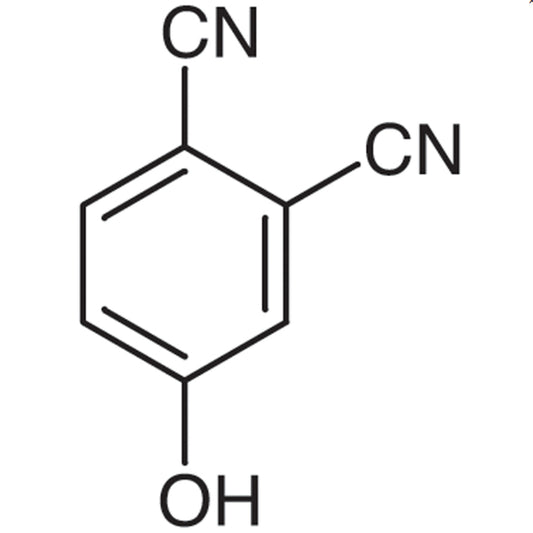
4-Butoxyphthalonitrile is a chemical compound widely used in organic synthesis reactions within laboratory settings. As a non-heterocyclic building block, it plays a crucial role in the development of complex molecular structures. Its unique molecular structure enables it to participate in various chemical transformations, making it an essential reagent for researchers in chemistry and related fields. Due to its versatility and reliability, it is frequently utilized in both academic and industrial laboratories for the synthesis of pharmaceuticals, materials, and other organic compounds.
This compound is valued for its chemical stability and specific reactivity, which make it a preferred choice for a wide range of experimental applications. It exhibits good solubility in organic solvents, which facilitates its use in solution-based reactions. Additionally, its ability to undergo substitution and condensation reactions enhances its utility in synthetic pathways. The compound also demonstrates favorable thermal stability, allowing it to be used in experiments that require controlled temperature environments. These properties contribute to its widespread adoption in chemical research.
In Indonesian laboratories, 4-Butoxyphthalonitrile is commonly employed in both fundamental and applied chemical research. It is frequently used in academic institutions and research centers for the development of new compounds and materials. Its availability and reliability make it a key component in the chemical toolkit of Indonesian scientists working in pharmaceutical, material science, and organic chemistry fields.
- Organic synthesis applications benefit from 4-Butoxyphthalonitrile due to its reactivity and ability to form complex molecular structures.
- Pharmaceutical research utilizes this compound for the development of new drug molecules and chemical intermediates.
- Material science experiments leverage its chemical properties to create advanced polymers and functional materials.
- Analytical chemistry uses it as a reference standard for spectroscopic and chromatographic analyses.
- Industrial chemical processes incorporate it as a building block for the production of specialty chemicals and fine chemicals.
| Brand | TCI |
|---|---|
| CAS number | 81560-32-9 |
| Molecular formula | — |
| Purity | — |
| Category | Chemistry > Building Blocks > Non-Heterocyclic Building Blocks |
| Pack sizes | Available in various quantities as per supplier specifications |
| Physical form | Liquid or solid, depending on supplier packaging |
| Storage | Store in a cool, dry place away from direct sunlight and incompatible materials |
4-Butoxyphthalonitrile should be stored in a cool, dry environment to maintain its chemical stability. It is recommended to keep the compound in tightly sealed containers to prevent exposure to moisture and air. Due to its potential reactivity, it should be stored away from strong oxidizing agents and incompatible substances. Proper ventilation is essential when handling the compound to minimize inhalation risks. Laboratory personnel should wear appropriate personal protective equipment, including gloves and safety goggles, when working with this material. Regular monitoring of storage conditions ensures the compound remains safe and effective for use in experimental settings.
—
Produk Terkait
-
Phthalonitrile TCI P0404
Regular price From Rp 557.550,00Regular priceRp 405.300,00Sale price From Rp 557.550,00 -
4-Hydroxyphthalonitrile TCI H0813
Regular price From Rp 2.147.250,00Regular priceRp 1.517.250,00Sale price From Rp 2.147.250,00 -
4-Pentyloxyphthalonitrile TCI P1071
Regular price From Rp 1.378.650,00Regular priceRp 979.650,00Sale price From Rp 1.378.650,00 -
4-Propoxyphthalonitrile TCI P1070
Regular price From Rp 1.749.300,00Regular priceRp 1.239.000,00Sale price From Rp 1.749.300,00 -
4-Hexyloxyphthalonitrile TCI H0691
Regular price Rp 1.378.650,00Regular priceRp 979.650,00Sale price Rp 1.378.650,00 -
4-Dodecyloxyphthalonitrile TCI D2237
Regular price From Rp 1.563.450,00Regular priceRp 1.108.800,00Sale price From Rp 1.563.450,00 -
4-(2',6'-Dimethylphenoxy)phthalonitrile TCI D1983
Regular price From Rp 2.677.500,00Regular priceRp 1.887.900,00Sale price From Rp 2.677.500,00 -
4-Iodophthalonitrile TCI I1050
Regular price Rp 4.876.200,00Regular priceRp 3.425.100,00Sale price Rp 4.876.200,00