4-Pentyloxyphthalonitrile from TCI is a phthalonitrile derivative with a pentyloxy group at the 4-position of the benzene ring. A pentyloxy group is a five-carbon chain attached through an oxygen atom. Like other substituted phthalonitriles, its main role in the laboratory is as a precursor for phthalocyanine synthesis. Phthalocyanines are large aromatic macrocycles formed by the tetramerization of four phthalonitrile units. The resulting phthalocyanine has four pentyloxy groups on the outer edge of its ring. Researchers can use these groups to tune its physical properties for materials and photochemistry work.
Researchers choose this compound because the pentyloxy chain is longer than a propoxy chain, so it improves solubility in common organic solvents more noticeably. Good solubility makes it easier to purify products by chromatography and to characterize them by spectroscopy. It also helps when preparing thin films by spin-coating or other solution-based methods. The flexible alkyl chains also reduce aggregation between phthalocyanine molecules. They can affect how molecules pack in the solid state, and some derivatives may show liquid-crystalline behaviour. These features make the compound a practical building block when processability matters as much as the core aromatic structure.
In Indonesia, this material suits materials chemistry, materials physics, and organic synthesis laboratories at universities and research institutions. Research groups studying dyes, photosensitizers, organic semiconductors, or optical materials can use it as a starting point for custom soluble phthalocyanines. It also works for student research projects and thesis work on macrocycle synthesis, where products that dissolve easily make purification and analysis simpler. Because it is supplied under the TCI brand, laboratories can use it alongside other TCI building blocks.
- Phthalocyanine synthesis: the compound acts as a substituted phthalonitrile precursor that tetramerizes into phthalocyanine macrocycles carrying four pentyloxy groups on the outer ring.
- Soluble macrocycle preparation: the pentyloxy chain improves solubility in common organic solvents, so purification by chromatography and handling in solution are easier than with unsubstituted analogues.
- Spectroscopic characterization studies: phthalocyanines made from this precursor dissolve more readily, which supports solution-based spectroscopic analysis with less interference from molecular aggregation.
- Thin-film fabrication research: better solubility allows spin-coating and other solution-processing methods to prepare films of phthalocyanine materials for materials science and device studies.
- Liquid-crystal and solid-state packing studies: the flexible alkyl chains influence how molecules arrange in the solid, so researchers can use the compound to study possible liquid-crystalline behaviour in some derivatives.
| Brand | TCI (product code P1071) |
|---|---|
| CAS number | 106943-83-3 |
| Molecular formula | — |
| Purity | — |
| Category | Chemistry > Building Blocks > Non-Heterocyclic Building Blocks |
| Pack sizes | as offered by TCI for product P1071; please confirm when ordering |
| Physical form | refer to the TCI product label and certificate of analysis |
| Storage | follow the storage conditions stated on the TCI label and Safety Data Sheet |
Store 4-Pentyloxyphthalonitrile in its original tightly closed container in a cool, dry, well-ventilated place, away from direct sunlight, heat sources, and incompatible materials such as strong oxidizing agents. Always follow the storage conditions on the TCI label and Safety Data Sheet. Keep containers clearly labelled and close them right after use so the material isn't exposed to moisture or contamination. Handle the compound in a fume hood or well-ventilated area. Wear suitable personal protective equipment, including a lab coat, safety glasses, and chemical-resistant gloves. Avoid creating dust or breathing in vapours, prevent contact with skin and eyes, and wash your hands thoroughly after handling. Dispose of waste and contaminated materials according to local regulations and institutional chemical waste procedures.
—
Produk Terkait
-
TCI B5774 5,10-Bis(4,4,5,5-tetramethyl-1,3,2-dioxaborolan-2-yl)naphtho[1,2-c:5,6-c']bis([1,2,5]oxadiazole)
Regular price Rp 10.255.350,00Regular price -
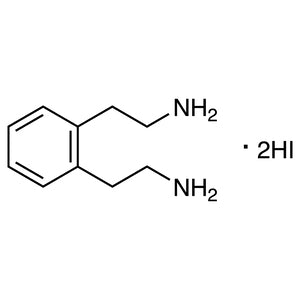
Dihydroiodide TCI B6569
Regular price From Rp 1.936.200,00Regular price -
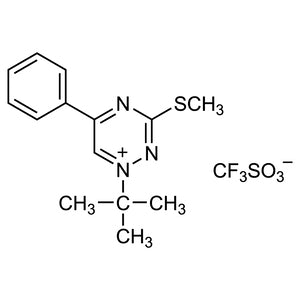
Trifluoromethanesulfonate TCI B7003
Regular price From Rp 1.936.200,00Regular price
![5,10-Bis(4,4,5,5-tetramethyl-1,3,2-dioxaborolan-2-yl)naphtho[1,2-c:5,6-c']bis([1,2,5]oxadiazole) - TCI B5774 - AMI Scientific](http://amiscientific.com/cdn/shop/files/TCI2510B5774.jpg?v=1769180228&width=533)