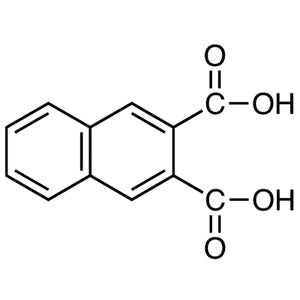
2,3-Naphthalenedicarboxylic Acid is a chemical compound widely used as a foundational building block in the synthesis of complex organic molecules. Its role in the laboratory is critical for creating new compounds through various chemical reactions, including carbon-carbon bond formation and molecular assembly. This compound is particularly valued in organic chemistry for its structural versatility and reactivity, making it a key component in research and development across multiple scientific disciplines.
The compound's aromatic structure provides stability, while its solubility in organic solvents such as ethylamine and acetone enhances its utility in synthetic processes. These properties make it ideal for substitution and covalent reactions, allowing chemists to manipulate its structure for desired outcomes. Additionally, its resistance to degradation ensures long-term storage and reliable performance in laboratory settings, reducing the risk of experimental inconsistencies.
In Indonesian laboratories, 2,3-Naphthalenedicarboxylic Acid is extensively used in organic synthesis and material development. It supports research in pharmaceuticals, polymer science, and advanced chemical engineering. Its consistent performance and structural integrity make it a trusted resource for scientists and researchers seeking reliable building blocks for complex molecular designs.
TCI brochures (PDF)
- Organic Linker Molecules for Metal Organic Frameworks (MOFs) 2026-05-11 · p. 4
- Monomers 2025-05-28 · p. 35
Related TCI products
- TCI N0377 1141-38-4 2,6-Naphthalenedicarboxylic Acid
- TCI N0606 605-70-9 1,4-Naphthalenedicarboxylic Acid
- TCI D4383 879360-14-2 Decahydro-1,4-naphthalenedicarboxylic Acid (mixture of isomers)
- TCI A0088 142-45-0 Acetylenedicarboxylic Acid
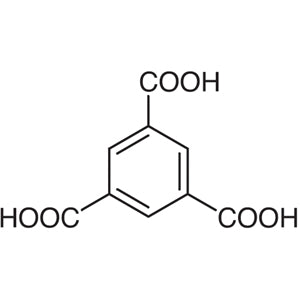
- TCI B0043 554-95-0 1,3,5-Benzenetricarboxylic Acid
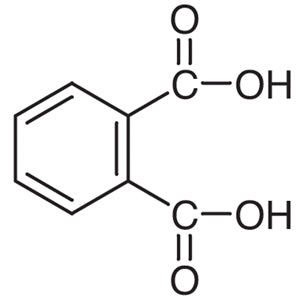
- TCI P0287 88-99-3 Phthalic Acid
- Organic synthesis of complex molecules due to its reactivity and structural versatility.
- Development of new pharmaceutical compounds through carbon-carbon bond formation.
- Creation of advanced materials in polymer science due to its aromatic stability.
- Research in chemical engineering for functional group modification and molecular assembly.
- Support for academic research in chemistry requiring stable and reactive building blocks.
| Brand | TCI |
|---|---|
| CAS number | 2169-87-1 |
| Molecular formula | — |
| Purity | — |
| Category | Chemistry > Building Blocks > Non-Heterocyclic Building Blocks |
| Pack sizes | Available in various quantities as per standard laboratory supply |
| Physical form | Solid |
| Storage | Store in a cool, dry place away from light and moisture |
This compound should be stored in a cool, dry environment, away from direct light and moisture to maintain its stability and reactivity. It is recommended to use airtight containers to prevent exposure to air and humidity, which could affect its performance. In laboratory settings, it is essential to handle it with care, using appropriate personal protective equipment such as gloves and safety goggles. Due to its chemical nature, it should be kept separate from incompatible substances to avoid any potential reactions. Proper labeling and storage conditions ensure the compound remains safe and effective for use in research and development activities.
—
Product Categories
- Organic-Inorganic Hybrid MaterialsMetal Organic Frameworks (MOF) and Their Raw MaterialsOrganic Linker Molecules [Metal Organic Frameworks (MOFs) Precursors]
- Polymer/Macromolecule ReagentsMetal Organic Frameworks (MOF) and Their Raw MaterialsOrganic Linker Molecules [Metal Organic Frameworks (MOFs) Precursors]
- Polymer/Macromolecule ReagentsMonomersDicarboxylic Acid Monomers
Produk Terkait
-
2,6-NaphthalenedicarboxylicAcid TCI N0377
Regular price From Rp 743.400,00Regular priceRp 519.750,00Sale price From Rp 743.400,00 -
1,4-NaphthalenedicarboxylicAcid TCI N0606
Regular price From Rp 2.227.050,00Regular priceRp 1.557.150,00Sale price From Rp 2.227.050,00 -
Decahydro-1,4-naphthalenedicarboxylicAcid(mixtureofisomers) TCI D4383
Regular price Rp 3.605.700,00Regular priceRp 2.521.050,00Sale price Rp 3.605.700,00 -
AcetylenedicarboxylicAcid TCI A0088
Regular price From Rp 1.220.100,00Regular priceRp 868.350,00Sale price From Rp 1.220.100,00 -
1,3,5-BenzenetricarboxylicAcid TCI B0043
Regular price From Rp 1.035.300,00Regular priceRp 723.450,00Sale price From Rp 1.035.300,00 -
PhthalicAcid TCI P0287
Regular price From Rp 505.050,00Regular priceRp 352.800,00Sale price From Rp 505.050,00 -
IsophthalicAcid TCI I0155
Regular price From Rp 477.750,00Regular priceRp 333.900,00Sale price From Rp 477.750,00 -
4,5-DifluorophthalicAcid TCI D6038
Regular price From Rp 2.254.350,00Regular priceRp 1.576.050,00Sale price From Rp 2.254.350,00