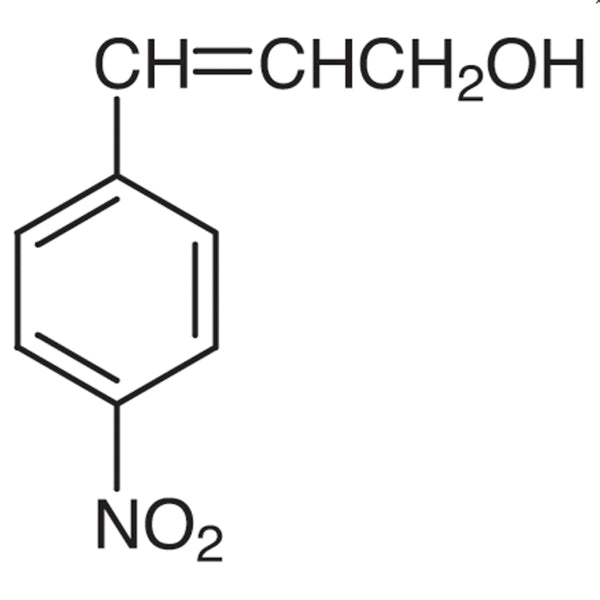
4-Nitrocinnamyl Alcohol from TCI (product code N0690) is an allylic alcohol. Its structure has three parts: a benzene ring with a nitro group in the para position, a conjugated carbon-carbon double bond, and a primary hydroxyl group at the end of the chain. This cinnamyl framework is common in organic chemistry because it links an aromatic ring to a three-carbon chain. In the laboratory, the compound serves as a non-heterocyclic building block for making more complex molecules. Its three functional groups can be changed one at a time.
Its main value is that each of the three functional groups can react selectively. The allylic hydroxyl group can be oxidised to the corresponding cinnamaldehyde, turned into a halide or another leaving group, or used in Mitsunobu reactions and etherification. The double bond can undergo epoxidation, dihydroxylation or hydrogenation. The nitro group can be reduced to an aromatic amine for further functionalisation. The nitroaromatic ring is conjugated with the double bond, which gives the compound clear UV absorption. This makes reactions easier to follow by TLC or HPLC.
In organic chemistry laboratories at Indonesian universities, this material fits well into undergraduate and graduate synthesis work, final-year research projects and methodology studies where students practise selective functional-group transformations. Research groups working on multistep synthesis can use it as a reliable starting point for aromatic amines, aldehydes and oxygenated derivatives. Because it comes from TCI, it offers consistent quality from batch to batch, which helps results stay reproducible across repeated experiments and teaching sessions.
Related TCI products
- Selective oxidation studies: the primary allylic hydroxyl group can be oxidised to the matching cinnamaldehyde, so the compound works well for comparing oxidising reagents and conditions.
- Leaving-group and substitution chemistry: the hydroxyl group can be turned into a halide or another leaving group, which opens routes to nucleophilic substitution and further carbon-chain elaboration.
- Mitsunobu reactions and etherification: the primary alcohol is a convenient substrate for building ethers, esters and other linked structures under mild, well-established conditions.
- Double-bond transformations: the conjugated alkene can undergo epoxidation, dihydroxylation or hydrogenation, so researchers can explore how selectively the alkene reacts while the other groups are present.
- Nitro reduction to aromatic amines: reducing the para-nitro group gives an aromatic amine for later coupling or functionalisation, and the strong UV absorption makes it easy to monitor progress by TLC or HPLC.
| Brand | TCI (product code N0690) |
|---|---|
| CAS number | 1504-63-8 |
| Molecular formula | — |
| Purity | — |
| Category | Chemistry > Building Blocks > Non-Heterocyclic Building Blocks |
| Pack sizes | as listed for TCI code N0690 on the product page |
| Physical form | see the TCI product documentation and Certificate of Analysis |
| Storage | follow the storage conditions on the TCI label and Safety Data Sheet |
Keep 4-Nitrocinnamyl Alcohol in its original, tightly closed TCI container, or in a well-sealed glass container that is clearly labelled. Store it in a cool, dry, well-ventilated area away from direct sunlight, heat sources and incompatible substances, especially strong oxidising and reducing agents. Always check the label and Safety Data Sheet for the exact storage temperature. Handle the material in a fume hood while wearing a lab coat, safety glasses and chemical-resistant gloves. Avoid breathing in dust or vapour and avoid contact with skin and eyes. Clean up spills promptly, and dispose of waste according to institutional and local chemical-waste rules.
—
Product Categories
Produk Terkait
-
2-Nitrocinnamaldehyde TCI N0611
Regular price Rp 1.246.350,00Regular price -
(E)-CinnamylAlcohol TCI C0362
Regular price From Rp 505.050,00Regular price -
4-Methyl-3-nitrobenzylAlcohol TCI M2916
Regular price From Rp 1.829.100,00Regular price -
3-Methyl-4-nitrobenzylAlcohol TCI M2915
Regular price From Rp 689.850,00Regular price -
4,5-Dimethoxy-2-nitrobenzylAlcohol TCI D4811
Regular price From Rp 1.353.450,00Regular price -
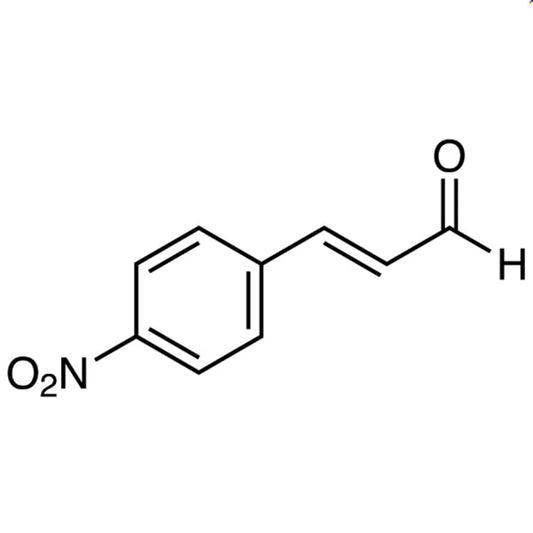
(E)-4-Nitrocinnamaldehyde TCI N0541
Regular price Rp 3.498.600,00Regular price -
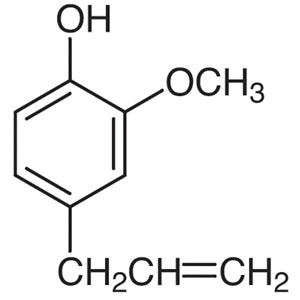
Eugenol TCI A0232
Regular price From Rp 505.050,00Regular price -
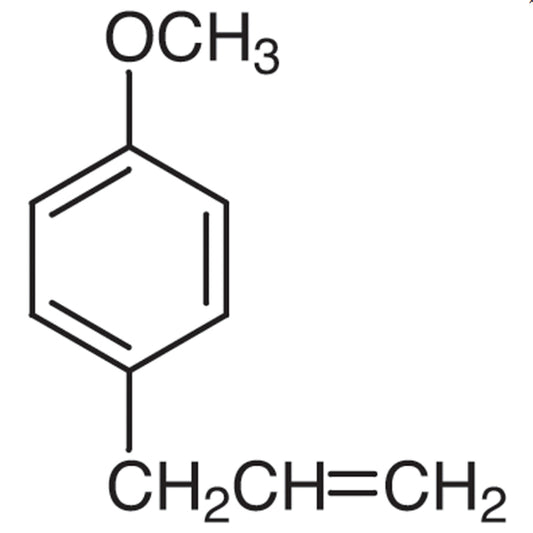
4-Allylanisole TCI A0702
Regular price From Rp 1.035.300,00Regular price