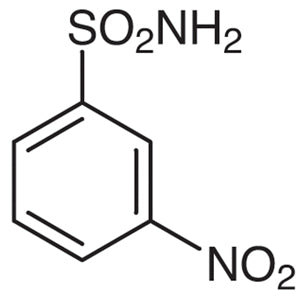
3-Nitrobenzenesulfonamide is a chemical compound widely used as a building block in the synthesis of complex organic compounds. Its simple molecular structure plays a crucial role in various chemical reactions, particularly in the formation of heterocyclic compounds and molecules containing sulfonamide functional groups. In laboratory settings, this compound serves as a versatile reagent, supporting substitution reactions, nitration processes, and functional group coupling. Its ability to participate in multiple reaction pathways makes it an essential component in synthetic chemistry workflows.
The chemical properties of 3-Nitrobenzenesulfonamide make it a preferred choice for laboratory applications. It exhibits chemical stability under controlled conditions but is sensitive to heat and excessive exposure. Its open molecular structure allows it to react readily with a variety of reagents, including amines, acids, and oxidizing agents. This reactivity, combined with its predictable behavior in controlled environments, makes it ideal for high-precision chemical reactions requiring precise control over reaction conditions.
In Indonesian laboratories, 3-Nitrobenzenesulfonamide is commonly utilized in organic chemistry research, especially in academic institutions and research centers. It is also popular in the pharmaceutical and food chemistry industries due to its ability to participate in the synthesis of bioactive compounds. Its widespread use highlights its importance in both academic and industrial chemical research.
Related TCI products
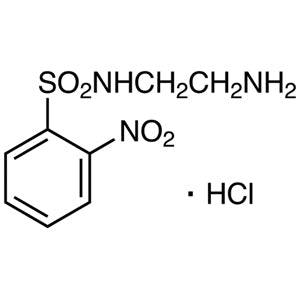
- TCI A2329 92504-03-5 N-(2-Aminoethyl)-2-nitrobenzenesulfonamide Hydrochloride
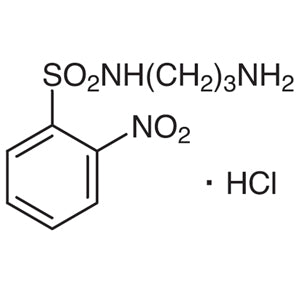
- TCI A2268 863983-46-4 N-(3-Aminopropyl)-2-nitrobenzenesulfonamide Hydrochloride
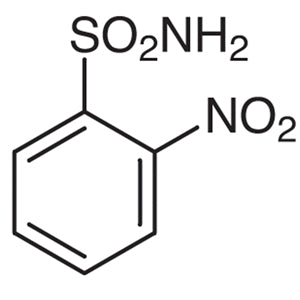
- TCI N0705 5455-59-4 2-Nitrobenzenesulfonamide
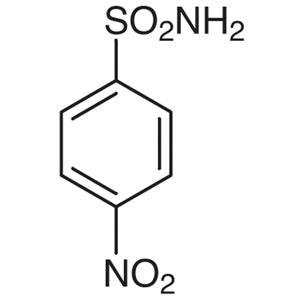
- TCI N0697 6325-93-5 4-Nitrobenzenesulfonamide
- TCI T3112 433695-36-4 N,N,2-Trimethyl-5-nitrobenzenesulfonamide
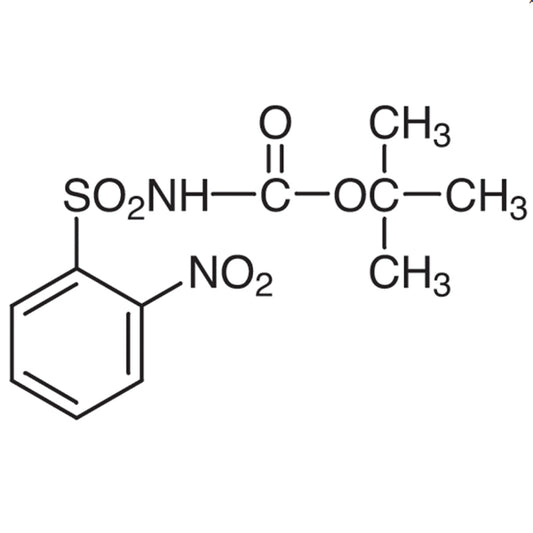
- TCI B2303 198572-71-3 N-(tert-Butoxycarbonyl)-2-nitrobenzenesulfonamide
- Organic synthesis is a key application where 3-Nitrobenzenesulfonamide is used to create complex molecules by participating in substitution and coupling reactions.
- Nitration processes benefit from this compound’s ability to act as a nitro group donor in controlled chemical environments.
- Functional group modification is enhanced by its reactivity with amines and acids, allowing for the creation of diverse chemical structures.
- Heterocyclic compound formation relies on its molecular structure, which supports the synthesis of ring-based organic molecules.
- Bioactive compound synthesis is supported by its role in creating molecules with pharmaceutical and food industry applications.
| Brand | TCI |
|---|---|
| CAS number | 121-52-8 |
| Molecular formula | — |
| Purity | — |
| Category | Chemistry > Building Blocks > Non-Heterocyclic Building Blocks |
| Pack sizes | Available in various quantities as per standard laboratory supply |
| Physical form | Solid |
| Storage | Store in a cool, dry place away from direct sunlight and moisture |
3-Nitrobenzenesulfonamide should be stored in a cool, dry environment to maintain its chemical stability. It is best kept in airtight containers to prevent exposure to moisture and air, which may affect its reactivity. Due to its sensitivity to heat, it should be stored away from sources of direct heat or sunlight. Laboratory personnel should handle the compound with care, using appropriate personal protective equipment such as gloves and safety goggles. While it is not inherently hazardous under normal storage conditions, its reactivity with various reagents necessitates careful handling during synthesis procedures. Proper labeling and storage practices ensure the safety and effectiveness of this compound in laboratory settings.
—
Produk Terkait
-
N-(2-Aminoethyl)-2-nitrobenzenesulfonamideHydrochloride TCI A2329
Regular price Rp 3.763.200,00Regular price -
N-(3-Aminopropyl)-2-nitrobenzenesulfonamideHydrochloride TCI A2268
Regular price From Rp 3.260.250,00Regular price -
2-Nitrobenzenesulfonamide TCI N0705
Regular price From Rp 1.510.950,00Regular price -
4-Nitrobenzenesulfonamide TCI N0697
Regular price From Rp 1.670.550,00Regular price -
N,N,2-Trimethyl-5-nitrobenzenesulfonamide TCI T3112
Regular price From Rp 2.571.450,00Regular price -
N-(tert-Butoxycarbonyl)-2-nitrobenzenesulfonamide TCI B2303
Regular price From Rp 1.353.450,00Regular price -
4-Fluoro-3-nitrobenzenesulfonamide TCI F1172
Regular price From Rp 2.518.950,00Regular price -
N-Benzyloxycarbonyl-2-nitrobenzenesulfonamide TCI C1757
Regular price From Rp 2.677.500,00Regular price