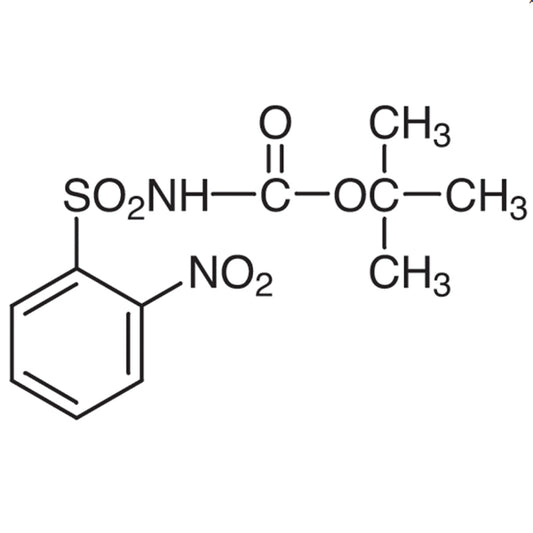
4-Nitrobenzenesulfonamide (4-NBSA) is a chemical compound widely used in organic synthesis reactions within laboratory settings. It serves as a key building block in the development of heterocyclic compounds, pharmaceuticals, and industrial chemicals. Its molecular structure enables it to participate in various chemical transformations, making it an essential reagent for synthetic chemists. Due to its versatility, 4-NBSA is frequently employed in both academic and industrial research environments to create complex molecular structures.
The chemical properties of 4-NBSA, including its reactivity towards bases, acids, and alkali metals, make it a preferred choice for synthetic applications. It exhibits good solubility in organic solvents such as ethyl acetate and chloroform, which enhances its usability in a wide range of experimental conditions. Its stability under specific conditions allows for controlled reactions, while its reactivity ensures efficient participation in nucleophilic and electrophilic substitution reactions. These characteristics contribute to its popularity among researchers working in organic chemistry.
In Indonesian laboratories, 4-Nitrobenzenesulfonamide is extensively used in pure and applied chemical research. It plays a crucial role in pharmaceutical development, organic synthesis, and industrial chemical production. Its availability and chemical properties make it a favored material for various experimental setups, supporting both basic and applied research in the field of chemistry.
Related TCI products
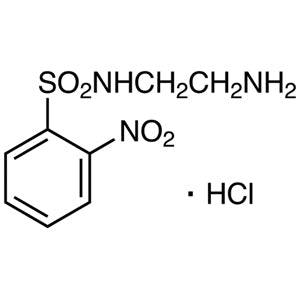
- TCI A2329 92504-03-5 N-(2-Aminoethyl)-2-nitrobenzenesulfonamide Hydrochloride
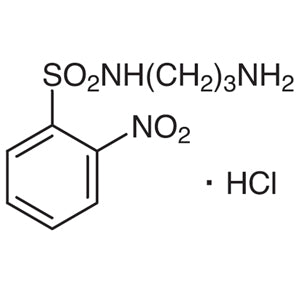
- TCI A2268 863983-46-4 N-(3-Aminopropyl)-2-nitrobenzenesulfonamide Hydrochloride
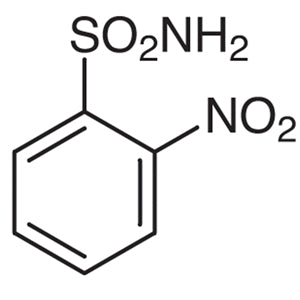
- TCI N0705 5455-59-4 2-Nitrobenzenesulfonamide
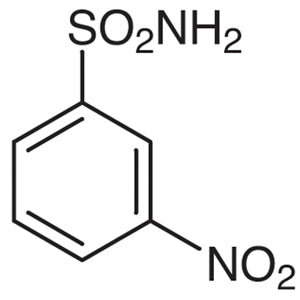
- TCI N0696 121-52-8 3-Nitrobenzenesulfonamide
- TCI T3112 433695-36-4 N,N,2-Trimethyl-5-nitrobenzenesulfonamide
- TCI B2303 198572-71-3 N-(tert-Butoxycarbonyl)-2-nitrobenzenesulfonamide
- Organic synthesis reactions benefit from 4-NBSA due to its reactivity in electrophilic and nucleophilic substitution processes.
- Pharmaceutical research utilizes 4-NBSA as a building block for the synthesis of heterocyclic compounds and drug molecules.
- Industrial chemical production relies on 4-NBSA for the creation of complex organic compounds used in various applications.
- Analytical chemistry experiments use 4-NBSA as a standard reference material for chemical identification and reaction testing.
- Environmental studies incorporate 4-NBSA to investigate its behavior in chemical degradation processes and reactivity in different media.
| Brand | TCI |
|---|---|
| CAS number | 6325-93-5 |
| Molecular formula | — |
| Purity | — |
| Category | Chemistry > Building Blocks > Non-Heterocyclic Building Blocks |
| Pack sizes | Available in various quantities as per standard laboratory supply |
| Physical form | Solid |
| Storage | Store in a cool, dry place away from moisture and direct sunlight |
4-Nitrobenzenesulfonamide should be stored in a cool, dry environment to maintain its chemical stability. It is recommended to keep the material in a tightly sealed container to prevent exposure to moisture and air. Due to its reactivity, it should be handled with care, using appropriate personal protective equipment such as gloves and safety goggles. Avoid contact with strong acids, bases, and reactive metals. In laboratory settings, it should be stored in a well-ventilated area to minimize any potential hazards. Proper labeling and storage practices are essential to ensure safe handling and prevent accidental exposure.
—
Produk Terkait
-
N-(2-Aminoethyl)-2-nitrobenzenesulfonamideHydrochloride TCI A2329
Regular price Rp 3.763.200,00Regular price -
N-(3-Aminopropyl)-2-nitrobenzenesulfonamideHydrochloride TCI A2268
Regular price From Rp 3.260.250,00Regular price -
2-Nitrobenzenesulfonamide TCI N0705
Regular price From Rp 1.510.950,00Regular price -
3-Nitrobenzenesulfonamide TCI N0696
Regular price From Rp 769.650,00Regular price -
N,N,2-Trimethyl-5-nitrobenzenesulfonamide TCI T3112
Regular price From Rp 2.571.450,00Regular price -
N-(tert-Butoxycarbonyl)-2-nitrobenzenesulfonamide TCI B2303
Regular price From Rp 1.353.450,00Regular price -
4-Fluoro-3-nitrobenzenesulfonamide TCI F1172
Regular price From Rp 2.518.950,00Regular price -
N-Benzyloxycarbonyl-2-nitrobenzenesulfonamide TCI C1757
Regular price From Rp 2.677.500,00Regular price