

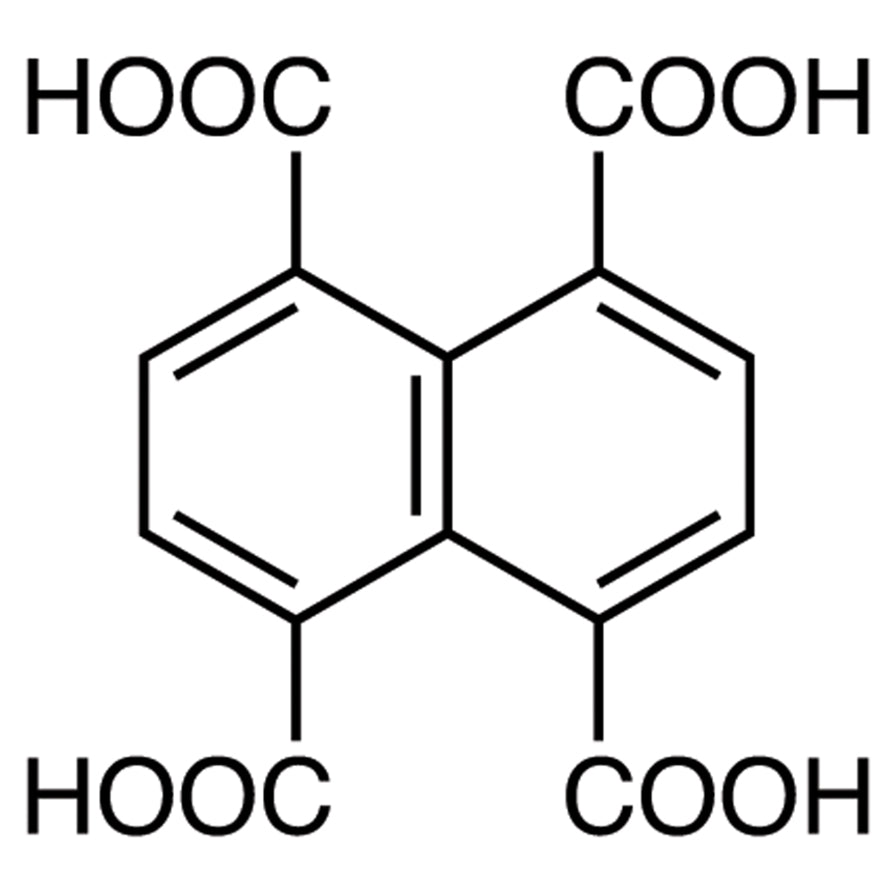
1,4,5,8-Naphthalenetetracarboxylic Acid (NNTC) is a key organic compound widely utilized in scientific material research. This compound plays a vital role in the synthesis of Metal Organic Frameworks (MOFs), which are advanced materials with unique structural properties. Its molecular structure enables the formation of stable crystalline frameworks, making it an essential building block for MOF synthesis. In laboratory settings, NNTC is used to create porous materials with high surface areas, which are critical for various applications in chemistry, physics, and engineering.
The chemical stability and ability of NNTC to form covalent bonds with specific metals make it a preferred choice in MOF development. These properties allow for the creation of highly porous structures with tunable properties, enhancing its versatility in material science. Its solubility in organic solvents further facilitates the synthesis process, ensuring ease of handling and integration into laboratory workflows. The compound’s reliability and performance in controlled environments contribute to its widespread adoption in advanced material research.
In Indonesian laboratories, NNTC is extensively used in scientific research, particularly in the fields of chemistry, physics, and engineering. It is a common component in studies focused on developing new materials with applications in gas storage, filtration, and catalysis. Researchers in Indonesia rely on NNTC for its consistent performance and compatibility with various synthetic techniques, making it a fundamental reagent in modern material science research.
TCI brochures (PDF)
- Organic Linker Molecules for Metal Organic Frameworks (MOFs) 2026-05-11 · p. 4
Related TCI products
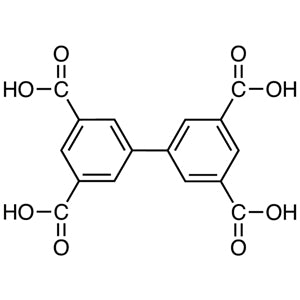
- TCI B3792 4371-28-2 Biphenyl-3,3',5,5'-tetracarboxylic Acid
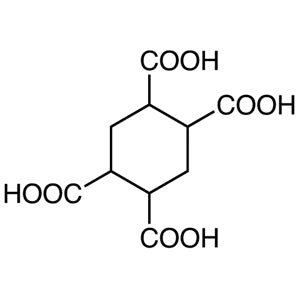
- TCI C2198 15383-49-0 1,2,4,5-Cyclohexanetetracarboxylic Acid
- TCI N1128 3711-01-1 2,3,6,7-Naphthalenetetracarboxylic 2,3:6,7-Dianhydride
- TCI C0856 3724-52-5 1,2,3,4-Cyclopentanetetracarboxylic Acid
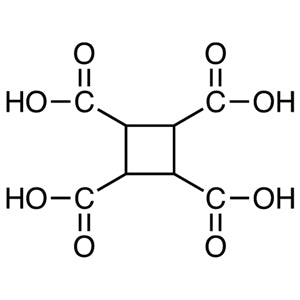
- TCI C2502 53159-92-5 1,2,3,4-Cyclobutanetetracarboxylic Acid
- TCI B0684 4534-68-3 meso-Butane-1,2,3,4-tetracarboxylic Acid
- Metal Organic Frameworks (MOF) synthesis due to its ability to form stable, porous structures with high surface area.
- Gas storage and separation applications because of its capacity to create materials with tunable pore sizes and surface properties.
- Catalytic processes where its chemical stability and reactivity with metal ions enhance reaction efficiency.
- Filtration systems due to its role in creating materials with high porosity and selective adsorption properties.
- Advanced material development in research institutions for creating novel compounds with tailored physical and chemical characteristics.
| Brand | TCI |
|---|---|
| CAS number | 128-97-2 |
| Molecular formula | — |
| Purity | — |
| Category | Materials Science > Organic-Inorganic Hybrid Materials > Metal Organic Frameworks (MOF) and Their Raw Materials |
| Pack sizes | Available in standard laboratory quantities |
| Physical form | Solid powder |
| Storage | Store in a cool, dry place away from moisture and direct sunlight |
This compound should be stored in a cool, dry environment to maintain its chemical stability and prevent degradation. It is recommended to use airtight containers to protect it from moisture and contaminants. Due to its organic nature, it should be kept away from sources of heat and direct sunlight. Laboratory personnel should handle it with appropriate personal protective equipment, such as gloves and safety goggles, to ensure safe handling. Proper ventilation is also essential when working with this material to minimize exposure risks. The compound is generally stable under standard laboratory conditions, making it suitable for routine use in research settings.
—
Product Categories
- Organic-Inorganic Hybrid MaterialsMetal Organic Frameworks (MOF) and Their Raw MaterialsOrganic Linker Molecules [Metal Organic Frameworks (MOFs) Precursors]
- Polymer/Macromolecule ReagentsMetal Organic Frameworks (MOF) and Their Raw MaterialsOrganic Linker Molecules [Metal Organic Frameworks (MOFs) Precursors]
Produk Terkait
-
Biphenyl-3,3',5,5'-tetracarboxylicAcid TCI B3792
Regular price Rp 3.949.050,00Regular priceRp 2.761.500,00Sale price Rp 3.949.050,00 -
1,2,4,5-CyclohexanetetracarboxylicAcid TCI C2198
Regular price From Rp 1.140.300,00Regular priceRp 796.950,00Sale price From Rp 1.140.300,00 -
2,3,6,7-Naphthalenetetracarboxylic2,3:6,7-Dianhydride TCI N1128
Regular price From Rp 4.161.150,00Regular priceRp 2.909.550,00Sale price From Rp 4.161.150,00 -
1,2,3,4-CyclopentanetetracarboxylicAcid TCI C0856
Regular price Rp 1.167.600,00Regular priceRp 815.850,00Sale price Rp 1.167.600,00 -
1,2,3,4-CyclobutanetetracarboxylicAcid TCI C2502
Regular price Rp 2.174.550,00Regular priceRp 1.520.400,00Sale price Rp 2.174.550,00 -
meso-Butane-1,2,3,4-tetracarboxylicAcid TCI B0684
Regular price From Rp 769.650,00Regular priceRp 553.350,00Sale price From Rp 769.650,00 -
[1,1'-Biphenyl]-3,3',4,4'-tetracarboxylicAcid TCI B6179
Regular price Rp 4.479.300,00Regular priceRp 3.132.150,00Sale price Rp 4.479.300,00 -
N,N'-Bis[3-(dimethylamino)propyl]perylene-3,4,9,10-tetracarboxylicDiimide TCI B5954
Regular price From Rp 3.498.600,00Regular priceRp 2.462.250,00Sale price From Rp 3.498.600,00






![TCI B6179 22803-05-0 [1,1'-Biphenyl]-3,3',4,4'-tetracarboxylic Acid](http://amiscientific.com/cdn/shop/files/TCI2510B6179_e3c368a5-5b9a-4d34-aabd-b29e1b37e176.jpg?v=1792631269&width=533)
![[1,1'-Biphenyl]-3,3',4,4'-tetracarboxylic Acid (CAS 22803-05-0) - TCI B6179 - AMI Scientific](http://amiscientific.com/cdn/shop/files/TCI2510B6179.jpg?v=1767093266&width=533)
![N,N'-Bis[3-(dimethylamino)propyl]perylene-3,4,9,10-tetracarboxylic Diimide (CAS 117901-97-0) - TCI B5954 - AMI Scientific](http://amiscientific.com/cdn/shop/files/TCI2510B5954.jpg?v=1768815937&width=533)