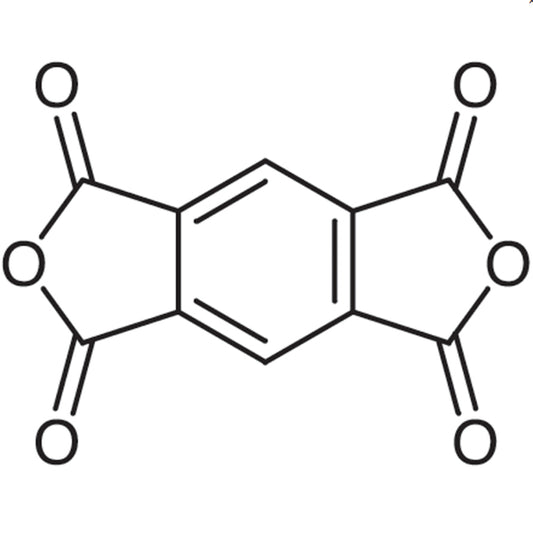
2,3,6,7-Naphthalenetetracarboxylic 2,3:6,7-Dianhydride is a chemical compound widely used as a building block in the synthesis of complex molecules. This compound plays a crucial role in laboratory settings where the creation of new chemical structures is required. Its unique molecular structure makes it an essential component in various synthetic processes, particularly in organic chemistry and polymer science. Due to its reactivity and versatility, it is frequently employed in research and development activities.
The compound's anhydride structure provides it with high reactivity, making it ideal for reactions such as esterification and coupling reactions. Its chemical stability under controlled conditions further enhances its utility in laboratory environments. These properties make it a preferred choice for chemists and researchers who require reliable and effective reagents. The compound's ability to participate in multiple chemical transformations also contributes to its widespread use in advanced chemical synthesis.
In Indonesian laboratories, this compound is commonly used in chemical research, especially in the fields of organic synthesis and polymer development. Its availability and consistent quality make it a trusted material for both academic and industrial research. The compound's versatility and reactivity ensure its continued relevance in various scientific applications within the region.
Advantages (TCI brochure)
- Reacts with various diamines to form polyimides.
- Highly reactive with amines, with higher degree of polymerization than 1,4,5,8-NTCDA.
- Electron acceptor molecule that may form interesting derivatives for electronic materials after reaction with monoamines.
TCI brochures (PDF)
- Polyimide Raw Material 2,3,6,7-NTCDA 2025-01-17 · p. 1
- Raw Material for Synthesis of Polyimides and Acceptor Materials 1,2,5,6-NTCDA 2025-08-07 · p. 1
- Naphthalene Tetracarboxylic Acid Dianhydride Derivatives 2025-07-16 · p. 1
- Raw Material for Synthesis of Polyimides and Acceptor Materials 2,3,6,7-ATCDA 2025-06-19 · p. 1
- Raw Material for Polyimides and COFs Mellitic Trianhydride 2026-09-14 · p. 1
- Covalent Organic Framework (COF) Linkers 2026-05-18 · p. 6
Related TCI products
- TCI N0755 81-30-1 Naphthalene-1,4,5,8-tetracarboxylic Dianhydride (purified by sublimation)
- TCI N0369 81-30-1 Naphthalene-1,4,5,8-tetracarboxylic Dianhydride
- TCI B0040 89-32-7 Pyromellitic Dianhydride
- TCI P2103 89-32-7 Pyromellitic Dianhydride (purified by sublimation)
- TCI P0972 128-69-8 3,4,9,10-Perylenetetracarboxylic Dianhydride
- TCI D5723 122640-83-9 Dicyclohexyl-3,4,3',4'-tetracarboxylic Dianhydride
- Organic synthesis is a key application where this compound is used to build complex molecular structures through its reactive anhydride groups.
- Polymer development benefits from this compound's ability to form stable chemical bonds, aiding in the creation of high-performance materials.
- Chemical research in Indonesian laboratories relies on this compound for its role in creating novel compounds with specific functional properties.
- Industrial chemical processes utilize this compound due to its reactivity and compatibility with various synthetic pathways.
- Advanced material science applications leverage this compound's structural versatility for the development of new materials with tailored properties.
From the TCI brochure
- Polyimide synthesis with various diamines
- Polyimide films with rigid structure
- Derivatives for electronic materials after reaction with monoamines
| Brand | TCI |
|---|---|
| CAS number | 3711-01-1 |
| Molecular formula | — |
| Purity | — |
| Category | Chemistry > Building Blocks > Non-Heterocyclic Building Blocks |
| Pack sizes | Available in various quantities as per supplier specifications |
| Physical form | Solid |
| Storage | Store in a cool, dry place away from moisture and direct sunlight |
Data from the TCI brochure
| Glass transition temperature of polyimide film | over 400°C |
|---|---|
| Coefficient of thermal expansion of polyimide film | low (no numeric value stated) |
Source: TCI brochure FF120 (2025-01-17)
This compound should be stored in a cool, dry environment to maintain its chemical stability. It is recommended to keep it in a sealed container to prevent exposure to moisture and air. Due to its reactivity, it should be handled in a well-ventilated area, and appropriate personal protective equipment should be worn. Avoid contact with incompatible materials such as strong acids or bases. The compound should not be stored near heat sources or in direct sunlight. Regular inspection of storage conditions is advised to ensure the integrity of the material.
—
Product Categories
- Material Building BlocksCovalent Organic Frameworks (COFs) LinkersCarboxylic Anhydride Linkers [Covalent Organic Frameworks (COFs) Linkers]
- Polymer/Macromolecule ReagentsCovalent Organic Frameworks (COFs) LinkersCarboxylic Anhydride Linkers [Covalent Organic Frameworks (COFs) Linkers]
- Polymer/Macromolecule ReagentsMonomersTetracarboxylic Dianhydride Monomers
- Polymer/Macromolecule ReagentsPolyimide Raw MaterialsTetracarboxylic Dianhydrides [Polyimide Raw Materials]
Produk Terkait
-
Naphthalene-1,4,5,8-tetracarboxylicDianhydride(purifiedbysublimation) TCI N0755
Regular price From Rp 2.227.050,00Regular priceRp 1.557.150,00Sale price From Rp 2.227.050,00 -
Naphthalene-1,4,5,8-tetracarboxylicDianhydride TCI N0369
Regular price From Rp 2.439.150,00Regular priceRp 1.705.200,00Sale price From Rp 2.439.150,00 -
PyromelliticDianhydride TCI B0040
Regular price From Rp 505.050,00Regular priceRp 352.800,00Sale price From Rp 505.050,00 -
PyromelliticDianhydride(purifiedbysublimation) TCI P2103
Regular price From Rp 2.704.800,00Regular priceRp 1.891.050,00Sale price From Rp 2.704.800,00 -
3,4,9,10-PerylenetetracarboxylicDianhydride TCI P0972
Regular price From Rp 1.485.750,00Regular priceRp 1.038.450,00Sale price From Rp 1.485.750,00 -
Dicyclohexyl-3,4,3',4'-tetracarboxylicDianhydride TCI D5723
Regular price From Rp 2.942.100,00Regular priceRp 2.056.950,00Sale price From Rp 2.942.100,00 -
1,2,3,4-CyclobutanetetracarboxylicDianhydride(purifiedbysublimation) TCI C2842
Regular price From Rp 1.908.900,00Regular priceRp 1.334.550,00Sale price From Rp 1.908.900,00 -
1,2,3,4-CyclobutanetetracarboxylicDianhydride TCI C2262
Regular price From Rp 1.803.900,00Regular priceRp 1.261.050,00Sale price From Rp 1.803.900,00