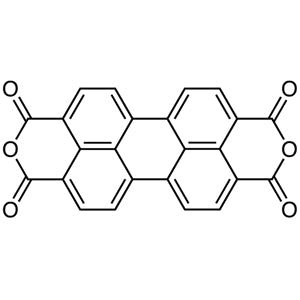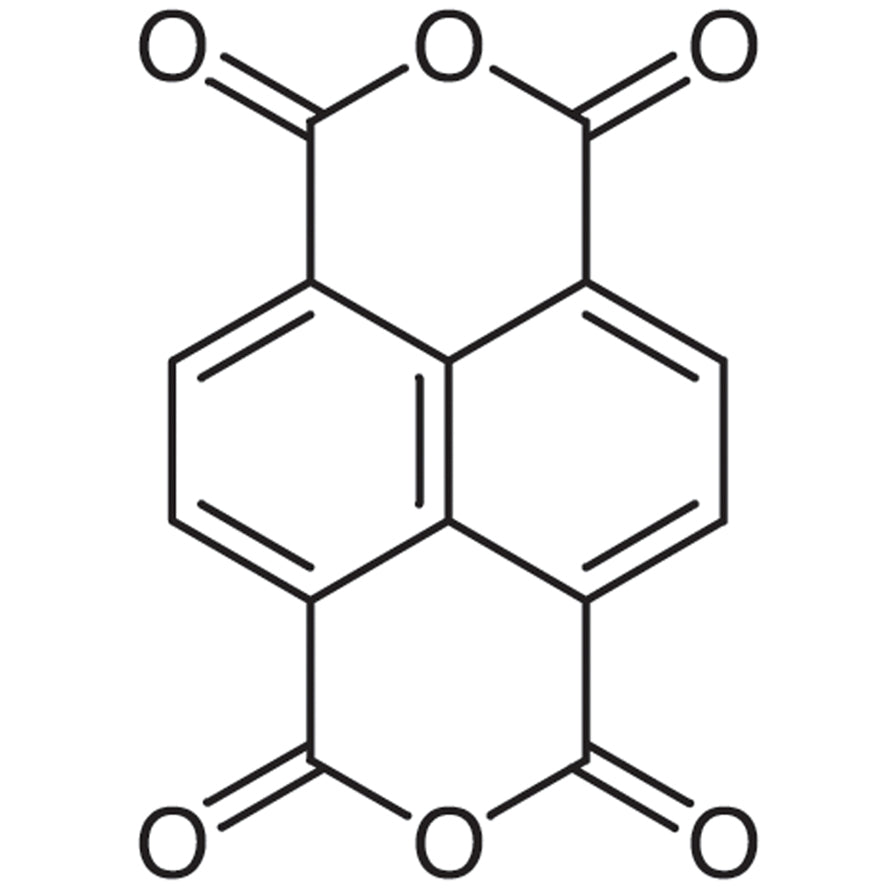
Naphthalene-1,4,5,8-tetracarboxylic Dianhydride is a chemical compound widely used in organic material research, particularly in the development of materials for organic field-effect transistors (OFETs). This compound plays a crucial role in the synthesis of organic semiconductors, which are essential for flexible electronics and organic display technologies. In the laboratory, it serves as a fundamental building block for creating advanced electronic materials with tailored properties. Its versatility makes it a key component in the exploration of new electronic applications and material innovations.
The compound is preferred for its high purity and stable chemical structure, which allows for consistent and reproducible results in synthesis processes. Its high melting point ensures that it remains stable under various experimental conditions, while its ability to form complex chemical structures enhances its utility in creating materials with unique electronic properties. These characteristics make it an ideal choice for researchers aiming to develop high-performance organic electronic devices.
In Indonesian laboratories, this compound is highly relevant for research in materials science and electronic engineering. Its use in the fabrication of thin films and active layers for electronic devices supports the growth of advanced technological applications. Due to its purity and stability, it is particularly valuable for precision-based research, making it a sought-after material in academic and industrial research settings.
TCI brochures (PDF)
- Organic Transistor (OFET) Materials 2026-05-07 · p. 17
- Raw Materials for Polyimide Synthesis 2026-05-11 · p. 3
Related TCI products
- TCI P2103 89-32-7 Pyromellitic Dianhydride (purified by sublimation)
- TCI P2102 128-69-8 3,4,9,10-Perylenetetracarboxylic Dianhydride (purified by sublimation)
- TCI N0369 81-30-1 Naphthalene-1,4,5,8-tetracarboxylic Dianhydride
- TCI P0972 128-69-8 3,4,9,10-Perylenetetracarboxylic Dianhydride
- TCI B4260 2421-28-5 3,3',4,4'-Benzophenonetetracarboxylic Dianhydride (purified by sublimation)
- TCI C2920 6053-68-5 1,2,3,4-Cyclopentanetetracarboxylic Dianhydride (purified by sublimation)
- Organic Field-Effect Transistor (OFET) Development: This compound is ideal for synthesizing organic semiconductors used in OFETs due to its ability to form complex molecular structures with high conductivity.
- Flexible Electronics Research: Its chemical stability and high purity make it suitable for creating materials used in flexible electronic devices, such as bendable displays and sensors.
- Thin Film Fabrication: The compound’s high melting point and purity allow for the production of uniform and high-quality thin films, essential for advanced electronic applications.
- Organic Display Technology: It is used in the development of organic light-emitting diodes (OLEDs) and other display technologies due to its electronic properties and structural versatility.
- Material Characterization Studies: Its stable chemical structure and predictable behavior make it a valuable material for testing and analyzing new electronic material properties.
| Brand | TCI |
|---|---|
| CAS number | 81-30-1 |
| Molecular formula | — |
| Purity | — |
| Category | Materials Science > Electronic Materials > Organic Transistor (OFET) Materials |
| Pack sizes | Available in various quantities as per supplier specifications |
| Physical form | Solid |
| Storage | Store in a cool, dry place away from moisture and direct sunlight |
This compound should be stored in a cool, dry environment to maintain its chemical stability and prevent degradation. It is recommended to use airtight containers made of glass or high-density polyethylene to protect it from moisture and air exposure. Due to its high melting point, it remains solid under normal laboratory conditions, but care should be taken to avoid thermal fluctuations. When handling, it is advisable to use appropriate personal protective equipment, such as gloves and safety goggles, to ensure safety. The compound is non-hazardous under standard laboratory conditions, but it should be kept away from sources of heat and open flames to prevent any potential risks. Proper labeling and storage practices are essential to maintain the integrity of the material and ensure safe laboratory operations.
—
Product Categories
- Electronic MaterialsOrganic Transistor (OFET) Materialsn-Type Organic Semiconductors [Organic Transistor (OFET) Materials]
- High Purity CompoundsCompounds Purified by SublimationMaterial Building Blocks [Compounds Purified by Sublimation]
- Material Building BlocksCovalent Organic Frameworks (COFs) LinkersCarboxylic Anhydride Linkers [Covalent Organic Frameworks (COFs) Linkers]
- Polymer/Macromolecule ReagentsCovalent Organic Frameworks (COFs) LinkersCarboxylic Anhydride Linkers [Covalent Organic Frameworks (COFs) Linkers]
- Polymer/Macromolecule ReagentsMonomersTetracarboxylic Dianhydride Monomers
- Polymer/Macromolecule ReagentsPolyimide Raw MaterialsTetracarboxylic Dianhydrides [Polyimide Raw Materials]
Produk Terkait
-
PyromelliticDianhydride(purifiedbysublimation) TCI P2103
Regular price From Rp 2.704.800,00Regular price -
3,4,9,10-PerylenetetracarboxylicDianhydride(purifiedbysublimation) TCI P2102
Regular price Rp 3.021.900,00Regular price -
Naphthalene-1,4,5,8-tetracarboxylicDianhydride TCI N0369
Regular price From Rp 2.439.150,00Regular price -
3,4,9,10-PerylenetetracarboxylicDianhydride TCI P0972
Regular price From Rp 1.485.750,00Regular price -
3,3',4,4'-BenzophenonetetracarboxylicDianhydride(purifiedbysublimation) TCI B4260
Regular price From Rp 2.068.500,00Regular price -
1,2,3,4-CyclopentanetetracarboxylicDianhydride(purifiedbysublimation) TCI C2920
Regular price From Rp 1.565.550,00Regular price -
1,2,4,5-CyclohexanetetracarboxylicDianhydride(purifiedbysublimation) TCI C2919
Regular price Rp 1.565.550,00Regular price -
1,2,3,4-CyclobutanetetracarboxylicDianhydride(purifiedbysublimation) TCI C2842
Regular price From Rp 1.908.900,00Regular price