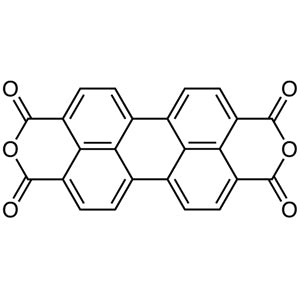
3,4,9,10-Perylenetetracarboxylic Dianhydride is a chemical compound widely used in laboratory settings for research and experimental purposes. It is a key reagent in organic chemistry and material science, often serving as a building block for the synthesis of complex compounds. This compound is particularly valuable in applications requiring high chemical stability and purity, making it a reliable choice for various analytical and synthetic processes. Its versatility allows it to be incorporated into a range of experimental protocols, contributing to the advancement of scientific research across multiple disciplines.
The compound is purified through sublimation, ensuring a high level of purity that enhances the accuracy and reproducibility of experimental results. Its stable chemical and physical properties make it suitable for use in controlled laboratory environments where precision is essential. The solid form of the compound also facilitates easy handling and storage, reducing the risk of contamination or degradation. These characteristics make it an ideal material for use in both academic and industrial research settings.
In Indonesian laboratories, this compound is commonly used in chemical research, particularly in the fields of material analysis, organic synthesis, and the development of chemical products. Its reliability and availability make it a preferred choice among researchers and practitioners in various scientific institutions. The compound's role in supporting high-precision experiments underscores its importance in the scientific community.
- Organic synthesis applications benefit from this compound's stability and reactivity, making it ideal for creating complex molecular structures.
- Material analysis laboratories use it as a standard reagent for testing the properties of new materials and compounds.
- It is well-suited for dye and pigment research due to its chromophore structure, allowing for the development of new colorants.
- In analytical chemistry, it serves as a reference material for spectroscopic and chromatographic analyses.
- It supports research in nanomaterials and functional materials due to its ability to participate in molecular modifications.
| Brand | TCI |
|---|---|
| CAS number | 128-69-8 |
| Molecular formula | — |
| Purity | — |
| Category | Chemistry > Stains and Dyes (for Research and Experimental Use) > Pigments (for Research and Experimental Use) |
| Pack sizes | Available in standard laboratory quantities |
| Physical form | Solid |
| Storage | Store in a cool, dry place away from moisture and direct sunlight |
This compound should be stored in a cool, dry environment to maintain its chemical stability and prevent degradation. It is recommended to keep it in a tightly sealed container to avoid exposure to moisture and air, which could affect its purity. Due to its solid form, it is suitable for storage in glass or plastic containers that are resistant to chemical reactions. Laboratory personnel should handle it with care, using appropriate personal protective equipment to ensure safety. It is not reactive under normal conditions, but it should be kept away from incompatible substances to prevent any potential chemical interactions. Proper storage and handling are essential to maintain its quality and effectiveness in research applications.
—
Produk Terkait
-
TCI B5774 5,10-Bis(4,4,5,5-tetramethyl-1,3,2-dioxaborolan-2-yl)naphtho[1,2-c:5,6-c']bis([1,2,5]oxadiazole)
Regular price Rp 10.255.350,00Regular price -
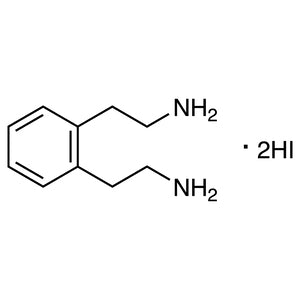
Dihydroiodide TCI B6569
Regular price From Rp 1.936.200,00Regular price -
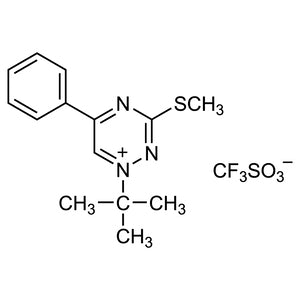
Trifluoromethanesulfonate TCI B7003
Regular price From Rp 1.936.200,00Regular price
![5,10-Bis(4,4,5,5-tetramethyl-1,3,2-dioxaborolan-2-yl)naphtho[1,2-c:5,6-c']bis([1,2,5]oxadiazole) - TCI B5774 - AMI Scientific](http://amiscientific.com/cdn/shop/files/TCI2510B5774.jpg?v=1769180228&width=533)