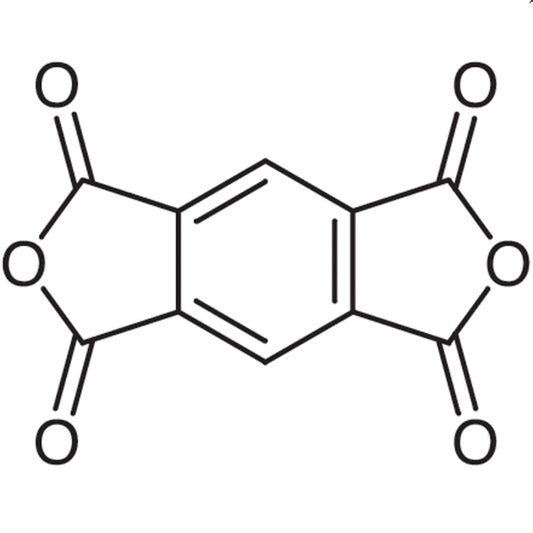
Pyromellitic Dianhydride (PMDA), with CAS number 89-32-7, is a high-purity chemical compound widely used in scientific and industrial applications. As a member of the anhydride family, PMDA possesses a complex molecular structure that contributes to its chemical stability and reactivity. This compound is particularly valuable in organic synthesis and polymer science due to its ability to participate in various chemical reactions. Its high purity, achieved through sublimation, ensures minimal contamination, making it a reliable material for precise laboratory work.
The chemical properties of PMDA, including its high reactivity and stability, make it a preferred choice for researchers and industrial chemists. The sublimation process not only enhances its purity but also ensures a uniform molecular structure, which is essential for applications requiring high precision. This compound is known for its ability to form stable intermediates and is often used in the development of advanced materials. Its chemical inertness under controlled conditions further supports its use in a wide range of laboratory settings.
In Indonesian laboratories, PMDA is commonly used in chemical research, material development, and electronic applications. It plays a crucial role in the production of epoxy resins, insulating materials, and bonding agents. Many local research institutions and industries rely on PMDA for experiments and product development. Its consistent quality and reliability make it an essential component in both academic and industrial research environments.
TCI brochures (PDF)
- Raw Material for Polyimides and COFs Mellitic Trianhydride 2026-09-14 · p. 1
- Chemical Compounds Purified by Sublimation 2025-05-07 · p. 3
- Covalent Organic Framework (COF) Linkers 2026-05-18 · p. 6
- Raw Materials for Polyimide Synthesis 2026-05-11 · p. 2
- Monomers 2025-05-28 · p. 38
Related TCI products
- TCI N0755 81-30-1 Naphthalene-1,4,5,8-tetracarboxylic Dianhydride (purified by sublimation)
- TCI B4260 2421-28-5 3,3',4,4'-Benzophenonetetracarboxylic Dianhydride (purified by sublimation)
- TCI B0040 89-32-7 Pyromellitic Dianhydride
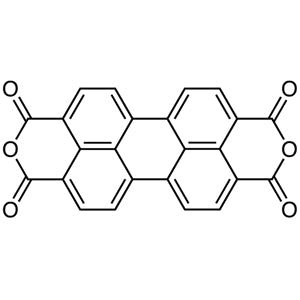
- TCI P2102 128-69-8 3,4,9,10-Perylenetetracarboxylic Dianhydride (purified by sublimation)
- TCI C2920 6053-68-5 1,2,3,4-Cyclopentanetetracarboxylic Dianhydride (purified by sublimation)
- TCI C2919 2754-41-8 1,2,4,5-Cyclohexanetetracarboxylic Dianhydride (purified by sublimation)
- Used in the synthesis of epoxy resins due to its ability to form stable cross-linked networks, enhancing mechanical properties and thermal stability.
- Applied in the development of insulating materials for electronic components, providing high dielectric strength and thermal resistance.
- Utilized in bonding agents for electronic and chemical industries, offering strong adhesion and chemical resistance under various conditions.
- Employed in polymer science research to create advanced materials with tailored properties, such as high thermal and mechanical performance.
- Integrated into material development projects to improve the performance of composite materials and coatings through controlled chemical reactions.
| Brand | TCI |
|---|---|
| CAS number | 89-32-7 |
| Molecular formula | — |
| Purity | — |
| Category | Materials Science > High Purity Compounds > Compounds Purified by Sublimation |
| Pack sizes | Available in various sizes as per standard laboratory requirements |
| Physical form | Solid |
| Storage | Store in a cool, dry place away from moisture and direct sunlight |
Pyromellitic Dianhydride should be stored in a cool, dry environment to maintain its chemical stability and prevent degradation. It is recommended to use airtight containers made of inert materials such as glass or polyethylene to minimize exposure to moisture and contaminants. Due to its reactivity, it should be handled in a well-ventilated area, ideally with appropriate personal protective equipment. Avoid contact with moisture, as it may lead to hydrolysis. Keep the compound away from incompatible substances such as strong acids or bases. Regular inspection of storage conditions is advised to ensure long-term quality and safety in laboratory settings.
—
Product Categories
- High Purity CompoundsCompounds Purified by SublimationMaterial Building Blocks [Compounds Purified by Sublimation]
- Material Building BlocksCovalent Organic Frameworks (COFs) LinkersCarboxylic Anhydride Linkers [Covalent Organic Frameworks (COFs) Linkers]
- Polymer/Macromolecule ReagentsCovalent Organic Frameworks (COFs) LinkersCarboxylic Anhydride Linkers [Covalent Organic Frameworks (COFs) Linkers]
- Polymer/Macromolecule ReagentsMonomersTetracarboxylic Dianhydride Monomers
- Polymer/Macromolecule ReagentsPolyimide Raw MaterialsTetracarboxylic Dianhydrides [Polyimide Raw Materials]
Produk Terkait
-
Naphthalene-1,4,5,8-tetracarboxylicDianhydride(purifiedbysublimation) TCI N0755
Regular price Rp 2.227.050,00Regular priceRp 1.557.150,00Sale price Rp 2.227.050,00 -
3,3',4,4'-BenzophenonetetracarboxylicDianhydride(purifiedbysublimation) TCI B4260
Regular price Rp 2.121.000,00Regular priceRp 1.498.350,00Sale price Rp 2.121.000,00 -
PyromelliticDianhydride TCI B0040
Regular price Rp 505.050,00Regular priceRp 352.800,00Sale price Rp 505.050,00 -
3,4,9,10-PerylenetetracarboxylicDianhydride(purifiedbysublimation) TCI P2102
Regular price Rp 3.021.900,00Regular priceRp 2.112.600,00Sale price Rp 3.021.900,00 -
1,2,3,4-CyclopentanetetracarboxylicDianhydride(purifiedbysublimation) TCI C2920
Regular price Rp 1.565.550,00Regular priceRp 1.094.100,00Sale price Rp 1.565.550,00 -
1,2,4,5-CyclohexanetetracarboxylicDianhydride(purifiedbysublimation) TCI C2919
Regular price Rp 1.565.550,00Regular priceRp 1.094.100,00Sale price Rp 1.565.550,00 -
1,2,3,4-CyclobutanetetracarboxylicDianhydride(purifiedbysublimation) TCI C2842
Regular price Rp 1.908.900,00Regular priceRp 1.334.550,00Sale price Rp 1.908.900,00 -
3,4,9,10-PerylenetetracarboxylicDianhydride TCI P0972
Regular price Rp 1.485.750,00Regular priceRp 1.038.450,00Sale price Rp 1.485.750,00