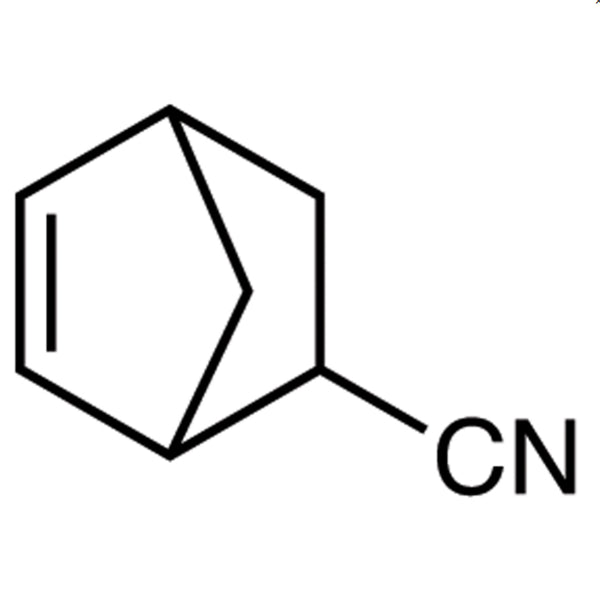
5-Norbornene-2-carbonitrile (mixture of isomers) is a chemical compound widely used in laboratory settings as a building block for the synthesis of complex molecules. This compound plays a crucial role in organic chemistry, particularly in reactions that require high reactivity and the formation of new molecular structures. Its unique chemical properties make it an essential tool for researchers aiming to develop novel compounds and materials. In Indonesian laboratories, this compound is frequently utilized by chemists and young scientists to expand their knowledge in the field of complex molecule synthesis.
The compound's structure, featuring a norbornene ring and a nitrile group, contributes to its reactivity and polarity. These characteristics make it a preferred choice for various chemical reactions, including metathesis, cyclization, and substitution reactions. The presence of the nitrile group enhances its ability to participate in multiple reaction pathways, offering versatility in synthetic strategies. Additionally, its stability under certain conditions allows for easy storage and use in different experimental scales, making it a reliable reagent in both academic and industrial research environments.
In Indonesian laboratories, 5-Norbornene-2-carbonitrile is commonly used in research programs focused on the development of new materials and the application of chemical principles in industrial contexts. Its role in the synthesis of heterocyclic compounds and polymers makes it a valuable resource for advancing scientific knowledge and innovation. Researchers rely on this compound to explore new chemical reactions and to contribute to the broader field of organic chemistry.
Related TCI products
- TCI N0907 95-10-3 5-Norbornene-2-methylamine (mixture of isomers)
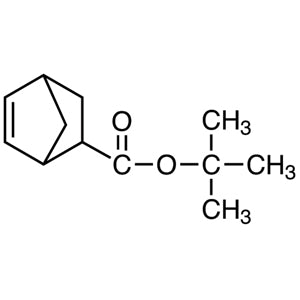
- TCI B4267 154970-45-3 tert-Butyl 5-Norbornene-2-carboxylate (endo- and exo- mixture)
- TCI N0764 85-39-2 5-Norbornene-2,3-dimethanol (mixture of endo- and exo-, predominantly endo-isomer)
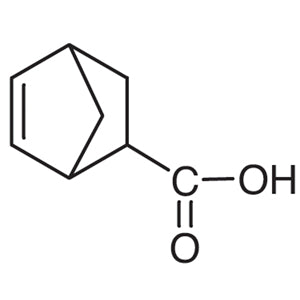
- TCI N0667 120-74-1 5-Norbornene-2-carboxylic Acid (endo- and exo- mixture)
- TCI T4428 13929-58-3 1,4,4a,5,8,8a-Hexahydro-1,4:5,8-dimethanonaphthalene (mixture of isomers) (stabilized with BHT)
- TCI N0979 95-12-5 5-Norbornen-2-methanol (mixture of isomers)
- Organic synthesis of heterocyclic compounds due to its reactivity and structural versatility.
- Polymer development as a building block for creating new materials with specific properties.
- Metathesis reactions where its nitrile group facilitates the formation of new molecular structures.
- Cyclization processes that benefit from its norbornene ring structure for ring formation.
- Substitution reactions where its polar nitrile group enhances reactivity and selectivity.
| Brand | TCI |
|---|---|
| CAS number | 95-11-4 |
| Molecular formula | — |
| Purity | — |
| Category | Chemistry > Building Blocks > Non-Heterocyclic Building Blocks |
| Pack sizes | Available in various quantities as per supplier specifications |
| Physical form | Solid or liquid depending on the specific isomer mixture |
| Storage | Store in a cool, dry place away from direct sunlight |
This compound should be stored in a cool, dry environment, away from direct sunlight and sources of heat. It is recommended to use airtight containers made of materials that are chemically inert, such as glass or polyethylene, to prevent contamination and degradation. Due to its reactivity, it should be handled with care, using appropriate personal protective equipment like gloves and safety goggles. In laboratory settings, it is important to ensure proper ventilation to avoid inhalation of vapors. The compound should not be exposed to incompatible materials, such as strong oxidizing agents, to prevent any adverse chemical reactions. Regular inspection of storage conditions is advised to maintain its stability and usability for research purposes.
—
Produk Terkait
-
5-Norbornene-2-methylamine(mixtureofisomers) TCI N0907
Regular price From Rp 2.068.500,00Regular price -
tert-Butyl5-Norbornene-2-carboxylate(endo-andexo-mixture) TCI B4267
Regular price From Rp 1.485.750,00Regular price -
5-Norbornene-2,3-dimethanol(mixtureofendo-andexo-,predominantlyendo-isomer) TCI N0764
Regular price From Rp 2.016.000,00Regular price -
5-Norbornene-2-carboxylicAcid(endo-andexo-mixture) TCI N0667
Regular price From Rp 689.850,00Regular price -
1,4,4a,5,8,8a-Hexahydro-1,4:5,8-dimethanonaphthalene(mixtureofisomers)(stabilizedwithBHT) TCI T4428
Regular price From Rp 4.056.150,00Regular price -
5-Norbornen-2-methanol(mixtureofisomers) TCI N0979
Regular price From Rp 955.500,00Regular price -
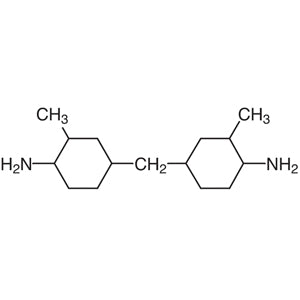
4,4'-Methylenebis(2-methylcyclohexylamine)(mixtureofisomers) TCI M1422
Regular price From Rp 505.050,00Regular price -
2,4(or4,6)-Diethyl-6(or2)-methylbenzene-1,3-diamine(mixtureofisomers) TCI D6282
Regular price From Rp 1.618.050,00Regular price