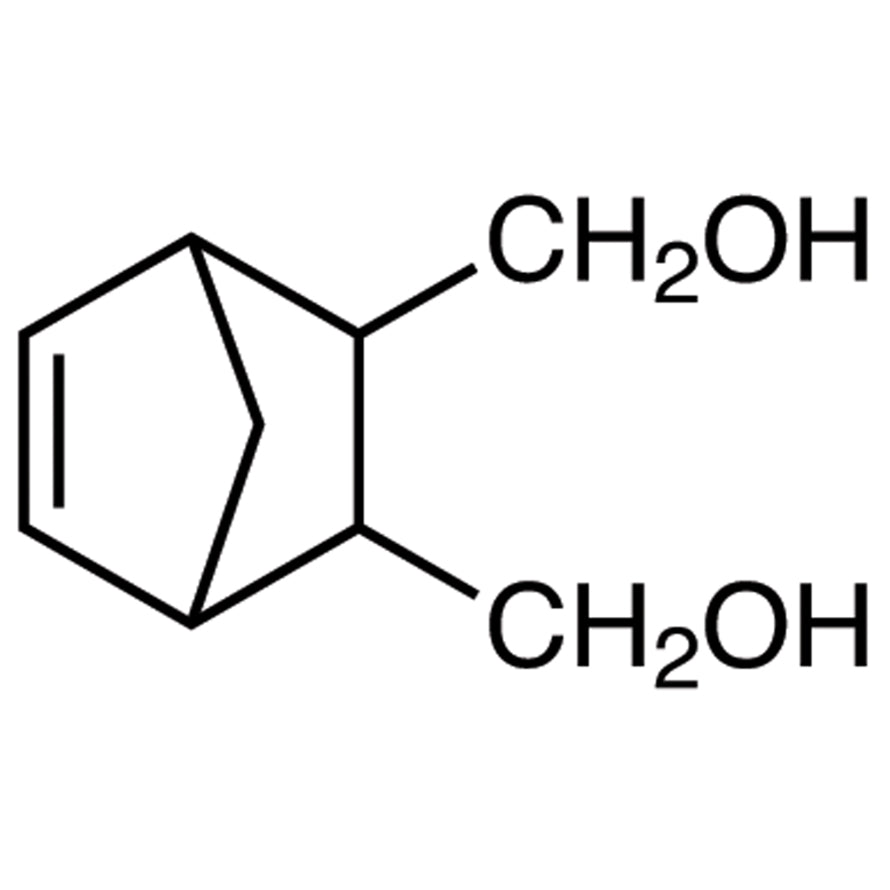
5-Norbornene-2,3-dimethanol from TCI (product code N0764, CAS 85-39-2) is a bicyclic diol built on a norbornene skeleton. The skeleton has one C=C double bond and two hydroxymethyl groups at positions 2 and 3. The product is a mixture of endo and exo isomers, with the endo isomer as the main component. In the laboratory it serves as a versatile building block because each molecule carries two different kinds of reactive group. The strained norbornene alkene can be polymerized or functionalized, and the two primary alcohol groups can be used for esterification, urethane formation, or other follow-up reactions.
This combination of functional groups is what makes the material useful. The norbornene double bond sits in a strained ring, so it is highly reactive in ring-opening metathesis polymerization (ROMP) and in addition reactions such as thiol-ene chemistry. The two primary hydroxyl groups are fairly easy to reach, which suits them to condensation reactions. As a result, the compound can act as a diol monomer for polyesters and polyurethanes while its alkene group stays free for later crosslinking. Because it is sold as an isomer mixture, it is a cost-effective option for work that does not need a single pure stereoisomer.
In Indonesian laboratories, this compound is mostly used in university research groups working on organic synthesis and polymer chemistry, in materials science laboratories, and in industrial R&D units that develop resins, coatings, or functional polymers. Researchers exploring ROMP-based materials, crosslinkable polyesters, or thiol-ene networks can use it as a starting monomer or intermediate. It also works well as a teaching and research compound for showing how strained alkenes and primary alcohols can be used selectively within one molecule.
TCI brochures (PDF)
- Norbornene-Based Cyclic Olefin Monomers 2026-07-02 · p. 2
- Monomers 2025-05-28 · p. 19
Related TCI products
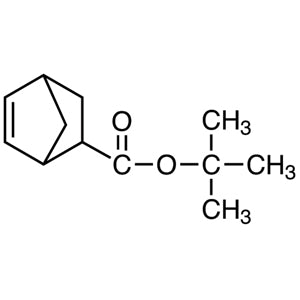
- TCI B4267 154970-45-3 tert-Butyl 5-Norbornene-2-carboxylate (endo- and exo- mixture)
- TCI N0907 95-10-3 5-Norbornene-2-methylamine (mixture of isomers)
- TCI N0897 95-11-4 5-Norbornene-2-carbonitrile (mixture of isomers)
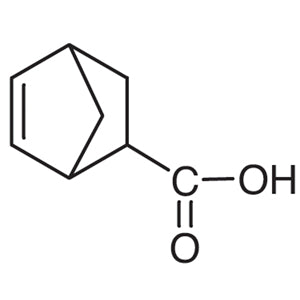
- TCI N0667 120-74-1 5-Norbornene-2-carboxylic Acid (endo- and exo- mixture)
- TCI T0651 25498-49-1 Tripropylene Glycol Monomethyl Ether (mixture of isomer)
- TCI N0769 699-95-6 5-Norbornene-2-exo,3-exo-dimethanol
- Ring-opening metathesis polymerization (ROMP): the strained norbornene double bond reacts readily with metathesis catalysts, so the compound is a good monomer for polymers that carry pendant hydroxymethyl groups.
- Thiol-ene addition and alkene functionalization: the reactive strained alkene takes part efficiently in addition reactions, so researchers can attach thiol-containing molecules or build crosslinked networks.
- Polyester synthesis: the two primary hydroxyl groups can react with diacids or their derivatives, giving polyesters that keep an alkene group available for later crosslinking or modification.
- Polyurethane formation: the diol can react with isocyanates to build urethane linkages, and the norbornene unit adds a reactive site for further curing or functionalization.
- General organic synthesis building block: with two alcohol groups and one strained alkene in one molecule, it is a versatile intermediate for esterification, derivatization, and multistep synthesis where stereochemical purity is not critical.
| Brand | TCI (product code N0764) |
|---|---|
| CAS number | 85-39-2 |
| Molecular formula | — |
| Purity | — |
| Category | Chemistry > Building Blocks > Non-Heterocyclic Building Blocks |
| Pack sizes | as listed on the product page |
| Physical form | — |
| Storage | follow the conditions stated on the TCI label and Safety Data Sheet |
- Composition: mixture of endo- and exo-isomers, predominantly endo-isomer
Keep 5-Norbornene-2,3-dimethanol in its original, tightly closed container in a cool, dry, well-ventilated place, away from direct sunlight, heat sources, and incompatible materials such as strong oxidizing agents. Reseal the container promptly after each use to limit exposure to moisture and air. Handle the material in a fume hood or well-ventilated area, and wear standard laboratory protective equipment, including safety glasses, chemical-resistant gloves, and a lab coat. Avoid contact with skin and eyes, and avoid breathing in any vapors or dust. Always read the TCI Safety Data Sheet before use for the specific storage conditions, hazards, and first-aid measures, and dispose of waste according to local regulations and institutional procedures.
—
Produk Terkait
-
tert-Butyl5-Norbornene-2-carboxylate(endo-andexo-mixture) TCI B4267
Regular price From Rp 1.485.750,00Regular price -
5-Norbornene-2-methylamine(mixtureofisomers) TCI N0907
Regular price From Rp 2.068.500,00Regular price -
5-Norbornene-2-carbonitrile(mixtureofisomers) TCI N0897
Regular price From Rp 1.298.850,00Regular price -
5-Norbornene-2-carboxylicAcid(endo-andexo-mixture) TCI N0667
Regular price From Rp 689.850,00Regular price -
TripropyleneGlycolMonomethylEther(mixtureofisomer) TCI T0651
Regular price From Rp 452.550,00Regular price -
5-Norbornene-2-exo,3-exo-dimethanol TCI N0769
Regular price From Rp 2.837.100,00Regular price -
5-Norbornene-2-endo,3-endo-dimethanol TCI N0768
Regular price From Rp 1.803.900,00Regular price -
Methyl5-Norbornene-2-carboxylate(endo-andexo-mixture) TCI N0691
Regular price Rp 6.228.600,00Regular price