

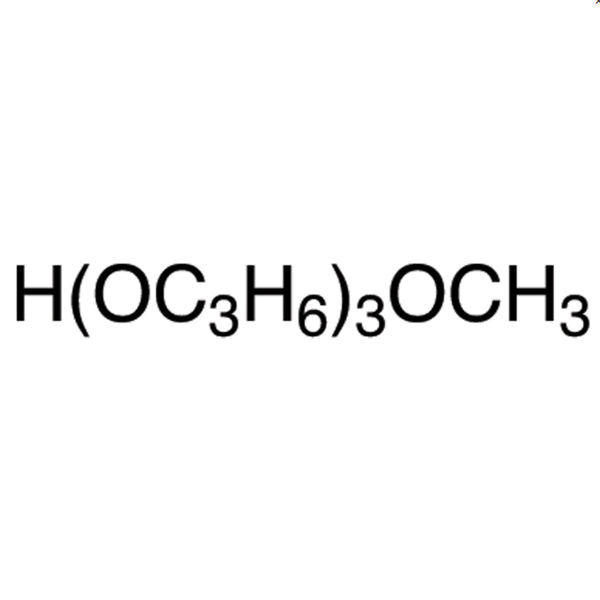
Tripropylene Glycol Monomethyl Ether (TPMME), with CAS number 25498-49-1, is a versatile chemical compound widely used in laboratory settings. As a non-heterocyclic building block, TPMME plays a crucial role in organic synthesis and analytical processes. Its ability to dissolve a wide range of organic compounds makes it an essential reagent for chemists. TPMME is commonly used in the preparation of complex chemical structures and in purification processes. Its chemical stability and inertness make it a reliable choice for laboratory applications where consistency and safety are paramount.
TPMME is valued for its high boiling point and strong solvating power, which allow it to dissolve both polar and non-polar substances effectively. These properties make it suitable for use in various chemical reactions and extraction techniques. Its stability under normal laboratory conditions ensures that it remains effective without undergoing significant degradation. Additionally, TPMME’s low reactivity minimizes the risk of unwanted side reactions, making it a preferred solvent for many synthetic and analytical procedures.
In Indonesian laboratories, TPMME is frequently used in academic and research institutions, including universities and research centers. It is particularly relevant in chemical, pharmaceutical, and industrial laboratories that require high-quality solvents. Its availability in the local market ensures that researchers can access this essential compound for their experiments and studies. Its reliability and performance make it a standard component in many laboratory workflows.
Related TCI products
- TCI T1372 23783-42-8 Tetraethylene Glycol Monomethyl Ether
- TCI B2402 111-32-0 1,4-Butanediol Monomethyl Ether
- TCI T0709 112-35-6 Triethylene Glycol Monomethyl Ether
- TCI T0523 24800-44-0 Tripropylene Glycol (mixture of isomers)
- TCI P1159 23778-52-1 Pentaethylene Glycol Monomethyl Ether
- TCI O0296 25990-96-9 Octaethylene Glycol Monomethyl Ether
- Organic synthesis where TPMME serves as a versatile solvent for dissolving a wide range of organic compounds and facilitating chemical reactions.
- Purification processes due to its ability to dissolve both polar and non-polar substances, making it ideal for extraction and separation techniques.
- Analytical chemistry applications where its stability and inertness ensure accurate and consistent results in various analytical methods.
- Pharmaceutical research for the preparation of complex chemical structures and the development of new compounds.
- Industrial laboratory settings where TPMME is used for its high solvating power and chemical stability in various production and testing procedures.
| Brand | TCI |
|---|---|
| CAS number | 25498-49-1 |
| Molecular formula | — |
| Purity | — |
| Category | Chemistry > Building Blocks > Non-Heterocyclic Building Blocks |
| Pack sizes | Available in various quantities as per standard laboratory requirements |
| Physical form | Liquid |
| Storage | Store in a cool, dry place away from direct sunlight and incompatible materials |
TPMME should be stored in a cool, dry location, away from direct sunlight and sources of heat. It is recommended to use sealed containers made of materials compatible with organic solvents, such as glass or high-density polyethylene. Due to its chemical stability, TPMME does not require refrigeration under normal conditions. However, it should be kept away from strong oxidizing agents and incompatible substances to prevent any potential reactions. In laboratory settings, proper ventilation and personal protective equipment should be used when handling TPMME to ensure safety and compliance with standard operating procedures.
—
Produk Terkait
-
TetraethyleneGlycolMonomethylEther TCI T1372
Regular price From Rp 1.881.600,00Regular priceRp 1.331.400,00Sale price From Rp 1.881.600,00 -
1,4-ButanediolMonomethylEther TCI B2402
Regular price From Rp 2.411.850,00Regular priceRp 1.702.050,00Sale price From Rp 2.411.850,00 -
TriethyleneGlycolMonomethylEther TCI T0709
Regular price From Rp 582.750,00Regular priceRp 423.150,00Sale price From Rp 582.750,00 -
TripropyleneGlycol(mixtureofisomers) TCI T0523
Regular price From Rp 530.250,00Regular priceRp 386.400,00Sale price From Rp 530.250,00 -
PentaethyleneGlycolMonomethylEther TCI P1159
Regular price From Rp 4.796.400,00Regular priceRp 3.369.450,00Sale price From Rp 4.796.400,00 -
OctaethyleneGlycolMonomethylEther TCI O0296
Regular price From Rp 5.300.400,00Regular priceRp 3.722.250,00Sale price From Rp 5.300.400,00 -
5-Norbornene-2,3-dimethanol(mixtureofendo-andexo-,predominantlyendo-isomer) TCI N0764
Regular price From Rp 2.068.500,00Regular priceRp 1.461.600,00Sale price From Rp 2.068.500,00 -
NonaethyleneGlycolMonomethylEther TCI N0699
Regular price From Rp 4.266.150,00Regular priceRp 2.998.800,00Sale price From Rp 4.266.150,00


