
![944451-10-9 [NH2Me2][(RuCl((S)-xylbinap))2(mu-Cl)3] - AMI Scientific](http://amiscientific.com/cdn/shop/files/TCI2510N1020.jpg?v=1767130685&width=1946)
![944451-10-9 [NH2Me2][(RuCl((S)-xylbinap))2(mu-Cl)3] - AMI Scientific](http://amiscientific.com/cdn/shop/files/TCI2510N1020.jpg?v=1767130685&width=1445)
TCI N1020, with the CAS number 944451-10-9, is a complex compound used in asymmetric synthesis. It is a chiral catalyst containing a ruthenium center, which plays a crucial role in facilitating selective chemical reactions. This material is widely utilized in laboratories to produce chiral products with high stereocontrol. Its unique structure allows it to act as an efficient chiral catalyst, making it a valuable tool in synthetic chemistry.
The compound's effectiveness stems from its stable structure and high reactivity. It maintains its catalytic activity under various reaction conditions, ensuring consistent results. The chiral nature of the molecule enables it to selectively promote the formation of desired enantiomers, which is essential in pharmaceutical and organic synthesis. Its ability to function without significant degradation makes it a reliable choice for long-term research applications.
In Indonesian laboratories, TCI N1020 is commonly used in organic chemistry research, particularly in asymmetric synthesis projects. It is especially relevant for studies involving the development of chiral compounds, which are critical in drug discovery and fine chemical manufacturing. Its versatility and performance make it a preferred material for researchers working on stereocontrolled reactions.
TCI brochures (PDF)
- Ruthenium Complex Catalysts for Asymmetric Hydrogenation to Optically Active Amines 2025-11-10 · p. 2
- Hydrogenation Catalysts 2025-11-10 · p. 7
Related TCI products
- Asymmetric Synthesis: TCI N1020 is ideal for asymmetric synthesis due to its chiral ruthenium center, which enables precise stereocontrol in complex molecule formation.
- Organic Chemistry Research: This compound is widely used in organic chemistry for producing chiral products with high enantiomeric purity, supporting advanced synthetic methodologies.
- Pharmaceutical Development: Its ability to catalyze selective reactions makes it suitable for drug synthesis, where stereochemistry is critical for biological activity.
- Catalytic Reactions: The compound's stability and reactivity make it a preferred choice for catalytic processes requiring high efficiency and selectivity.
- Academic Research: TCI N1020 is frequently employed in academic settings for teaching and research, providing students and scientists with a reliable tool for exploring asymmetric catalysis.
| Brand | TCI |
|---|---|
| CAS number | 944451-10-9 |
| Molecular formula | — |
| Purity | — |
| Category | Chemistry > Asymmetric Synthesis > Chiral Catalysts, Chiral Ligands, Chiral Reagents |
| Pack sizes | — |
| Physical form | — |
| Storage | Store in a cool, dry place away from light |
TCI N1020 should be stored in a cool, dry place, away from direct sunlight and moisture. It is recommended to keep the material in a sealed container to prevent exposure to air and humidity. Due to its chemical nature, it should be handled with appropriate personal protective equipment, such as gloves and safety goggles. Avoid contact with incompatible substances and ensure proper ventilation in the workspace. Regular monitoring of storage conditions is advised to maintain the compound's stability and effectiveness. Always follow standard laboratory safety protocols when working with this material.
—
Product Categories
- Asymmetric SynthesisChiral Catalysts, Chiral Ligands, Chiral ReagentsHydrogenation [Asymmetric Synthesis]
- Catalysis and Inorganic ChemistryHydrogenation [Catalysis]Asymmetric Hydrogenation Catalysts
- Catalysis and Inorganic ChemistryTransition Elements [Catalysis and Inorganic Chemistry]Ruthenium [Catalysis and Inorganic Chemistry]
Produk Terkait
-
Ru(OAc)2[(S)-xylbinap] TCI R0171
Regular price From Rp 1.485.750,00Regular price -
Ru(OAc)2[(R)-xylbinap] TCI R0170
Regular price From Rp 1.485.750,00Regular price -
(R)-RUCY(regR)-XylBINAP TCI R0139
Regular price From Rp 1.485.750,00Regular price -
(S)-RUCY(regR)-XylBINAP TCI R0138
Regular price From Rp 1.485.750,00Regular price -
RuCl2[(R)-xylbinap][(R,R)-dpen] TCI R0135
Regular price From Rp 1.485.750,00Regular price -
RuCl2[(S)-xylbinap][(S,S)-dpen] TCI R0134
Regular price From Rp 1.485.750,00Regular price -
RuCl2[(R)-xylbinap][(R)-daipen] TCI R0133
Regular price From Rp 1.485.750,00Regular price -
RuCl2[(S)-xylbinap][(S)-daipen] TCI R0132
Regular price From Rp 1.485.750,00Regular price
![374067-49-9 Ru(OAc)2[(S)-xylbinap] - AMI Scientific](http://amiscientific.com/cdn/shop/files/TCI2510R0171.jpg?v=1767138025&width=533)
![374067-50-2 Ru(OAc)2[(R)-xylbinap] - AMI Scientific](http://amiscientific.com/cdn/shop/files/TCI2510R0170.jpg?v=1767138021&width=533)
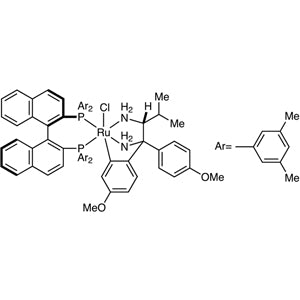
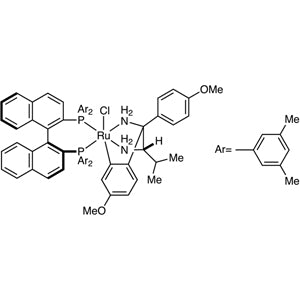
![220114-38-5 RuCl2[(R)-xylbinap][(R,R)-dpen] - AMI Scientific](http://amiscientific.com/cdn/shop/files/TCI2510R0135.jpg?v=1767137945&width=533)
![220114-03-4 RuCl2[(S)-xylbinap][(S,S)-dpen] - AMI Scientific](http://amiscientific.com/cdn/shop/files/TCI2510R0134.jpg?v=1767137941&width=533)
![220114-32-9 RuCl2[(R)-xylbinap][(R)-daipen] - AMI Scientific](http://amiscientific.com/cdn/shop/files/TCI2510R0133.jpg?v=1767137936&width=533)
![220114-01-2 RuCl2[(S)-xylbinap][(S)-daipen] - AMI Scientific](http://amiscientific.com/cdn/shop/files/TCI2510R0132.jpg?v=1767137932&width=533)