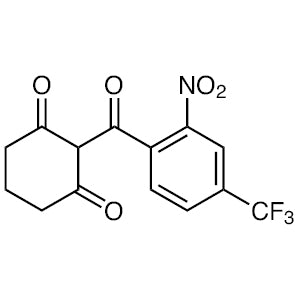
Nitisinone is a chemical compound widely used in pharmacological and biochemical research to study specific metabolic mechanisms within the body. As a pharmaceutical research reagent, it plays a crucial role in experimental settings where understanding drug metabolism and biological effects is essential. This compound is commonly found in laboratories focused on drug development and the investigation of the biological impacts of specific substances. Its application extends to early clinical trials and the formulation of new therapeutic agents, making it an indispensable tool for researchers in the field of pharmacology and biochemistry.
Nitisinone is valued for its stable chemical properties and strong reactivity, which make it suitable for a wide range of experimental procedures. It exhibits good solubility in organic solvents, facilitating its use in various analytical methods. These characteristics ensure consistent and reliable results, which are vital for scientific research. The compound’s predictable behavior and compatibility with different experimental setups further enhance its appeal among researchers. Its reliability and performance in laboratory settings make it a preferred choice for those conducting high-quality, reproducible experiments.
In Indonesian laboratories, Nitisinone is extensively used in scientific research, particularly in pharmacology and biochemistry. It is frequently employed in studies related to pharmacological effects and the metabolism of specific compounds. Researchers in Indonesia rely on Nitisinone to support experiments that require high-quality, stable reagents. Its consistent performance and reliability make it a trusted material in both academic and industrial research environments.
TCI brochures (PDF)
- Pharmaceutical Ingredients for Research and Experimental Use 2026-03-09 · p. 47
- Pharmacological research for studying drug metabolism and biological effects of compounds.
- Biochemical experiments to investigate metabolic pathways and enzyme interactions.
- Development of new pharmaceuticals through early-stage clinical trials and formulation studies.
- Analytical testing in drug discovery processes requiring stable and reactive reagents.
- Investigation of the pharmacological impact of specific substances on cellular and physiological functions.
| Brand | TCI |
|---|---|
| CAS number | 104206-65-7 |
| Molecular formula | — |
| Purity | — |
| Category | Life Science > Biochemicals and Reagents > Pharmaceutical Research Reagents |
| Pack sizes | As available |
| Physical form | Solid (as per standard product description) |
| Storage | Store in a cool, dry place away from light and moisture. |
Nitisinone should be stored in a cool, dry environment, away from direct light and moisture to maintain its chemical stability. It is recommended to use airtight containers to prevent contamination and degradation. Due to its reactivity, it should be handled with care, using appropriate personal protective equipment such as gloves and safety goggles. In laboratory settings, it is important to ensure proper ventilation to avoid inhalation of vapors. The compound should be kept in a secure location, away from incompatible materials to prevent any potential chemical reactions. Regular monitoring of storage conditions will help ensure the integrity and effectiveness of the reagent for experimental use.
—
Product Categories
- Biochemicals and ReagentsPharmaceutical Research Reagents (for Experimental Use)Pharmaceutical Research Reagents (Others)
- Molecular BiologyAntioxidants [Life Science]
- Pharmaceutical Development and Drug Discovery ResearchPharmaceutical Research Reagents (for Experimental Use)Pharmaceutical Research Reagents (Others)
Produk Terkait
-
Melatonin TCI M1105
Regular price From Rp 1.988.700,00Regular priceRp 1.405.950,00Sale price From Rp 1.988.700,00 -
3-Methyl-1-phenyl-5-pyrazolone TCI M0687
Regular price From Rp 610.050,00Regular priceRp 442.050,00Sale price From Rp 610.050,00 -
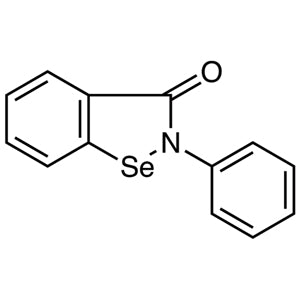
Ebselen TCI E0946
Regular price From Rp 1.881.600,00Regular priceRp 1.331.400,00Sale price From Rp 1.881.600,00 -
Bendazac TCI B4223
Regular price From Rp 1.378.650,00Regular priceRp 979.650,00Sale price From Rp 1.378.650,00 -
gamma-Oryzanol TCI O0172
Regular price From Rp 1.298.850,00Regular priceRp 924.000,00Sale price From Rp 1.298.850,00 -
Hesperidin TCI H0049
Regular price From Rp 1.272.600,00Regular priceRp 905.100,00Sale price From Rp 1.272.600,00 -
n-OctylGallate TCI G0206
Regular price From Rp 1.643.250,00Regular priceRp 1.164.450,00Sale price From Rp 1.643.250,00 -
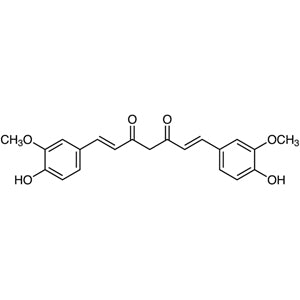
Curcumin(Synthetic) TCI C2302
Regular price From Rp 1.246.350,00Regular priceRp 887.250,00Sale price From Rp 1.246.350,00