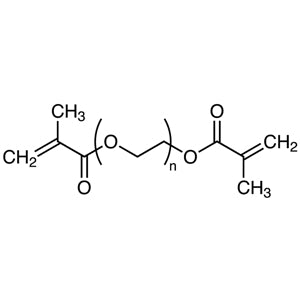
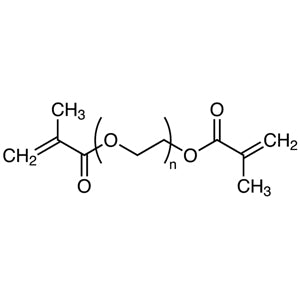
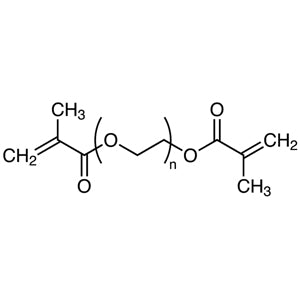
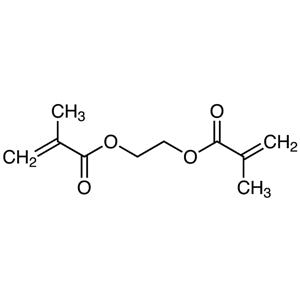
Nonamethylene Glycol Dimethacrylate (NMDA), with CAS number 65833-30-9, is a chemical compound widely used as a monomer in polymer synthesis. It serves as a fundamental building block in the creation of various polymers, including resins, composites, and adhesives. In laboratory settings, NMDA is essential for developing materials with specific mechanical and chemical properties. Its versatility makes it a key component in both academic and industrial research, particularly in materials science and polymer chemistry.
NMDA is valued for its chemical stability and reactivity, allowing it to bond with other monomers to form complex polymer networks. The stabilization with MEHQ (methyl ethyl glycol hydroquinone) enhances its shelf life and minimizes unwanted reactions, ensuring consistent performance. This combination of stability and reactivity makes NMDA a preferred choice for laboratories requiring high-quality, reliable materials. Its ability to maintain chemical integrity under controlled conditions further supports its use in sensitive applications.
In Indonesian laboratories, NMDA is commonly used in research related to polymer chemistry, material development, and composite manufacturing. It plays a vital role in creating new materials with broad applications, such as in construction, medical devices, and advanced industrial products. Its presence in these research areas highlights its importance in driving innovation and technological advancement in the region.
TCI brochures (PDF)
- Monomers 2025-05-28 · p. 9
Related TCI products
- TCI T3488 2082-81-7 Tetramethylene Glycol Dimethacrylate (stabilized with MEHQ)
- TCI T3486 109-17-1 Tetraethylene Glycol Dimethacrylate (stabilized with HQ)
- TCI T1352 25852-47-5 Polyethylene Glycol Dimethacrylate (n=approx 4) (stabilized with MEHQ)
- TCI T0948 109-16-0 Triethylene Glycol Dimethacrylate (stabilized with MEHQ)
- TCI P2760 25852-47-5 Polyethylene Glycol Dimethacrylate (n=approx 14) (stabilized with MEHQ)
- TCI P2709 25852-47-5 Polyethylene Glycol Dimethacrylate (n=approx 9) (stabilized with MEHQ)
- Polymer synthesis and composite material development due to its role as a reactive monomer in forming cross-linked networks.
- Adhesive formulation for bonding various substrates because of its ability to form strong, durable bonds.
- Research in polymer chemistry for studying polymerization mechanisms and structural properties.
- Development of medical-grade materials for applications such as dental composites and biocompatible polymers.
- Industrial applications in manufacturing processes requiring high-performance, chemically stable polymers.
| Brand | TCI |
|---|---|
| CAS number | 65833-30-9 |
| Molecular formula | — |
| Purity | — |
| Category | Materials Science > Polymer/Macromolecule Reagents > Monomers |
| Pack sizes | Available in standard laboratory quantities as per supplier specifications |
| Physical form | Liquid |
| Storage | Store in a cool, dark place away from oxidizing agents |
Nonamethylene Glycol Dimethacrylate should be stored in a cool, dark environment to maintain its chemical stability. It is recommended to keep the material in a sealed container to prevent exposure to air and moisture. Due to its potential reactivity, it should be stored away from strong oxidizing agents and heat sources. Proper labeling and secure storage are essential to ensure safety in the laboratory. Always use appropriate personal protective equipment when handling this compound to minimize exposure risks. Regular monitoring of storage conditions is advised to maintain product integrity and ensure safe laboratory practices.
—
Product Categories
Produk Terkait
-
TetramethyleneGlycolDimethacrylate(stabilizedwithMEHQ) TCI T3488
Regular price Rp 3.763.200,00Regular price -
TetraethyleneGlycolDimethacrylate(stabilizedwithHQ) TCI T3486
Regular price From Rp 1.298.850,00Regular price -
PolyethyleneGlycolDimethacrylate(n=approx4)(stabilizedwithMEHQ) TCI T1352
Regular price From Rp 505.050,00Regular price -
TriethyleneGlycolDimethacrylate(stabilizedwithMEHQ) TCI T0948
Regular price From Rp 505.050,00Regular price -
PolyethyleneGlycolDimethacrylate(n=approx14)(stabilizedwithMEHQ) TCI P2760
Regular price From Rp 610.050,00Regular price -
PolyethyleneGlycolDimethacrylate(n=approx9)(stabilizedwithMEHQ) TCI P2709
Regular price From Rp 610.050,00Regular price -
NeopentylGlycolDimethacrylate(stabilizedwithMEHQ) TCI N0780
Regular price From Rp 717.150,00Regular price -
EthyleneGlycolDimethacrylate(stabilizedwithHQ) TCI E0102
Regular price From Rp 452.550,00Regular price