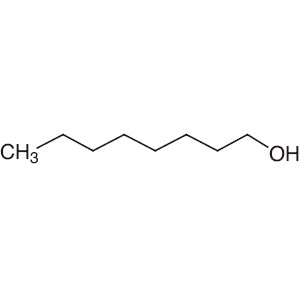
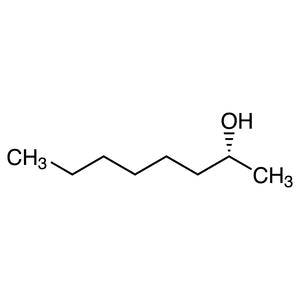
3-Octanol is a chemical compound widely used in various chemical experiments and molecular synthesis processes. As a fundamental building block in organic chemistry, it serves as a key component in the creation of more complex compounds. Its versatility makes it an essential material for researchers and chemists working in both academic and industrial settings. In the laboratory, 3-Octanol is commonly used as a solvent or a reagent in multiple reactions, including substitution, esterification, and others that require hydroxyl groups. Its chemical stability and moderate reactivity make it a reliable choice for a wide range of chemical applications.
One of the main reasons 3-Octanol is preferred is its chemical stability and good solubility in organic solvents. It is a colorless liquid with a distinct odor, which makes it easy to identify and handle. Its solubility properties allow it to be used in a variety of laboratory procedures, including purification and analysis of compounds. Additionally, its non-toxic nature and relatively safe handling characteristics make it a popular choice for use in laboratories. These features ensure that it is both practical and safe for routine laboratory work.
In Indonesian laboratories, 3-Octanol is frequently used in chemical research, education, and pharmaceutical industries. It is commonly found in academic institutions and research facilities where it supports various experimental and analytical processes. Its availability and reliability make it a go-to compound for both teaching and practical applications in the chemical sciences. Its role in supporting scientific research and development is significant in the context of Indonesia’s growing scientific community.
- Chemical synthesis: 3-Octanol is ideal for organic synthesis due to its hydroxyl group, which can participate in various reaction mechanisms.
- Solvent use: Its solubility in organic solvents makes it a preferred choice for dissolving and mixing compounds in laboratory experiments.
- Esterification reactions: The hydroxyl group in 3-Octanol enables it to be used in esterification processes, facilitating the formation of ester compounds.
- Isolation and purification: It is often used as a solvent in the isolation and purification of organic compounds due to its favorable solubility properties.
- Teaching and research: Its stability and safety make it suitable for educational purposes and research applications in both academic and industrial settings.
| Brand | TCI |
|---|---|
| CAS number | 589-98-0 |
| Molecular formula | — |
| Purity | — |
| Category | Chemistry > Building Blocks > Non-Heterocyclic Building Blocks |
| Pack sizes | Available in various sizes as per supplier specifications |
| Physical form | Colorless liquid |
| Storage | Store in a cool, dry place away from direct sunlight |
3-Octanol should be stored in a cool, dry place, away from direct sunlight and incompatible materials. It is recommended to use airtight containers made of glass or polyethylene to prevent contamination and evaporation. Due to its moderate reactivity, it should be handled with care, avoiding contact with strong oxidizing agents or acids. In laboratory settings, proper ventilation is essential to ensure safe handling. Always use appropriate personal protective equipment, such as gloves and safety goggles, when working with this compound. Its non-toxic nature makes it relatively safe, but following standard laboratory safety protocols is crucial for maintaining a secure working environment.
—
Produk Terkait
-
8-Bromo-1-octanol TCI B1729
Regular price From Rp 3.525.900,00Regular price -
1-Octanol[forDeterminingPartitionCoefficients] TCI O0212
Regular price Rp 4.108.650,00Regular price -
4-Octanol TCI O0155
Regular price Rp 2.491.650,00Regular price -
2-Octanol TCI O0037
Regular price Rp 637.350,00Regular price -
1-Octanol TCI O0036
Regular price From Rp 477.750,00Regular price -
8-Chloro-1-n-octanol TCI C2448
Regular price From Rp 1.246.350,00Regular price -
1H,1H,2H,2H-Tridecafluoro-1-n-octanol TCI T2528
Regular price From Rp 875.700,00Regular price -
(R)-(-)-2-Octanol TCI O0145
Regular price From Rp 3.155.250,00Regular price

![111-87-5 1-Octanol [for Determining Partition Coefficients] - AMI Scientific](http://amiscientific.com/cdn/shop/files/TCI2510O0212.jpg?v=1768362231&width=533)