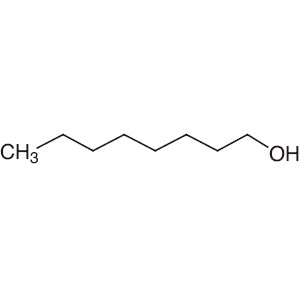
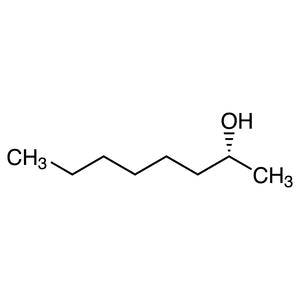
![111-87-5 1-Octanol [for Determining Partition Coefficients] - AMI Scientific](http://amiscientific.com/cdn/shop/files/TCI2510O0212.jpg?v=1768362231&width=1946)
![111-87-5 1-Octanol [for Determining Partition Coefficients] - AMI Scientific](http://amiscientific.com/cdn/shop/files/TCI2510O0212.jpg?v=1768362231&width=1445)
1-Octanol [for Determining Partition Coefficients] from TCI (product code O0212) is a straight-chain, eight-carbon primary alcohol supplied in a special grade for determining octanol-water partition coefficients. The partition coefficient, usually expressed as log P or log Kow, is a key parameter for describing how lipophilic a compound is. In the laboratory, 1-octanol serves as the standard organic phase that mimics a lipid environment. How a compound distributes between octanol and water can therefore be used to estimate how it behaves in biological and environmental systems.
This special grade matters because partition coefficient determination is highly sensitive to impurities. Contaminants in the solvent can interfere with measuring the analyte concentration, especially when the analysis uses UV spectrophotometry or chromatography. 1-Octanol itself is the accepted reference phase because it combines a hydrophobic hydrocarbon chain with a hydroxyl group that can form hydrogen bonds, which gives it properties similar to biological membranes. It is also only slightly miscible with water, so it forms two clearly separated phases after shaking and phase separation. This gives reliable and reproducible results.
In Indonesian laboratories, this product is especially relevant for pharmaceutical research and development, where lipophilicity data helps assess the absorption and distribution potential of drug candidates. University research groups in medicinal chemistry, pharmacy and environmental science use it to characterize newly synthesized compounds and natural product extracts. Environmental and regulatory testing laboratories also use octanol-water partition data to estimate the bioaccumulation potential and environmental fate of chemicals, so a consistent, dedicated grade is a practical choice for routine and research work.
- Shake-flask log P determination, where the special grade gives a clean organic phase that does not interfere with measuring the analyte concentration in either layer.
- Lipophilicity profiling of drug candidates, because octanol-water distribution is a widely used way to estimate membrane permeability and absorption behaviour in pharmaceutical research.
- Environmental fate assessment of chemicals, since log Kow values help estimate bioaccumulation potential and how substances distribute between water and organic matter.
- Characterization of newly synthesized compounds and natural product extracts in academic laboratories, where comparable partition data supports structure-activity studies and publications.
- Analytical method work that uses UV spectrophotometry or chromatography after phase separation, where low interference from solvent impurities improves measurement accuracy and reproducibility.
| Brand | TCI (product code O0212) |
|---|---|
| CAS number | 111-87-5 |
| Molecular formula | — |
| Purity | — |
| Category | Chemistry > Building Blocks > Non-Heterocyclic Building Blocks |
| Pack sizes | see the available options on the product page |
| Physical form | liquid; store in a tightly closed container as described below |
| Storage | — |
- Grade: for determining partition coefficients
Store 1-Octanol in its original tightly closed container in a cool, dry and well-ventilated area, away from heat sources, open flames and strong oxidizing agents. Keep the container sealed when it is not in use so the solvent does not pick up moisture or contaminants, because either one can affect partition coefficient results. Use clean glass equipment when you dispense the solvent. Handle it in a well-ventilated area or a fume hood, and wear suitable gloves, safety glasses and a lab coat. Avoid contact with skin and eyes, and do not breathe in the vapour. Always read the supplier's Safety Data Sheet for detailed hazard information, first aid measures and disposal guidance before use.
—
Produk Terkait
-
8-Bromo-1-octanol TCI B1729
Regular price From Rp 3.525.900,00Regular price -
4-Octanol TCI O0155
Regular price Rp 2.491.650,00Regular price -
3-Octanol TCI O0121
Regular price From Rp 1.140.300,00Regular price -
2-Octanol TCI O0037
Regular price Rp 637.350,00Regular price -
1-Octanol TCI O0036
Regular price From Rp 477.750,00Regular price -
8-Chloro-1-n-octanol TCI C2448
Regular price From Rp 1.246.350,00Regular price -
1H,1H,2H,2H-Tridecafluoro-1-n-octanol TCI T2528
Regular price From Rp 875.700,00Regular price -
(R)-(-)-2-Octanol TCI O0145
Regular price From Rp 3.155.250,00Regular price