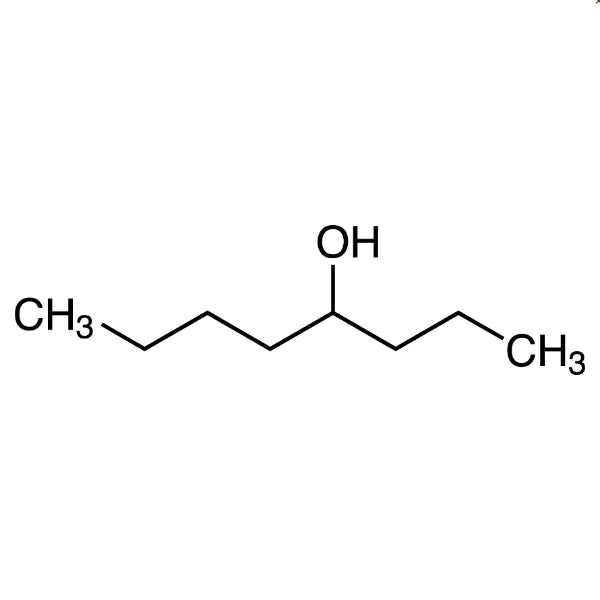
TCI 4-Octanol (CAS 589-62-8) is an eight-carbon secondary alcohol. Its hydroxyl group sits on the fourth carbon, so a propyl chain lies on one side and a butyl chain on the other. In organic chemistry laboratories it is used as a non-heterocyclic building block for making branched ketones, esters, ethers and alkyl halides. It is also a model compound for studying secondary alcohol reactions and a reference compound in chromatographic analysis of octanol isomers.
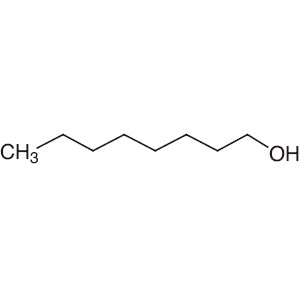
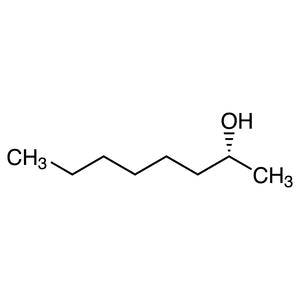
Researchers choose 4-Octanol because its hydroxyl group sits in the middle of the carbon chain. This gives it different reactivity and physical behaviour from both 1-octanol and 2-octanol. That difference matters in studies of how the position of a functional group affects reaction rate, selectivity or retention behaviour. The secondary hydroxyl group is easy to oxidise to 4-octanone, to esterify, or to turn into a leaving group for further substitution. The alkyl chains give it good solubility in common organic solvents, which makes it practical in many reaction and analytical systems.
In Indonesia, 4-Octanol suits university organic chemistry laboratories where students and researchers study secondary alcohol chemistry and prepare branched derivatives. It also fits analytical laboratories that work with volatile and aroma compounds and need well-defined isomer references for chromatography. Research groups studying catalytic oxidation of alcohols can use it as a substrate to compare catalyst performance. Supplied under the TCI brand, it gives these laboratories a consistent material for routine synthesis, method development and comparative studies.
- Synthesis of branched ketones: the secondary hydroxyl group oxidises readily to 4-octanone, so the compound is a simple starting material for preparing and studying branched aliphatic ketones.
- Preparation of esters and ethers: its hydroxyl group can be esterified or converted to ethers, so chemists can build branched eight-carbon derivatives for further synthetic work.
- Conversion to alkyl halides and leaving groups: the hydroxyl can be turned into a good leaving group, which opens routes to branched alkyl halides and substitution products in multi-step synthesis.
- Model compound for secondary alcohol reactivity: with its hydroxyl group in the middle of the chain, it lets researchers compare how functional group position affects reaction rate and selectivity against 1-octanol and 2-octanol.
- Chromatographic reference for octanol isomers: its retention behaviour differs from other octanol isomers, making it a useful reference when separating, identifying or checking methods for volatile alcohols and aroma compounds.
| Brand | TCI (product code O0155) |
|---|---|
| CAS number | 589-62-8 |
| Molecular formula | — |
| Purity | — |
| Category | Chemistry > Building Blocks > Non-Heterocyclic Building Blocks |
| Pack sizes | available in the pack sizes shown on the product page |
| Physical form | liquid at room temperature |
| Storage | keep in a tightly closed container in a cool, dry, well-ventilated place, following the manufacturer's label and SDS |
Store 4-Octanol in its original, tightly sealed container in a cool, dry and well-ventilated area, away from heat, sparks, open flames and strong oxidising agents. Glass or other chemically compatible containers with secure caps help limit evaporation and contamination. Handle the compound in a fume hood or a well-ventilated area, and wear chemical-resistant gloves, safety glasses and a laboratory coat. Avoid inhaling vapours and avoid contact with skin and eyes. Label transferred portions clearly, and clean up spills with suitable absorbent material. Always check the supplier's Safety Data Sheet for specific hazard, storage and disposal instructions before use.
—
Produk Terkait
-
8-Bromo-1-octanol TCI B1729
Regular price From Rp 3.525.900,00Regular price -
1-Octanol[forDeterminingPartitionCoefficients] TCI O0212
Regular price Rp 4.108.650,00Regular price -
3-Octanol TCI O0121
Regular price From Rp 1.140.300,00Regular price -
2-Octanol TCI O0037
Regular price Rp 637.350,00Regular price -
1-Octanol TCI O0036
Regular price From Rp 477.750,00Regular price -
8-Chloro-1-n-octanol TCI C2448
Regular price From Rp 1.246.350,00Regular price -
1H,1H,2H,2H-Tridecafluoro-1-n-octanol TCI T2528
Regular price From Rp 875.700,00Regular price -
(R)-(-)-2-Octanol TCI O0145
Regular price From Rp 3.155.250,00Regular price

![111-87-5 1-Octanol [for Determining Partition Coefficients] - AMI Scientific](http://amiscientific.com/cdn/shop/files/TCI2510O0212.jpg?v=1768362231&width=533)