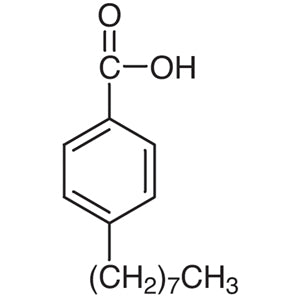
4-n-Octylbenzoic Acid from TCI, product code O0137, is an aromatic carboxylic acid with a straight octyl chain at the para position of the benzene ring. The molecule has two parts that behave differently: a polar carboxylic acid head and a long, hydrophobic alkyl tail. As a non-heterocyclic building block, it is widely used to build rod-shaped (calamitic) molecules, which are common in liquid crystal research, organic materials work and studies of amphiphilic compounds. In the laboratory, its main role is as a precursor to esters, amides and other derivatives.
Chemists choose this compound because its linear, para-substituted structure gives an elongated molecular shape. That shape matters for forming mesogenic phases in liquid crystals. The carboxyl group converts easily to esters, amides or acyl chlorides through standard reactions, so it fits into many synthetic routes. Alkyl-substituted benzoic acids can also form hydrogen-bonded dimers, which affect the thermal and phase behaviour of the final material. The octyl chain gives good solubility in organic solvents and the hydrophobic balance that material design often needs.
In Indonesia, this compound is relevant to materials chemistry laboratories, organic synthesis groups and university research teams working on liquid crystals, functional organic materials and amphiphilic systems. Postgraduate students and researchers use it to prepare mesogenic esters and amides, to study how chain length affects phase behaviour, and to design molecules with a set balance between polar and nonpolar parts. Because it comes from TCI with a clear product code and CAS number, laboratories can buy it again reliably for repeated or long-term research programmes.
- Liquid crystal synthesis: the linear para-substituted structure and long octyl tail give the elongated, rod-like shape needed to build calamitic mesogens and study their phases.
- Ester preparation: the carboxylic acid group reacts readily with alcohols and phenols through standard esterification, giving mesogenic or functional esters for materials research.
- Amide formation: the acid can be converted to amides, directly or through the acyl chloride, so researchers can add hydrogen-bonding amide links to new molecular designs.
- Hydrogen-bonded supramolecular studies: alkyl-substituted benzoic acids form dimers through hydrogen bonding, which makes this compound useful for studying how non-covalent interactions affect thermal and phase behaviour.
- Amphiphilic molecule design: the mix of a polar carboxylic head and a hydrophobic octyl tail makes it a good starting point for compounds with a controlled hydrophilic–hydrophobic balance.
| Brand | TCI (product code O0137) |
|---|---|
| CAS number | 3575-31-3 |
| Molecular formula | — |
| Purity | — |
| Category | Chemistry > Building Blocks > Non-Heterocyclic Building Blocks |
| Pack sizes | as listed on the product page |
| Physical form | — |
| Storage | follow the conditions on the TCI label and Safety Data Sheet |
- Chemical class: para-substituted aromatic carboxylic acid with a straight-chain octyl group
Store 4-n-Octylbenzoic Acid in its original, tightly closed container in a cool, dry, well-ventilated area, away from direct sunlight, heat sources and incompatible materials such as strong oxidising agents and strong bases. Keep the container clearly labelled and reseal it promptly after each use to limit moisture uptake and contamination. Handle the compound in a fume hood or well-ventilated area, and wear suitable personal protective equipment, including safety glasses, chemical-resistant gloves and a laboratory coat. Avoid breathing in dust and avoid contact with skin and eyes. Always read the TCI Safety Data Sheet before use, and dispose of waste according to institutional and local regulations.
—
Produk Terkait
-
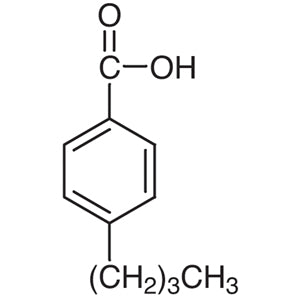
4-ButylbenzoicAcid TCI B0241
Regular price From Rp 530.250,00Regular priceRp 386.400,00Sale price From Rp 530.250,00 -
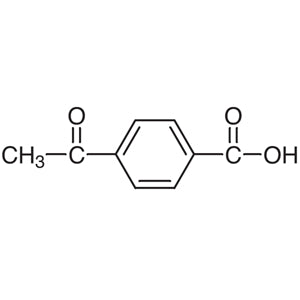
4-AcetylbenzoicAcid TCI A1024
Regular price From Rp 848.400,00Regular priceRp 609.000,00Sale price From Rp 848.400,00 -
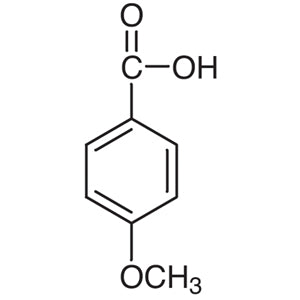
p-AnisicAcid TCI A0482
Regular price Rp 557.550,00Regular priceRp 405.300,00Sale price Rp 557.550,00 -
4-BenzyloxybenzoicAcid TCI B1665
Regular price From Rp 1.538.250,00Regular priceRp 1.090.950,00Sale price From Rp 1.538.250,00 -
4-ButoxybenzoicAcid TCI B0896
Regular price Rp 1.908.900,00Regular priceRp 1.350.300,00Sale price Rp 1.908.900,00 -
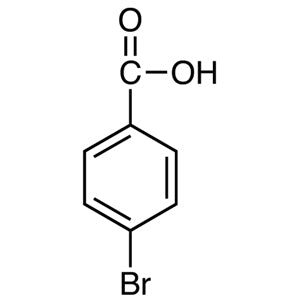
4-BromobenzoicAcid TCI B0553
Regular price From Rp 1.618.050,00Regular priceRp 1.146.600,00Sale price From Rp 1.618.050,00 -
4-AcetoxybenzoicAcid TCI A0885
Regular price From Rp 875.700,00Regular priceRp 627.900,00Sale price From Rp 875.700,00 -
p-ToluicAcid TCI T0293
Regular price From Rp 530.250,00Regular priceRp 386.400,00Sale price From Rp 530.250,00