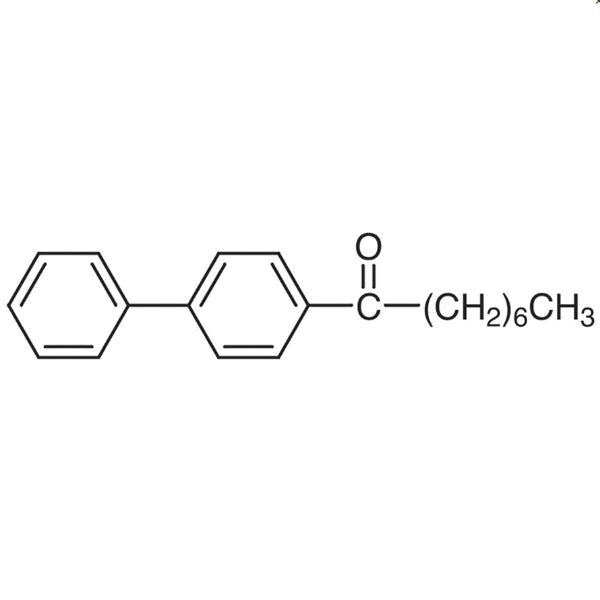
4-n-Octanoylbiphenyl is a chemical compound widely used in materials science, particularly in the study of liquid crystals. As a key component in liquid crystal research, it plays a crucial role in understanding the optical and molecular structure properties of these materials. Its unique molecular structure, featuring a long hydrocarbon chain and a functional group, enables it to exhibit anisotropic behavior, making it highly valuable for advanced material development. This compound is essential for scientists working on next-generation display technologies, optical sensors, and electronic materials due to its ability to form ordered structures under specific conditions.
The compound's molecular architecture gives it a distinct set of properties that make it a preferred choice in laboratory settings. Its ability to form anisotropic structures is critical for applications requiring precise control over physical and chemical characteristics. The presence of both hydrophobic and functional groups allows for tunable interactions with other molecules, enhancing its versatility in material synthesis. These properties make it a reliable and effective material for researchers aiming to develop innovative solutions in the field of liquid crystals and related technologies.
In Indonesian laboratories, 4-n-Octanoylbiphenyl is commonly used in material science and information technology research. It is a key component in studies focused on the development of liquid crystal materials for industrial and technological applications. Many research institutions and universities in Indonesia incorporate this compound into their programs, emphasizing its importance in advancing scientific knowledge and practical applications in the field of advanced materials.
Related TCI products
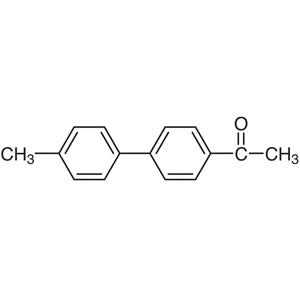
- TCI A1322 5748-38-9 4-Acetyl-4'-methylbiphenyl
- TCI P1133 7116-96-3 4-Pentylbiphenyl
- TCI E1231 360768-57-6 4-Ethynyl-4'-propylbiphenyl
- TCI B5872 117713-14-1 4-(3-Buten-1-yl)-4'-methylbiphenyl
- TCI T3755 90035-34-0 4'-(Trifluoromethyl)-[1,1'-biphenyl]-4-carboxaldehyde
- TCI T3031 760989-91-1 4'-(4,4,5,5-Tetramethyl-1,3,2-dioxaborolan-2-yl)biphenyl-4-ol
- Liquid Crystal Research: This compound is ideal for studying the optical and structural properties of liquid crystals, enabling the development of advanced display technologies.
- Optical Sensor Development: Its anisotropic behavior makes it suitable for creating sensors that respond to light and temperature changes with high sensitivity.
- Electronic Material Synthesis: The compound's molecular structure supports the creation of electronic materials with tailored properties for use in semiconductor devices.
- Material Characterization Studies: Its unique physical properties make it a valuable tool for analyzing molecular interactions and phase behavior in complex systems.
- Industrial Material Innovation: Researchers use it to design new materials with enhanced performance for applications in telecommunications and energy technologies.
| Brand | TCI |
|---|---|
| CAS number | 47162-00-5 |
| Molecular formula | — |
| Purity | — |
| Category | Materials Science > Material Building Blocks > Liquid Crystal (LC) Building Blocks |
| Pack sizes | Available in standard laboratory quantities |
| Physical form | Liquid |
| Storage | Store in a cool, dry place away from light |
This compound should be stored in a cool, dry environment, away from direct sunlight and sources of heat. It is recommended to use airtight containers made of glass or high-density polyethylene to prevent contamination and maintain stability. Due to its chemical nature, it should be handled with appropriate personal protective equipment, including gloves and safety goggles, to ensure laboratory safety. Avoid exposure to incompatible substances such as strong oxidizers. Keep the container sealed when not in use to prevent evaporation and maintain the integrity of the material. Regular monitoring of storage conditions is advised to ensure optimal performance and safety in laboratory settings.
—
Produk Terkait
-
4-Acetyl-4'-methylbiphenyl TCI A1322
Regular price From Rp 1.035.300,00Regular price -
4-Pentylbiphenyl TCI P1133
Regular price From Rp 1.565.550,00Regular price -
4-Ethynyl-4'-propylbiphenyl TCI E1231
Regular price From Rp 1.115.100,00Regular price -
4-(3-Buten-1-yl)-4'-methylbiphenyl TCI B5872
Regular price Rp 2.094.750,00Regular price -
4'-(Trifluoromethyl)-[1,1'-biphenyl]-4-carboxaldehyde TCI T3755
Regular price From Rp 1.405.950,00Regular price -
4'-(4,4,5,5-Tetramethyl-1,3,2-dioxaborolan-2-yl)biphenyl-4-ol TCI T3031
Regular price From Rp 2.625.000,00Regular price -
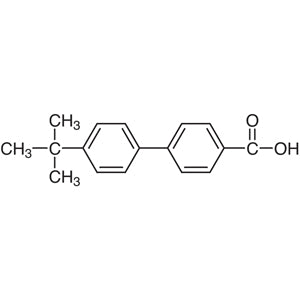
4-(4-tert-Butylphenyl)benzoicAcid TCI B1986
Regular price From Rp 2.677.500,00Regular price -
4-Octadecyloxybiphenyl TCI B1924
Regular price From Rp 1.326.150,00Regular price


![90035-34-0 4'-(Trifluoromethyl)-[1,1'-biphenyl]-4-carboxaldehyde - AMI Scientific](http://amiscientific.com/cdn/shop/files/TCI2510T3755.jpg?v=1768819806&width=533)