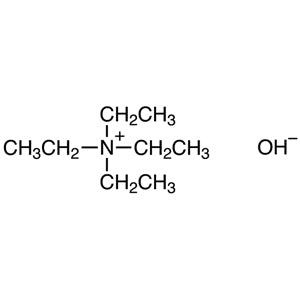
Octadecyldimethyl(3-sulfopropyl)ammonium Hydroxide Inner Salt is a specialized chemical compound widely used in colloidal quantum dot (QD) research. It plays a crucial role in the synthesis of quantum dots with precise control over size and optical properties. This material is essential for creating stable and high-performance thin films, which are fundamental in advanced electronic and optoelectronic applications. Its unique chemical structure enables the formation of stable complexes in solution, making it a key reagent in the development of functional materials.
The compound's chemical stability and compatibility with various reaction conditions make it a preferred choice for researchers. Its ability to form stable ion pairs allows for effective charge transfer and molecular interactions, which are critical in the fabrication of high-quality quantum dot films. Additionally, its molecular design supports the encapsulation of quantum dots, enhancing their optical and electronic performance. These properties ensure consistent results and reliability in laboratory settings.
In Indonesian laboratories, this material is extensively used in quantum dot research, particularly in the fields of electrooptics and functional materials. It supports the development of new materials with potential applications in display technologies, photovoltaics, and sensors. Many research institutions and universities rely on this compound for advancing their work in nanotechnology and material science.
Related TCI products
- TCI D2332 14933-08-5 Dodecyldimethyl(3-sulfopropyl)ammonium Hydroxide Inner Salt
- TCI T2653 14933-09-6 Tetradecyldimethyl(3-sulfopropyl)ammonium Hydroxide Inner Salt [for Biochemical Research]
- TCI H1283 2281-11-0 Hexadecyldimethyl(3-sulfopropyl)ammonium Hydroxide Inner Salt [for Biochemical Research]
- TCI D4247 15178-76-4 Dimethyl(n-octyl)(3-sulfopropyl)ammonium Hydroxide Inner Salt [for Biochemical Research]
- TCI D4246 15163-36-7 Decyldimethyl(3-sulfopropyl)ammonium Hydroxide Inner Salt [for Biochemical Research]
- TCI T2589 77-98-5 Tetraethylammonium Hydroxide (35% in Water)
- Colloidal Quantum Dot Synthesis: This compound is ideal for synthesizing quantum dots with controlled size and optical properties, enabling precise material engineering.
- Thin Film Fabrication: Its ability to form stable complexes in solution makes it suitable for creating high-performance thin films used in optoelectronic devices.
- Electrooptics Research: The compound supports the development of materials with enhanced optical and electronic properties for advanced display and sensor technologies.
- Functional Material Development: It is used to encapsulate and stabilize quantum dots, improving their performance in various nanotechnology applications.
- Nanomaterial Characterization: Its chemical stability allows it to be used in studies that require consistent and reproducible results in material characterization.
| Brand | TCI |
|---|---|
| CAS number | 13177-41-8 |
| Molecular formula | — |
| Purity | — |
| Category | Materials Science > Electronic Materials > Colloidal Quantum Dot (QD) Research Reagents |
| Pack sizes | Available in various quantities as per standard laboratory supply |
| Physical form | Solid powder |
| Storage | Store in a cool, dry place away from moisture and direct sunlight |
This compound should be stored in a cool, dry environment, away from moisture and direct sunlight to maintain its chemical stability. It is recommended to use airtight containers made of glass or high-density polyethylene to prevent contamination and degradation. Due to its chemical nature, it should be handled with appropriate personal protective equipment, including gloves and safety goggles. Avoid exposure to incompatible substances and ensure proper ventilation in the laboratory. Regular monitoring of storage conditions is advised to ensure the material remains suitable for use in research applications.
—
Produk Terkait
-
Dodecyldimethyl(3-sulfopropyl)ammoniumHydroxideInnerSalt TCI D2332
Regular price From Rp 1.590.750,00Regular price -
Tetradecyldimethyl(3-sulfopropyl)ammoniumHydroxideInnerSalt[forBiochemicalResearch] TCI T2653
Regular price From Rp 584.850,00Regular price -
Hexadecyldimethyl(3-sulfopropyl)ammoniumHydroxideInnerSalt[forBiochemicalResearch] TCI H1283
Regular price From Rp 1.220.100,00Regular price -
Dimethyl(n-octyl)(3-sulfopropyl)ammoniumHydroxideInnerSalt[forBiochemicalResearch] TCI D4247
Regular price Rp 3.021.900,00Regular price -
Decyldimethyl(3-sulfopropyl)ammoniumHydroxideInnerSalt[forBiochemicalResearch] TCI D4246
Regular price From Rp 2.174.550,00Regular price -
TetraethylammoniumHydroxide(35%inWater) TCI T2589
Regular price From Rp 769.650,00Regular price -
TetrabutylammoniumHydroxide(37%inMethanol) TCI T1948
Regular price Rp 610.050,00Regular price -
TetrabutylammoniumHydroxide(40%inWater) TCI T1685
Regular price From Rp 1.193.850,00Regular price

![14933-09-6 Tetradecyldimethyl(3-sulfopropyl)ammonium Hydroxide Inner Salt [for Biochemical Research] - AMI Scientific](http://amiscientific.com/cdn/shop/files/TCI2510T2653.jpg?v=1767143195&width=533)
![14933-09-6 Tetradecyldimethyl(3-sulfopropyl)ammonium Hydroxide Inner Salt [for Biochemical Research] - AMI Scientific](http://amiscientific.com/cdn/shop/files/TCI2510T2653_b588d470-fcf5-4779-b07d-24f3f865a2db.jpg?v=1768819679&width=533)
![2281-11-0 Hexadecyldimethyl(3-sulfopropyl)ammonium Hydroxide Inner Salt [for Biochemical Research] - AMI Scientific](http://amiscientific.com/cdn/shop/files/TCI2510H1283.jpg?v=1767117729&width=533)
![2281-11-0 Hexadecyldimethyl(3-sulfopropyl)ammonium Hydroxide Inner Salt [for Biochemical Research] - AMI Scientific](http://amiscientific.com/cdn/shop/files/TCI2510H1283_37410c72-07d8-4cc7-9e67-8019ceacd288.jpg?v=1768819066&width=533)
![Dimethyl(n-octyl)(3-sulfopropyl)ammonium Hydroxide Inner Salt [for Biochemical Research] (CAS 15178-76-4) - TCI D4247 - AMI Scientific](http://amiscientific.com/cdn/shop/files/TCI2510D4247.jpg?v=1769180645&width=533)
![Decyldimethyl(3-sulfopropyl)ammonium Hydroxide Inner Salt [for Biochemical Research] (CAS 15163-36-7) - TCI D4246 - AMI Scientific](http://amiscientific.com/cdn/shop/files/TCI2510D4246.jpg?v=1767107292&width=533)
![Decyldimethyl(3-sulfopropyl)ammonium Hydroxide Inner Salt [for Biochemical Research] (CAS 15163-36-7) - TCI D4246 - AMI Scientific](http://amiscientific.com/cdn/shop/files/TCI2510D4246_6f564fcf-b2bc-4a02-9a78-6ffdf909ca35.jpg?v=1768818054&width=533)