![89025-51-4 1-Oxa-2-oxo-3-thiaindolizinium Chloride [for Source of Alkyl Radical] - AMI Scientific](http://amiscientific.com/cdn/shop/files/TCI2510O0270.jpg?v=1769181126&width=1946)
![89025-51-4 1-Oxa-2-oxo-3-thiaindolizinium Chloride [for Source of Alkyl Radical] - AMI Scientific](http://amiscientific.com/cdn/shop/files/TCI2510O0270.jpg?v=1769181126&width=1445)
TCI O0270 89025-51-4 1-Oxa-2-oxo-3-thiaindolizinium Chloride is a specialized chemical compound used in the synthesis of complex heterocyclic compounds. This compound plays a crucial role in laboratory settings where the generation of alkyl radicals is required. Its unique molecular structure enables it to act as a source of alkyl radicals, making it an essential reagent in radical-based chemical reactions. Due to its reactivity and versatility, it is widely used in organic chemistry research to facilitate the formation of various functional groups and molecular architectures.
The compound is preferred for its high reactivity and ability to participate in multiple types of chemical reactions, including radical substitution and oxidation processes. Its chemical stability and purity make it suitable for use in controlled laboratory environments where precision and accuracy are critical. The compound’s molecular design allows for efficient participation in synthetic pathways, making it a valuable tool for researchers working on the development of new heterocyclic compounds. Its reliability and performance in various reaction conditions contribute to its popularity among chemists.
In Indonesian laboratories, this compound is commonly used in organic chemistry research, particularly in the synthesis of heterocyclic compounds and the development of new chemical entities. It is frequently employed in academic and research institutions that focus on pure and applied chemistry. Its relevance extends to both teaching and experimental applications, supporting the advancement of chemical knowledge and innovation in the field.
Related TCI products
- TCI H0902 49762-08-5 3-Hydroxy-4-methyl-2(3H)-thiazolethione [for Source of Alkyl Radical]
- TCI T2122 16629-19-9 2-Thiophenesulfonyl Chloride
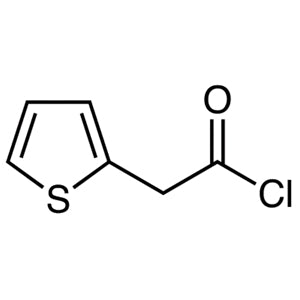
- TCI T1751 39098-97-0 Thiophene-2-acetyl Chloride
- TCI B4637 39827-11-7 Benzo[b]thiophene-2-carbonyl Chloride
- TCI B1940 4209-18-1 3-Benzyl-4-methylthiazolium Chloride
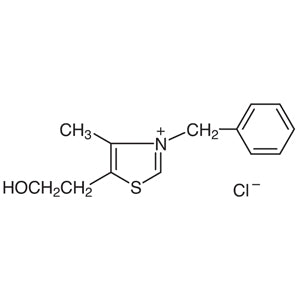
- TCI B1224 4568-71-2 3-Benzyl-5-(2-hydroxyethyl)-4-methylthiazolium Chloride
- Organic synthesis of heterocyclic compounds due to its ability to generate alkyl radicals and participate in radical reactions.
- Radical substitution reactions where the compound serves as a source of reactive intermediates for functional group modification.
- Development of new chemical entities in pharmaceutical and material science research due to its structural versatility.
- Synthesis of complex molecules requiring precise control over radical initiation and propagation steps.
- Research applications in academic and industrial laboratories focusing on chemical innovation and compound design.
| Brand | TCI |
|---|---|
| CAS number | 89025-51-4 |
| Molecular formula | — |
| Purity | — |
| Category | Chemistry > Building Blocks > Heterocyclic Building Blocks |
| Pack sizes | Available in various quantities as per supplier specifications |
| Physical form | Solid (as per standard product description) |
| Storage | Store in a cool, dry place away from light and moisture |
This compound should be stored in a cool, dry environment, away from direct sunlight and moisture to maintain its chemical integrity. It is recommended to use airtight containers to prevent exposure to air and humidity, which could affect its stability. Due to its reactivity, it should be handled in a well-ventilated laboratory setting, with appropriate personal protective equipment such as gloves and safety goggles. Avoid contact with incompatible substances, and ensure that storage conditions are consistent with standard chemical safety protocols. Proper labeling and storage are essential to ensure safe handling and prevent accidental exposure.
—
Produk Terkait
-
3-Hydroxy-4-methyl-2(3H)-thiazolethione[forSourceofAlkylRadical] TCI H0902
Regular price Rp 3.180.450,00Regular price -
2-ThiophenesulfonylChloride TCI T2122
Regular price From Rp 2.809.800,00Regular price -
Thiophene-2-acetylChloride TCI T1751
Regular price Rp 1.776.600,00Regular price -
Benzo[b]thiophene-2-carbonylChloride TCI B4637
Regular price From Rp 1.167.600,00Regular price -
3-Benzyl-4-methylthiazoliumChloride TCI B1940
Regular price Rp 2.995.650,00Regular price -
3-Benzyl-5-(2-hydroxyethyl)-4-methylthiazoliumChloride TCI B1224
Regular price Rp 2.227.050,00Regular price -
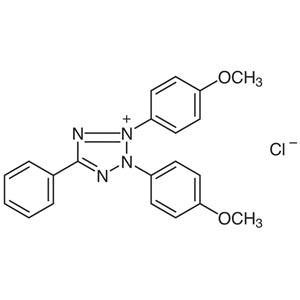
2,3-Bis(4-methoxyphenyl)-5-phenyltetrazoliumChloride TCI B1056
Regular price Rp 6.599.250,00Regular price -
2,3-Bis(4-nitrophenyl)-5-phenyltetrazoliumChloride TCI B1047
Regular price Rp 3.446.100,00Regular price
![49762-08-5 3-Hydroxy-4-methyl-2(3H)-thiazolethione [for Source of Alkyl Radical] - AMI Scientific](http://amiscientific.com/cdn/shop/files/TCI2510H0902.jpg?v=1767117192&width=533)

![39827-11-7 Benzo[b]thiophene-2-carbonyl Chloride - AMI Scientific](http://amiscientific.com/cdn/shop/files/TCI2510B4637_9d4e67db-4d59-4414-9881-fc1acfc72b84.jpg?v=1767437371&width=533)