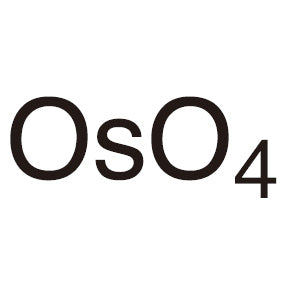
Osmium tetroxide (OsO₄) is a highly toxic and corrosive inorganic compound commonly used in chemical laboratories for oxidation and catalytic reactions. It is particularly effective in breaking down complex organic compounds into simpler products, making it a crucial reagent in organic synthesis. Its unique reactivity allows it to participate in a wide range of chemical transformations, especially in processes requiring strong oxidizing agents. Due to its potency, OsO₄ is often used in controlled environments where safety protocols are strictly enforced.
The compound’s strong oxidizing properties and ability to selectively oxidize organic substrates make it a preferred choice in specialized chemical applications. Its solubility in water allows for safer handling in diluted forms, reducing the risk of spills and exposure. Additionally, its reactivity with both organic and inorganic materials makes it versatile for various chemical processes. However, its sensitivity to moisture and light necessitates careful handling and storage conditions.
In Indonesian laboratories, osmium tetroxide is used in limited contexts due to its high toxicity and corrosiveness. Despite these risks, it remains a key reagent in advanced chemical research, particularly in higher education institutions and research facilities. Its application is typically restricted to well-equipped laboratories with strict safety protocols in place to manage its hazardous nature.
TCI brochures (PDF)
- Oxidizing Agents 2025-06-11 · p. 9
- Metallic Salts 2025-11-06 · p. 6
- Transition Metal Catalysts 2026-04-10 · p. 9
- Oxidation Reactions: OsO₄ is ideal for oxidation reactions due to its strong oxidizing properties, enabling the selective oxidation of complex organic molecules.
- Catalytic Processes: It serves as a catalyst in various chemical processes, particularly those involving the breakdown of organic compounds into simpler structures.
- Organic Synthesis: Its ability to facilitate the oxidation of alkenes and other functional groups makes it a valuable tool in synthetic organic chemistry.
- Analytical Chemistry: It is used in analytical procedures where precise oxidation of compounds is required for accurate results.
- Material Science Research: OsO₄ is employed in the study of material properties, especially in the development of new chemical compounds and structures.
| Brand | TCI |
|---|---|
| CAS number | 20816-12-0 |
| Molecular formula | — |
| Purity | — |
| Category | Chemistry > Catalysis and Inorganic Chemistry > Oxidation [Catalysis] |
| Pack sizes | 4% aqueous solution |
| Physical form | Liquid |
| Storage | — |
Osmium tetroxide must be stored in a cool, dry, and well-ventilated area away from light and moisture. It should be kept in sealed, corrosion-resistant containers to prevent exposure and contamination. Due to its high reactivity and toxicity, it requires careful handling with appropriate personal protective equipment, including gloves, goggles, and a respirator. Regular monitoring of storage conditions is essential to ensure safety and maintain the integrity of the compound. In laboratory settings, it should only be used in controlled environments with proper ventilation and emergency response plans in place.
—
Product Categories
- Catalysis and Inorganic ChemistryOxidation [Catalysis]Metal Catalysts for Oxidation
- Catalysis and Inorganic ChemistryTransition Elements [Catalysis and Inorganic Chemistry]Osmium [Catalysis and Inorganic Chemistry]
- Catalysis and Inorganic ChemistryMetallic Salts [Catalysis and Inorganic Chemistry]Oxides [Metallic Salts]
- Synthetic ReagentsOxidation [Synthetic Reagents]Osmium [Oxidation]
Produk Terkait
-
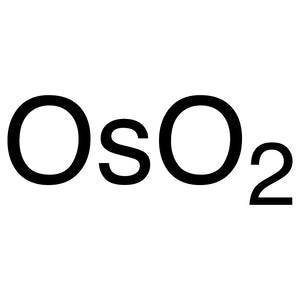
Osmium(IV)Oxide TCI O0650
Regular price Rp 5.855.850,00Regular priceRp 4.110.750,00Sale price Rp 5.855.850,00 -
OsmiumCatalystsupportedonMagnetite(0.07-0.09mmol/g) TCI O0414
Regular price Rp 3.472.350,00Regular priceRp 2.427.600,00Sale price Rp 3.472.350,00 -
Osmium(III)Chloride TCI O0651
Regular price From Rp 2.411.850,00Regular priceRp 1.702.050,00Sale price From Rp 2.411.850,00 -
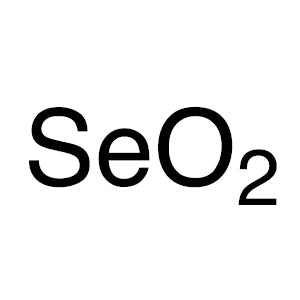
SeleniumDioxide TCI E1459
Regular price From Rp 848.400,00Regular priceRp 593.250,00Sale price From Rp 848.400,00 -
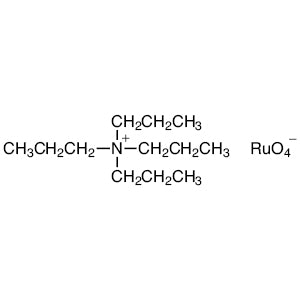
TetrapropylammoniumPerruthenate TCI T1559
Regular price From Rp 3.683.400,00Regular priceRp 2.591.400,00Sale price From Rp 3.683.400,00 -
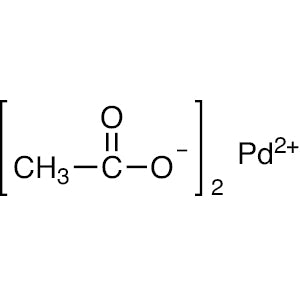
Palladium(II)Acetate TCI A1424
Regular price From Rp 3.127.950,00Regular priceRp 2.202.900,00Sale price From Rp 3.127.950,00 -
Palladium(II)Acetate(Purified) TCI P2161
Regular price Rp 3.975.300,00Regular priceRp 2.795.100,00Sale price Rp 3.975.300,00 -
PotassiumPerrhenate TCI P1939
Regular price From Rp 1.167.600,00Regular priceRp 815.850,00Sale price From Rp 1.167.600,00