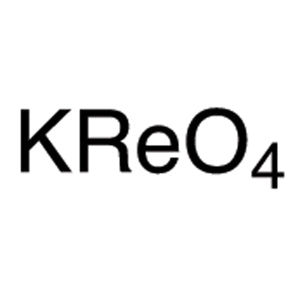
Potassium Perrhenate from TCI (product code P1939) is an inorganic salt made of potassium ions and perrhenate ions. The rhenium in it is in its highest oxidation state, +7. It is one of the most common and stable sources of rhenium used in research laboratories. In the oxidation catalysis category, Potassium Perrhenate is a precursor for preparing rhenium-based catalysts. It is also a starting material in coordination chemistry and rhenium materials research, which makes it a basic reagent for many synthetic programs.
Chemists choose Potassium Perrhenate mainly because it is fairly stable and easier to handle than many other rhenium compounds, so it makes a practical starting point for synthesis. Other rhenium compounds can be made from the perrhenate salt, including precursors to oxorhenium catalysts. These catalysts are known in oxidation reactions such as olefin epoxidation and in the deoxydehydration of diols. The perrhenate ion is close in size and charge to the pertechnetate ion, so it is often used as a non-radioactive stand-in for pertechnetate in radiopharmaceutical and environmental chemistry studies.
In Indonesia, this material is useful to inorganic chemistry, catalysis, and materials laboratories at universities and research institutions. That includes research groups working on biomass conversion, for example the deoxydehydration of diols and polyols from renewable feedstocks into more valuable chemicals. Groups working on coordination chemistry, rhenium complex synthesis, and model studies that need a pertechnetate analogue can also use this TCI reagent as a dependable and familiar rhenium source.
TCI brochures (PDF)
- Oxidizing Agents 2025-06-11 · p. 9
- Metallic Salts 2025-11-06 · p. 14
- Transition Metal Catalysts 2026-04-10 · p. 7
Related TCI products
- Rhenium catalyst precursor preparation: as a stable, easy-to-handle rhenium(VII) salt, Potassium Perrhenate is a practical starting point for making rhenium-based catalysts for oxidation chemistry.
- Oxorhenium catalyst synthesis for olefin epoxidation: the perrhenate salt can be converted into oxorhenium catalyst precursors, which are known for epoxidizing olefins in oxidation catalysis research.
- Deoxydehydration of diols: rhenium compounds made from perrhenate are relevant to diol deoxydehydration, which supports biomass conversion studies that turn renewable diols and polyols into useful products.
- Coordination chemistry and rhenium materials: as one of the most common rhenium sources, this salt is a convenient starting material for making rhenium complexes and developing new rhenium-containing materials.
- Non-radioactive pertechnetate analogue studies: the perrhenate ion is similar in size and charge to pertechnetate, so researchers use it to model pertechnetate behaviour in radiopharmaceutical and environmental chemistry without radioactive material.
| Brand | TCI (product code P1939) |
|---|---|
| CAS number | 10466-65-6 |
| Molecular formula | — |
| Purity | — |
| Category | Chemistry > Catalysis and Inorganic Chemistry > Oxidation [Catalysis] |
| Pack sizes | see the available TCI pack options on the product page |
| Physical form | solid inorganic salt |
| Storage | keep tightly closed in a cool, dry place, following the TCI label and Safety Data Sheet |
Store Potassium Perrhenate in its original, tightly closed container in a cool, dry, well-ventilated area, away from moisture and direct sunlight. As a high-oxidation-state compound, it should be kept apart from reducing agents, combustible materials, and incompatible substances. Clearly labelled glass or chemically resistant plastic containers are suitable if the material is repackaged. Wear standard laboratory protective equipment, including safety glasses, gloves, and a lab coat. Avoid creating or breathing in dust, and weigh the material in a fume hood or ventilated enclosure where possible. Always check the TCI Safety Data Sheet for full hazard, first-aid, and disposal information before use.
—
Product Categories
- Catalysis and Inorganic ChemistryOxidation [Catalysis]Metal Catalysts for Oxidation
- Catalysis and Inorganic ChemistryTransition Elements [Catalysis and Inorganic Chemistry]Rhenium [Catalysis and Inorganic Chemistry]
- Catalysis and Inorganic ChemistryMetallic Salts [Catalysis and Inorganic Chemistry]Oxometallate Salts [Metallic Salts]
Produk Terkait
-
TetrabutylammoniumPerrhenate TCI T1803
Regular price From Rp 3.021.900,00Regular priceRp 2.128.350,00Sale price From Rp 3.021.900,00 -
AmmoniumPerrhenate(VII) TCI A3620
Regular price From Rp 1.405.950,00Regular priceRp 982.800,00Sale price From Rp 1.405.950,00 -
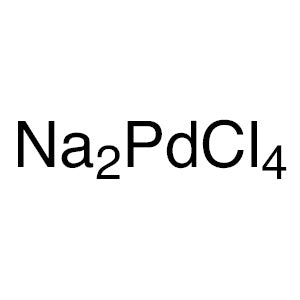
SodiumTetrachloropalladate(II) TCI S0540
Regular price Rp 4.531.800,00Regular priceRp 3.184.650,00Sale price Rp 4.531.800,00 -
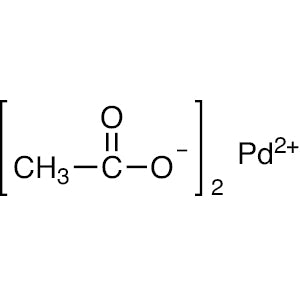
Palladium(II)Acetate TCI A1424
Regular price From Rp 3.127.950,00Regular priceRp 2.202.900,00Sale price From Rp 3.127.950,00 -
Palladium(II)Acetate(Purified) TCI P2161
Regular price Rp 3.975.300,00Regular priceRp 2.795.100,00Sale price Rp 3.975.300,00 -
Palladium(II)Trifluoroacetate TCI P1870
Regular price From Rp 3.843.000,00Regular priceRp 2.702.700,00Sale price From Rp 3.843.000,00 -
PotassiumBromide TCI P1747
Regular price Rp 477.750,00Regular priceRp 333.900,00Sale price Rp 477.750,00 -
PotassiumIodide TCI P1721
Regular price From Rp 425.250,00Regular priceRp 775.950,00Sale price From Rp 425.250,00Sale