Sodium Tetrachloropalladate(II) is an inorganic compound widely used in chemical reactions, particularly in catalysis and transition metal chemistry. This compound plays a crucial role in laboratory settings where efficient and selective catalytic processes are required. It is commonly employed in organic synthesis to facilitate reactions such as hydroboration and hydrogenation. Its unique structure, consisting of palladium(II) ions coordinated with chloride and sodium ions, makes it a valuable tool for chemists working in both inorganic and organic fields.
The compound's high reactivity and ability to act as a catalyst in various chemical transformations make it a preferred choice for many researchers. Its effectiveness in promoting complex synthesis reactions and quantitative analysis is well recognized. Sodium Tetrachloropalladate(II) is chemically stable under specific conditions but is highly sensitive to moisture and air. These properties influence its handling and storage requirements, ensuring its performance is maintained in laboratory environments.
In Indonesian laboratories, Sodium Tetrachloropalladate(II) is frequently used in both organic and inorganic chemical research. It is particularly important in academic institutions where students and researchers conduct experiments involving catalytic processes and transition metal chemistry. Its versatility and reliability make it a staple in chemical laboratories across Indonesia, supporting a wide range of scientific investigations.
TCI brochures (PDF)
- Metallic Salts 2025-11-06 · p. 14
- Transition Metal Catalysts 2026-04-10 · p. 13
- Suzuki-Miyaura Cross Coupling Reaction 2025-12-01 · p. 22
Related TCI products
- TCI P3139 10025-98-6 Potassium Tetrachloropalladate(II)
- TCI A3840 13820-40-1 Ammonium Tetrachloropalladate(II)
- TCI B6255 887919-35-9 Bis[di-tert-butyl(4-dimethylaminophenyl)phosphine]dichloropalladium(II)
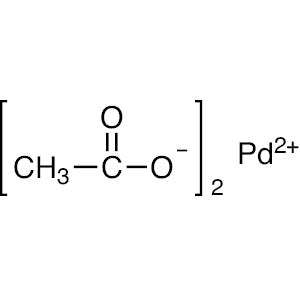
- TCI A1424 3375-31-3 Palladium(II) Acetate
- TCI P2161 3375-31-3 Palladium(II) Acetate (Purified)
- TCI P1870 42196-31-6 Palladium(II) Trifluoroacetate
- Organic synthesis reactions benefit from Sodium Tetrachloropalladate(II) due to its catalytic activity in promoting hydrogenation and hydroboration processes.
- Transition metal chemistry research utilizes this compound to study the coordination behavior of palladium(II) ions in complex environments.
- Quantitative analysis in analytical chemistry relies on its reactivity for detecting and quantifying specific compounds in solution.
- Catalytic processes in industrial and academic settings require its ability to accelerate chemical reactions efficiently.
- Inorganic chemistry experiments use it to explore the properties of transition metals and their complexes in various reaction conditions.
| Brand | TCI |
|---|---|
| CAS number | 13820-53-6 |
| Molecular formula | — |
| Purity | — |
| Category | Chemistry > Catalysis and Inorganic Chemistry > Transition Elements |
| Pack sizes | Available in various quantities as per supplier specifications |
| Physical form | Solid powder |
| Storage | Should be stored in a sealed container away from moisture and air |
Sodium Tetrachloropalladate(II) should be stored in a sealed container to prevent exposure to moisture and air, which can degrade its chemical stability. It is recommended to keep the compound in a cool, dry place away from direct sunlight and sources of heat. Due to its corrosive nature, it should be handled with appropriate personal protective equipment such as gloves and safety goggles. Laboratory personnel should avoid skin and eye contact and ensure proper ventilation when working with this compound. Regular monitoring of storage conditions is essential to maintain its effectiveness and safety in laboratory environments.
—
Product Categories
- Catalysis and Inorganic ChemistryTransition Elements [Catalysis and Inorganic Chemistry]Palladium [Catalysis and Inorganic Chemistry]
- Catalysis and Inorganic ChemistryCross-coupling Reaction using Transition Metal Catalysts [C-C Bond Formation]Palladium Catalysts [Cross-coupling Reaction using Transition Metal Catalysts]
- Catalysis and Inorganic ChemistryMetallic Salts [Catalysis and Inorganic Chemistry]Metallate Salts [Metallic Salts]
- Synthetic ReagentsC-C Bond Formation [Synthetic Reagents]Cross-coupling Reaction using Transition Metal Catalysts [C-C Bond Formation]
Produk Terkait
-
PotassiumTetrachloropalladate(II) TCI P3139
Regular price Rp 4.072.000,00Regular priceRp 2.786.000,00Sale price Rp 4.072.000,00 -
AmmoniumTetrachloropalladate(II) TCI A3840
Regular price Rp 4.719.000,00Regular priceRp 3.227.000,00Sale price Rp 4.719.000,00 -
Bis[di-tert-butyl(4-dimethylaminophenyl)phosphine]dichloropalladium(II) TCI B6255
Regular price Rp 4.564.000,00Regular priceRp 3.121.000,00Sale price Rp 4.564.000,00 -
Palladium(II)Acetate TCI A1424
Regular price From Rp 3.059.000,00Regular priceRp 2.098.000,00Sale price From Rp 3.059.000,00 -
Palladium(II)Acetate(Purified) TCI P2161
Regular price Rp 3.890.000,00Regular priceRp 2.662.000,00Sale price Rp 3.890.000,00 -
Palladium(II)Trifluoroacetate TCI P1870
Regular price From Rp 3.760.000,00Regular priceRp 2.574.000,00Sale price From Rp 3.760.000,00 -
Palladium(II)Chloride TCI P1489
Regular price From Rp 3.059.000,00Regular priceRp 2.098.000,00Sale price From Rp 3.059.000,00 -
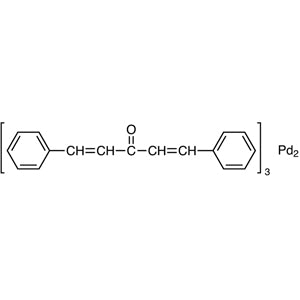
Tris(dibenzylideneacetone)dipalladium(0) TCI T2184
Regular price From Rp 2.542.000,00Regular priceRp 1.745.000,00Sale price From Rp 2.542.000,00