Potassium Tetrachloropalladate(II) is a chemical compound widely used in laboratory settings, particularly in catalytic reactions involving transition metals. It plays a crucial role in cross-coupling reactions, which are essential for forming carbon-carbon bonds in organic synthesis. This compound is a key component in various chemical processes, enabling the creation of complex organic molecules with high efficiency and selectivity. Its importance is especially evident in research and development within the field of inorganic chemistry and catalysis.
The compound is valued for its high purity and consistent chemical properties, making it a preferred choice for precise and reproducible experiments. It exhibits chemical stability under controlled conditions, although it is sensitive to moisture and oxidation. These properties necessitate careful handling and storage to maintain its effectiveness. Its ability to act as a catalyst without being consumed in the reaction ensures its utility in multiple experimental setups, contributing to the reliability of laboratory results.
In Indonesian laboratories, Potassium Tetrachloropalladate(II) is commonly used in organic chemistry research, particularly in catalysis and the synthesis of complex compounds. Its availability in solid form simplifies handling and application in laboratory-scale experiments. Due to its high purity and consistent performance, it is a favored material for experiments requiring precision and accuracy in chemical synthesis and analysis.
TCI brochures (PDF)
- Metallic Salts 2025-11-06 · p. 14
- Transition Metal Catalysts 2026-04-10 · p. 13
Related TCI products
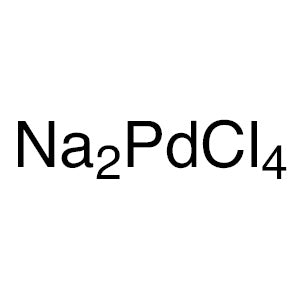
- TCI S0540 13820-53-6 Sodium Tetrachloropalladate(II)
- TCI A3840 13820-40-1 Ammonium Tetrachloropalladate(II)
- TCI B6255 887919-35-9 Bis[di-tert-butyl(4-dimethylaminophenyl)phosphine]dichloropalladium(II)
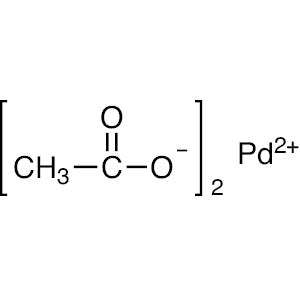
- TCI A1424 3375-31-3 Palladium(II) Acetate
- TCI P2161 3375-31-3 Palladium(II) Acetate (Purified)
- TCI P1870 42196-31-6 Palladium(II) Trifluoroacetate
- Cross-coupling reactions such as Suzuki and Heck reactions benefit from its catalytic properties, enabling efficient C-C bond formation in organic synthesis.
- Organic synthesis experiments require precise reagents, and this compound provides reliable catalytic activity for complex molecule creation.
- Inorganic chemistry research often involves transition metal catalysts, and this compound is ideal for studying metal-based reaction mechanisms.
- Carbon-carbon bond formation studies rely on its stability and effectiveness in facilitating bond creation under controlled conditions.
- Chemical research in Indonesian laboratories utilizes this compound for its consistent performance in catalytic processes and its role in advanced synthesis techniques.
| Brand | TCI |
|---|---|
| CAS number | 10025-98-6 |
| Molecular formula | — |
| Purity | — |
| Category | Chemistry > Catalysis and Inorganic Chemistry > Cross-coupling Reaction using Transition Metal Catalysts [C-C Bond Formation] |
| Pack sizes | — |
| Physical form | Solid |
| Storage | Should be stored in a dry, airtight container to prevent moisture and oxidation |
Potassium Tetrachloropalladate(II) should be stored in a dry, airtight container to prevent exposure to moisture and oxidation, which can degrade its chemical properties. It is recommended to use containers made of inert materials such as glass or polyethylene to avoid any chemical interactions. The compound is sensitive to environmental conditions, so it should be kept in a cool, dark place away from direct sunlight and sources of heat. Laboratory personnel should wear appropriate personal protective equipment when handling this material to ensure safety. Regular monitoring of storage conditions is essential to maintain the compound's integrity and effectiveness for use in experiments.
—
Product Categories
- Catalysis and Inorganic ChemistryCross-coupling Reaction using Transition Metal Catalysts [C-C Bond Formation]Palladium Catalysts [Cross-coupling Reaction using Transition Metal Catalysts]
- Catalysis and Inorganic ChemistryMetallic Salts [Catalysis and Inorganic Chemistry]Metallate Salts [Metallic Salts]
- Synthetic ReagentsC-C Bond Formation [Synthetic Reagents]Cross-coupling Reaction using Transition Metal Catalysts [C-C Bond Formation]
Produk Terkait
-
SodiumTetrachloropalladate(II) TCI S0540
Regular price Rp 4.531.800,00Regular priceRp 3.184.650,00Sale price Rp 4.531.800,00 -
AmmoniumTetrachloropalladate(II) TCI A3840
Regular price Rp 4.823.700,00Regular priceRp 3.388.350,00Sale price Rp 4.823.700,00 -
Bis[di-tert-butyl(4-dimethylaminophenyl)phosphine]dichloropalladium(II) TCI B6255
Regular price Rp 4.664.100,00Regular priceRp 3.277.050,00Sale price Rp 4.664.100,00 -
Palladium(II)Acetate TCI A1424
Regular price From Rp 3.127.950,00Regular priceRp 2.202.900,00Sale price From Rp 3.127.950,00 -
Palladium(II)Acetate(Purified) TCI P2161
Regular price Rp 3.975.300,00Regular priceRp 2.795.100,00Sale price Rp 3.975.300,00 -
Palladium(II)Trifluoroacetate TCI P1870
Regular price From Rp 3.843.000,00Regular priceRp 2.702.700,00Sale price From Rp 3.843.000,00 -
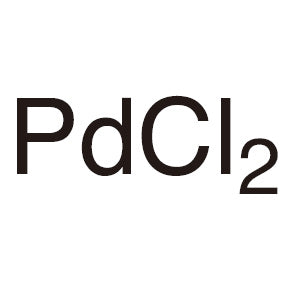
Palladium(II)Chloride TCI P1489
Regular price From Rp 3.127.950,00Regular priceRp 2.202.900,00Sale price From Rp 3.127.950,00 -
Tetrakis(acetonitrile)palladium(II)Bis(trifluoromethanesulfonate) TCI T3023
Regular price Rp 3.710.700,00Regular priceRp 2.610.300,00Sale price Rp 3.710.700,00