


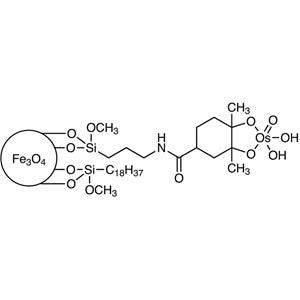

Osmium Catalyst supported on Magnetite (0.07-0.09 mmol/g) is a heterogeneous catalyst that plays a crucial role in various chemical reactions within the laboratory. This material is specifically designed for oxidation and reduction processes, making it an essential tool in both organic and inorganic chemistry. Its ability to facilitate complex chemical transformations with high efficiency makes it a preferred choice for researchers aiming to achieve precise and reproducible results. The catalyst is particularly useful in synthetic applications where controlled reaction conditions are necessary to produce desired compounds.
The unique properties of this catalyst, including its high surface area and strong metal-support interaction, contribute to its effectiveness in a wide range of reaction environments. The magnetite support provides mechanical stability and enhances the catalyst’s ability to be easily separated after the reaction, which is critical for reuse and cost-effectiveness. Additionally, the osmium content ensures that the catalyst maintains its activity even under varying reaction conditions, making it a reliable option for laboratory experiments. Its stability and efficiency make it ideal for applications requiring long-term performance and consistent results.
In Indonesian laboratories, this catalyst is commonly used in chemical research, particularly in catalysis and oxidation reactions. It is widely applied in academic and industrial settings where high-performance catalysts are required to support experimental work. Many research institutions and universities in Indonesia rely on this product to advance their studies in chemical synthesis and reaction mechanisms. Its versatility and effectiveness make it a valuable asset in the laboratory environment.
Advantages (TCI brochure)
- Collectable with a magnet (neodymium magnet) after use
- Effectively collectable and environment-friendly
- Comparable catalytic activity with a naked osmium oxide
- Useful for catalytic oxidation of olefins and so on
TCI brochures (PDF)
- Collectable and Recyclable Oxidation Osmium Catalyst supported on Magnetite 2024-12-12 · p. 1
- Oxidizing Agents 2025-06-11 · p. 9
- Transition Metal Catalysts 2026-04-10 · p. 9
Related TCI products
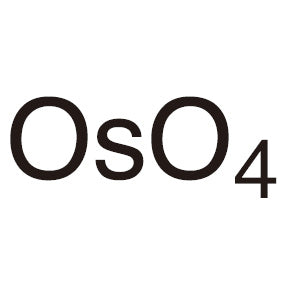
- TCI O0308 20816-12-0 Osmium Tetroxide (4% in Water)
- TCI O0651 13444-93-4 Osmium(III) Chloride
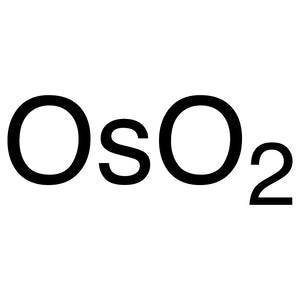
- TCI O0650 12036-02-1 Osmium(IV) Oxide
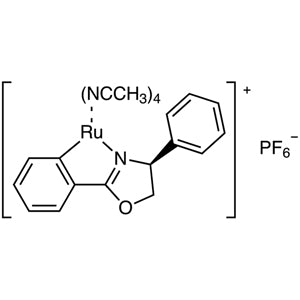
- TCI R0196 1259070-80-8 Ru(II)-(S)-Pheox Catalyst
- TCI P1785 7440-05-3 Palladium 10% on Carbon (wetted with ca 55% Water) [Useful catalyst for coupling reaction, etc]
- TCI K0073 7440-02-0 Skeletal Nickel Catalyst slurry in Water [Active catalyst for Hydrogenation]
- Oxidation of Organic Compounds: This catalyst is ideal for promoting selective oxidation reactions in organic synthesis, enabling the production of complex molecules with high yield and purity.
- Reduction Reactions in Inorganic Chemistry: It supports efficient reduction processes, making it suitable for the synthesis of inorganic compounds that require controlled electron transfer.
- Catalytic Oxidation in Industrial Processes: Its stability and reusability make it a preferred choice for laboratory-scale industrial applications that require consistent performance.
- Synthesis of Organic and Inorganic Compounds: The catalyst’s ability to maintain activity under varied conditions allows it to be used in the synthesis of a wide range of chemical products.
- Research in Catalytic Mechanisms: Its well-defined structure and predictable behavior make it a valuable tool for studying reaction mechanisms and catalyst performance.
From the TCI brochure
- Catalytic oxidation of olefins and so on
| Brand | TCI |
|---|---|
| CAS number | — |
| Molecular formula | — |
| Purity | — |
| Category | Chemistry > Catalysis and Inorganic Chemistry > Oxidation [Catalysis] |
| Pack sizes | As per supplier specifications |
| Physical form | Powder |
| Storage | Store in a cool, dry place away from moisture and direct sunlight |
Data from the TCI brochure
| Loading osmium | 0.07-0.09mmol/g |
|---|---|
| Kemasan | 1g |
Source: TCI brochure RR040 (2024-12-12)
This catalyst should be stored in a cool, dry environment to maintain its chemical stability and activity. It is recommended to use airtight containers to prevent exposure to moisture and air, which can degrade its performance. Due to its chemical nature, it should be handled with care, using appropriate personal protective equipment such as gloves and safety goggles. It is important to ensure that the storage area is well-ventilated to minimize any potential hazards. Avoid contact with incompatible materials and keep it away from sources of heat or ignition. Proper storage ensures the catalyst remains effective for its intended applications in the laboratory.
References cited in the TCI brochure
- Ken-ichi Fujita. Magnetically Recoverable Osmium Catalysts with Osmium-Diolate Esters for Dihydroxylation of Olefins Synlett, 2013. doi:10.1055/s-0032-1316910
Produk Terkait
-
OsmiumTetroxide(4%inWater) TCI O0308
Regular price Rp 4.373.250,00Regular priceRp 3.073.350,00Sale price Rp 4.373.250,00 -
Osmium(III)Chloride TCI O0651
Regular price From Rp 2.411.850,00Regular priceRp 1.702.050,00Sale price From Rp 2.411.850,00 -
Osmium(IV)Oxide TCI O0650
Regular price Rp 5.855.850,00Regular priceRp 4.110.750,00Sale price Rp 5.855.850,00 -
Ru(II)-(S)-PheoxCatalyst TCI R0196
Regular price From Rp 1.829.100,00Regular priceRp 1.294.650,00Sale price From Rp 1.829.100,00 -
Palladium10%onCarbon(wettedwithca55%Water)[Usefulcatalystforcouplingreaction,etc] TCI P1785
Regular price From Rp 2.041.200,00Regular priceRp 1.426.950,00Sale price From Rp 2.041.200,00 -
SkeletalNickelCatalystslurryinWater[ActivecatalystforHydrogenation] TCI K0073
Regular price Rp 2.041.200,00Regular priceRp 1.426.950,00Sale price Rp 2.041.200,00 -
N-BenzylcinchoniniumChloride[ChiralPhase-TransferCatalyst] TCI B1689
Regular price Rp 1.801.800,00Regular priceRp 1.275.750,00Sale price Rp 1.801.800,00 -
N-BenzylquinidiniumChloride[ChiralPhase-TransferCatalyst] TCI B1684
Regular price Rp 8.770.650,00Regular priceRp 6.148.800,00Sale price Rp 8.770.650,00




![TCI P1785 7440-05-3 Palladium 10% on Carbon (wetted with ca 55% Water) [Useful catalyst for coupling reaction, etc]](http://amiscientific.com/cdn/shop/files/TCI2510P1785_cce269a4-01b1-4dd0-b7a3-d09686c54a7d.jpg?v=1792653041&width=533)
![7440-05-3 Palladium 10% on Carbon (wetted with ca. 55% Water) [Useful catalyst for coupling reaction, etc.] - AMI Scientific](http://amiscientific.com/cdn/shop/files/TCI2510P1785.jpg?v=1767135226&width=533)
![TCI K0073 7440-02-0 Skeletal Nickel Catalyst slurry in Water [Active catalyst for Hydrogenation]](http://amiscientific.com/cdn/shop/files/TCI2510K0073_efbc37ac-8a04-466e-98e1-5d61bd8e8470.jpg?v=1792646175&width=533)
![7440-02-0 Skeletal Nickel Catalyst slurry in Water [Active catalyst for Hydrogenation] - AMI Scientific](http://amiscientific.com/cdn/shop/files/TCI2510K0073.jpg?v=1767121187&width=533)
![TCI B1689 69221-14-3 N-Benzylcinchoninium Chloride [Chiral Phase-Transfer Catalyst]](http://amiscientific.com/cdn/shop/files/TCI2510B1689_e3232498-1912-4f3e-8b09-49641ab39909.jpg?v=1792660083&width=533)
![69221-14-3 N-Benzylcinchoninium Chloride [Chiral Phase-Transfer Catalyst] - AMI Scientific](http://amiscientific.com/cdn/shop/files/TCI2510B1689.jpg?v=1767087613&width=533)
![TCI B1684 77481-82-4 N-Benzylquinidinium Chloride [Chiral Phase-Transfer Catalyst]](http://amiscientific.com/cdn/shop/files/TCI2510B1684_3f1de569-54e5-4551-a0db-44217ac05631.jpg?v=1792660080&width=533)
![77481-82-4 N-Benzylquinidinium Chloride [Chiral Phase-Transfer Catalyst] - AMI Scientific](http://amiscientific.com/cdn/shop/files/TCI2510B1684.jpg?v=1767087609&width=533)