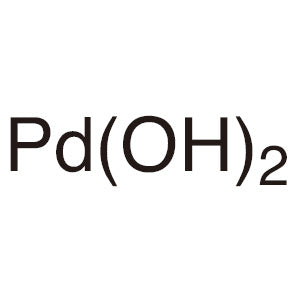
Palladium 10% on Carbon (wetted with ca 55% Water) is a widely used catalyst in chemical reactions, particularly in coupling reactions. This material is a composite of palladium metal evenly distributed on the surface of activated carbon, with approximately 55% water content. It serves as an essential tool in laboratories for accelerating chemical reactions without being consumed in the process. Its versatility makes it a valuable asset in various synthetic processes, enabling efficient and controlled chemical transformations.
The unique properties of Palladium 10% on Carbon make it a preferred choice for many chemical applications. The combination of palladium and activated carbon provides a large surface area for adsorption, enhancing reactivity. The presence of water helps maintain the stability of the catalyst and prevents precipitation. Additionally, its high reactivity and selectivity allow it to function effectively in a variety of reaction conditions. These characteristics ensure consistent performance and reliability in laboratory settings.
In Indonesian laboratories, Palladium 10% on Carbon is commonly used in both academic and industrial research. It is frequently employed in hydrogenation processes and coupling reactions, such as the Suzuki and Heck reactions. Its stability and efficiency make it a go-to material for chemists working on complex synthetic pathways. The material is also favored for its safety profile compared to pure metal catalysts, making it a reliable choice for routine laboratory operations.
Advantages (TCI brochure)
- General-purpose palladium/carbon catalyst, also useful for cross-coupling.
TCI brochures (PDF)
- Hydrogenation Catalysts 2025-11-10 · p. 3
- Transition Metal Catalysts 2026-04-10 · p. 13
- Suzuki-Miyaura Cross Coupling Reaction 2025-12-01 · p. 22
- Reagents for Glyco Chemistry & Biology 5th Edition · p. 144
Related TCI products
- TCI P1491 7440-05-3 Palladium 10% on Carbon (wetted with ca 55% Water)
- TCI P1490 7440-05-3 Palladium 5% on Carbon (wetted with ca 55% Water)
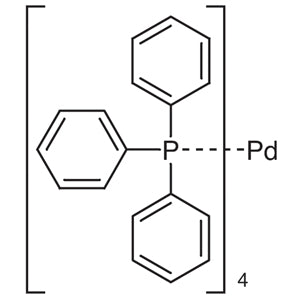
- TCI T1350 14221-01-3 Tetrakis(triphenylphosphine)palladium(0)
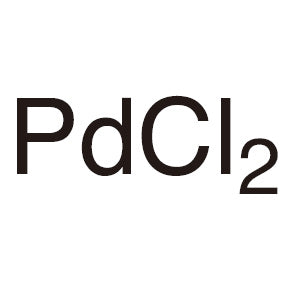
- TCI P1489 7647-10-1 Palladium(II) Chloride
- TCI P1528 12135-22-7 Palladium Hydroxide (contains Pd, PdO) on Carbon (wetted with ca 50% Water)
- TCI B3224 31277-98-2 Bis[1,2-bis(diphenylphosphino)ethane]palladium(0)
- Hydrogenation reactions benefit from this catalyst due to its high surface area and reactivity, enabling efficient hydrogen transfer in organic synthesis.
- Coupling reactions, such as the Suzuki and Heck reactions, rely on this material for its stability and ability to activate substrates under mild conditions.
- Catalytic reduction processes utilize this catalyst to facilitate the conversion of functional groups in a controlled and selective manner.
- Organic synthesis workflows often incorporate this material to enhance reaction rates and improve product yields in complex transformations.
- Environmental remediation applications may use this catalyst to break down pollutants in aqueous solutions through catalytic degradation.
From the TCI brochure
- Hydrogenation of olefins, acetylenes, nitriles, nitro groups and aromatic rings; debenzylation; hydrogenative dehalogenation; cross-coupling.
| Brand | TCI |
|---|---|
| CAS number | 7440-05-3 |
| Molecular formula | — |
| Purity | — |
| Category | Chemistry > Catalysis and Inorganic Chemistry > Hydrogenation [Catalysis] |
| Pack sizes | Available in various sizes as per standard laboratory requirements |
| Physical form | Powder or slurry, depending on the specific formulation |
| Storage | Store in a cool, dry place away from direct sunlight and moisture |
This material should be stored in a cool, dry environment to maintain its catalytic activity and prevent degradation. It is recommended to use airtight containers to minimize exposure to moisture and air, which could affect its performance. Due to its reactivity, it should be handled with care, using appropriate personal protective equipment such as gloves and safety goggles. Avoid contact with strong oxidizing agents or acids to prevent unwanted side reactions. In laboratory settings, it is important to ensure proper ventilation when working with this material to maintain a safe and controlled environment. Always follow standard safety protocols to ensure safe handling and storage practices.
—
Product Categories
- Catalysis and Inorganic ChemistryHydrogenation [Catalysis]Hydrogenation Catalysts
- Catalysis and Inorganic ChemistryTransition Elements [Catalysis and Inorganic Chemistry]Palladium [Catalysis and Inorganic Chemistry]
- Catalysis and Inorganic ChemistryCross-coupling Reaction using Transition Metal Catalysts [C-C Bond Formation]Palladium Catalysts [Cross-coupling Reaction using Transition Metal Catalysts]
- Chemical BiologyGlycoscienceReagents for Oligosaccharide Synthesis [Glycoscience]
- Synthetic ReagentsC-C Bond Formation [Synthetic Reagents]Cross-coupling Reaction using Transition Metal Catalysts [C-C Bond Formation]
Produk Terkait
-
Palladium10%onCarbon(wettedwithca55%Water) TCI P1491
Regular price From Rp 1.998.000,00Regular priceRp 1.359.000,00Sale price From Rp 1.998.000,00 -
Palladium5%onCarbon(wettedwithca55%Water) TCI P1490
Regular price From Rp 1.169.000,00Regular priceRp 795.000,00Sale price From Rp 1.169.000,00 -
Tetrakis(triphenylphosphine)palladium(0) TCI T1350
Regular price From Rp 1.426.000,00Regular priceRp 986.000,00Sale price From Rp 1.426.000,00 -
Palladium(II)Chloride TCI P1489
Regular price From Rp 3.059.000,00Regular priceRp 2.098.000,00Sale price From Rp 3.059.000,00 -
PalladiumHydroxide(containsPd,PdO)onCarbon(wettedwithca50%Water) TCI P1528
Regular price From Rp 8.560.000,00Regular priceRp 5.824.000,00Sale price From Rp 8.560.000,00 -
Bis[1,2-bis(diphenylphosphino)ethane]palladium(0) TCI B3224
Regular price Rp 2.307.000,00Regular priceRp 1.586.000,00Sale price Rp 2.307.000,00 -
Bis(tri-tert-butylphosphine)palladium(0) TCI B3161
Regular price From Rp 2.645.000,00Regular priceRp 1.815.000,00Sale price From Rp 2.645.000,00 -
[1,1'-Bis(di-tert-butylphosphino)ferrocene]palladium(II)Dichloride TCI B3160
Regular price From Rp 6.666.000,00Regular priceRp 4.551.000,00Sale price From Rp 6.666.000,00