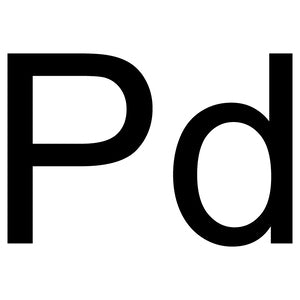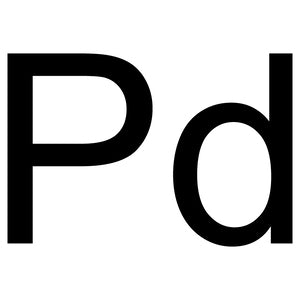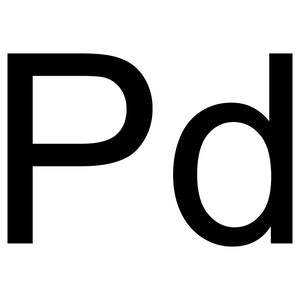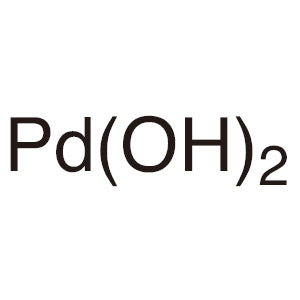
Palladium Hydroxide (contains Pd, PdO) on Carbon, with approximately 50% water content, is a chemical compound widely used in catalytic reactions, particularly in hydrogenation processes. This material serves as a versatile catalyst in laboratory settings, offering high reactivity and efficiency in various chemical transformations. It is a metal-based catalyst supported on carbon, which enhances its surface area and adsorption capacity, making it suitable for a wide range of applications. Its ability to facilitate hydrogenation reactions makes it an essential tool for researchers working in organic and inorganic chemistry.
The unique properties of Palladium Hydroxide make it a preferred choice for catalytic applications. Its high surface area and strong adsorption capacity allow it to interact effectively with reactants, promoting efficient reaction pathways. The presence of water in its structure further aids in the activation process, improving its performance in reactive environments. Additionally, the carbon support provides mechanical stability, ensuring the catalyst remains active and uniform during reactions. These characteristics make it ideal for use in both academic and industrial research settings.
In Indonesian laboratories, Palladium Hydroxide is commonly used in chemical research, particularly in the fields of catalysis and hydrogenation. It is a key component in experiments involving the hydrogenation of alkenes and aromatic compounds. Its availability and effectiveness make it a popular choice among researchers and institutions in Indonesia. The material is also used in the development of new chemical processes and the optimization of existing ones, contributing to scientific advancements in the region.
Related TCI products
- TCI P1785 7440-05-3 Palladium 10% on Carbon (wetted with ca 55% Water) [Useful catalyst for coupling reaction, etc]
- TCI P1491 7440-05-3 Palladium 10% on Carbon (wetted with ca 55% Water)
- TCI P1490 7440-05-3 Palladium 5% on Carbon (wetted with ca 55% Water)
- TCI P3303 7440-05-3 Palladium 75% on Carbon, PH type (wetted with ca 53% Water)
- TCI P3302 7440-05-3 Palladium 5% on Carbon, PH type (wetted with ca 55% Water)
- TCI P3301 7440-05-3 Palladium 10% on Carbon, MA type (wetted with ca 53% Water)
- Hydrogenation Reactions: Palladium Hydroxide is ideal for hydrogenation due to its high catalytic activity and ability to facilitate the reduction of unsaturated compounds.
- Organic Synthesis: It supports the synthesis of complex organic molecules by promoting efficient and selective hydrogenation processes.
- Catalytic Testing: Its stability and reactivity make it suitable for testing new catalytic systems and reaction conditions in research settings.
- Industrial Process Development: The material is used in developing and optimizing chemical processes that require efficient hydrogenation catalysts.
- Analytical Chemistry: It is employed in analytical procedures where precise control of hydrogenation reactions is necessary for accurate results.
| Brand | TCI |
|---|---|
| CAS number | 12135-22-7 |
| Molecular formula | — |
| Purity | — |
| Category | Chemistry > Catalysis and Inorganic Chemistry > Hydrogenation [Catalysis] |
| Pack sizes | — |
| Physical form | Wetted with approximately 50% water, supported on carbon |
| Storage | Store in a cool, dry place away from moisture and direct sunlight |
Palladium Hydroxide should be stored in a cool, dry environment to maintain its stability and catalytic activity. It is recommended to use airtight containers to prevent moisture absorption, which can affect its performance. Due to its wetted nature, it should be kept away from strong oxidizing agents to avoid unwanted reactions. Proper labeling of storage containers is essential for safe handling. In laboratory settings, it is important to wear appropriate personal protective equipment, such as gloves and safety goggles, when handling this material. Regular inspection of storage conditions ensures the material remains in optimal condition for use in chemical reactions.
—
Product Categories
Produk Terkait
-
Palladium10%onCarbon(wettedwithca55%Water)[Usefulcatalystforcouplingreaction,etc] TCI P1785
Regular price From Rp 2.041.200,00Regular price -
Palladium10%onCarbon(wettedwithca55%Water) TCI P1491
Regular price From Rp 2.041.200,00Regular price -
Palladium5%onCarbon(wettedwithca55%Water) TCI P1490
Regular price From Rp 1.193.850,00Regular price -
Palladium75%onCarbon,PHtype(wettedwithca53%Water) TCI P3303
Regular price From Rp 1.644.300,00Regular price -
Palladium5%onCarbon,PHtype(wettedwithca55%Water) TCI P3302
Regular price From Rp 1.431.150,00Regular price -
Palladium10%onCarbon,MAtype(wettedwithca53%Water) TCI P3301
Regular price From Rp 2.359.350,00Regular price -
Palladium5%onCarbon,Mtype(wettedwithca55%Water) TCI P3300
Regular price From Rp 1.298.850,00Regular price -
Palladium10%onCarbon,Mtype(wettedwithca55%Water) TCI P3299
Regular price From Rp 2.147.250,00Regular price
![7440-05-3 Palladium 10% on Carbon (wetted with ca. 55% Water) [Useful catalyst for coupling reaction, etc.] - AMI Scientific](http://amiscientific.com/cdn/shop/files/TCI2510P1785.jpg?v=1767135226&width=533)