Palladium 5% on Carbon (wetted with ca 55% Water) from TCI is a heterogeneous catalyst made of palladium metal dispersed on an activated carbon support, with a palladium loading of 5%. The product is deliberately wetted with approximately 55% water to make it safer to handle. Pd/C is one of the most widely used catalysts in organic synthesis laboratories. It is used mainly to hydrogenate multiple bonds, reduce nitro groups, and remove benzyl and Cbz protecting groups with hydrogen gas or a hydrogen donor.
Chemists choose this catalyst because it is active, selective in many reductive transformations, and easy to separate from the reaction mixture by simple filtration. Activated carbon has a very large surface area, so the palladium is spread evenly and many active sites are available. The 5% loading is active enough for many routine reactions and uses less precious metal than higher loadings. The water-wetted form, at about 55% water, greatly lowers the pyrophoric risk, which is the tendency of dry catalyst to ignite when it meets air and organic solvent vapours.
In Indonesian laboratories, 5% Pd/C is widely used in university research on drug synthesis, natural products, and organic chemistry. Researchers rely on it when they prepare intermediates, modify natural product scaffolds, or remove protecting groups in multistep syntheses. Because it is a reliable and well-documented catalyst, it is also a practical choice for teaching laboratories and for groups developing reduction methods. In all of these settings, the wetted form makes everyday weighing, transfer, and filtration safer.
- Hydrogenation of carbon–carbon double and triple bonds: the evenly dispersed palladium on activated carbon gives many active sites, so unsaturated compounds can be saturated efficiently with hydrogen gas or a suitable hydrogen donor.
- Reduction of nitro groups to amines: Pd/C is a standard catalyst for this transformation, and chemists can recover it from the reaction mixture by filtration once the reduction is complete.
- Removal of benzyl protecting groups: the catalyst cleaves benzyl ethers and related groups by hydrogenolysis, which makes it a key tool in multistep synthesis of drugs and natural products.
- Cleavage of Cbz (benzyloxycarbonyl) protecting groups: Pd/C removes Cbz groups from amines under reductive conditions, which supports work in peptide chemistry and the preparation of amine intermediates.
- Transfer hydrogenation with hydrogen donors: when handling hydrogen gas is impractical, this catalyst can work with a hydrogen donor, so reductive transformations stay accessible in laboratories with limited hydrogenation equipment.
| Brand | TCI (product code P1490) |
|---|---|
| CAS number | 7440-05-3 |
| Molecular formula | — |
| Purity | — |
| Category | Chemistry > Catalysis and Inorganic Chemistry > Hydrogenation [Catalysis] |
| Pack sizes | as listed in the TCI catalogue for product P1490 |
| Physical form | — |
| Storage | keep in its wetted state in a tightly closed container, away from ignition sources |
- Composition: 5% palladium on an activated carbon support, wetted with approximately 55% water
Keep the catalyst in its original, tightly closed container in a cool, well-ventilated area away from heat, open flames, and other ignition sources. Do not let the material dry out, because dry Pd/C can ignite when it meets air and organic solvent vapours. Store it away from oxidizing agents and flammable solvents. When charging a reaction, add the catalyst under an inert atmosphere where possible, before adding the organic solvent. Never let used catalyst dry on filter paper. Keep filter cakes wet and dispose of them according to local regulations for precious metal waste. Wear safety glasses, gloves, and a lab coat, and work in a fume hood. Always consult the TCI Safety Data Sheet before use.
—
Produk Terkait
-
TCI B5774 5,10-Bis(4,4,5,5-tetramethyl-1,3,2-dioxaborolan-2-yl)naphtho[1,2-c:5,6-c']bis([1,2,5]oxadiazole)
Regular price Rp 10.255.350,00Regular price -
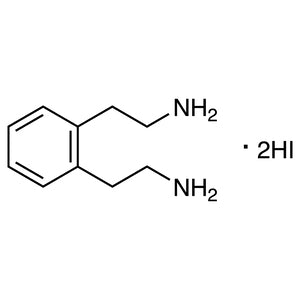
Dihydroiodide TCI B6569
Regular price From Rp 1.936.200,00Regular price -
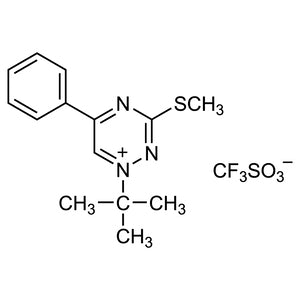
Trifluoromethanesulfonate TCI B7003
Regular price From Rp 1.936.200,00Regular price
![5,10-Bis(4,4,5,5-tetramethyl-1,3,2-dioxaborolan-2-yl)naphtho[1,2-c:5,6-c']bis([1,2,5]oxadiazole) - TCI B5774 - AMI Scientific](http://amiscientific.com/cdn/shop/files/TCI2510B5774.jpg?v=1769180228&width=533)