![7440-02-0 Skeletal Nickel Catalyst slurry in Water [Active catalyst for Hydrogenation] - AMI Scientific](http://amiscientific.com/cdn/shop/files/TCI2510K0073.jpg?v=1767121187&width=1946)
![7440-02-0 Skeletal Nickel Catalyst slurry in Water [Active catalyst for Hydrogenation] - AMI Scientific](http://amiscientific.com/cdn/shop/files/TCI2510K0073.jpg?v=1767121187&width=1445)
TCI K0073 Skeletal Nickel Catalyst slurry in Water is a highly porous nickel catalyst suspended in water, supplied as an active catalyst for hydrogenation reactions. This skeletal-type catalyst is widely known in organic chemistry laboratories as a heterogeneous catalyst capable of activating hydrogen gas at its metal surface, allowing unsaturated functional groups to be reduced efficiently. Its role in the laboratory is central to the reduction stage of synthetic work, covering hydrogenation of carbon-carbon double bonds, reduction of nitro groups to amines, and the reduction of nitriles and certain carbonyl compounds in multi-step synthesis.
The characteristics that make this catalyst a preferred choice are its very large active surface area, which results from the porous skeletal structure, together with the hydrogen adsorbed onto the metal surface that makes it reactive without requiring extreme hydrogen pressure for many substrates. The slurry-in-water presentation is a deliberate format decision: the water layer protects the metal surface from direct contact with atmospheric oxygen, so the catalyst remains active while being far safer to handle than a dry form. The catalyst is also heterogeneous in nature, remaining in a separate phase from the reaction mixture.
In Indonesian laboratories, this catalyst is typically used in organic synthesis and reduction work where a reliable heterogeneous hydrogenation catalyst is needed. It suits academic research groups, teaching laboratories running synthesis practicals, and industrial or contract laboratories carrying out multi-step preparations. Because it is supplied as an aqueous slurry rather than a dry powder, it fits workflows where handling convenience and surface protection during storage and transfer are practical considerations for the working chemist.
- Hydrogenation of carbon-carbon double bonds: the porous skeletal nickel surface activates hydrogen gas directly, allowing unsaturated carbon-carbon bonds to be saturated efficiently under laboratory conditions.
- Reduction of nitro groups to amines: this catalyst supports the conversion of nitro functionality into the corresponding amine, a routine and frequently required transformation in organic synthesis.
- Reduction of nitrile compounds: the active nickel surface enables nitrile groups to be reduced as part of preparative sequences where amine products are the synthetic target.
- Reduction of selected carbonyl compounds: certain carbonyl substrates can be reduced over this catalyst during multi-step synthesis, making it useful at intermediate stages of a preparation.
- Heterogeneous catalysis in preparative organic chemistry: because the catalyst occupies a separate phase from the reaction mixture, it suits preparative work where the catalyst must remain distinct from the reaction medium.
| Brand | TCI |
|---|---|
| CAS number | 7440-02-0 |
| Molecular formula | — |
| Purity | — |
| Category | Chemistry > Catalysis and Inorganic Chemistry > Hydrogenation [Catalysis] |
| Pack sizes | — |
| Physical form | skeletal (porous) nickel catalyst supplied as a slurry in water |
| Storage | keep the catalyst covered by its water layer at all times to maintain activity and safe handling |
- Product code: K0073
Store the container closed and upright so that the catalyst always remains covered by its water layer, since this layer is what protects the metal surface from direct contact with atmospheric oxygen. Keep the material in its original supplier container or an equivalent tightly closed, chemically compatible container. Never allow the catalyst to dry out during storage, transfer, or weighing. Handle in a fume hood with appropriate laboratory personal protective equipment, including gloves, safety glasses, and a laboratory coat. Keep away from ignition sources, transfer carefully to avoid spillage, and consult the supplier safety data sheet before use and before disposal of spent catalyst.
—
Produk Terkait
-
TCI B5774 5,10-Bis(4,4,5,5-tetramethyl-1,3,2-dioxaborolan-2-yl)naphtho[1,2-c:5,6-c']bis([1,2,5]oxadiazole)
Regular price Rp 10.255.350,00Regular price -
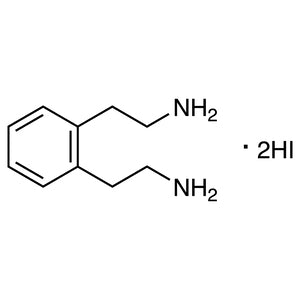
Dihydroiodide TCI B6569
Regular price From Rp 1.936.200,00Regular price -
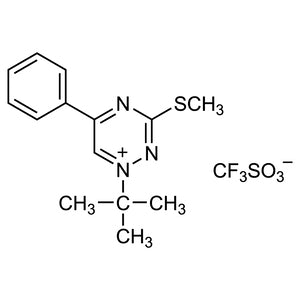
Trifluoromethanesulfonate TCI B7003
Regular price From Rp 1.936.200,00Regular price
![5,10-Bis(4,4,5,5-tetramethyl-1,3,2-dioxaborolan-2-yl)naphtho[1,2-c:5,6-c']bis([1,2,5]oxadiazole) - TCI B5774 - AMI Scientific](http://amiscientific.com/cdn/shop/files/TCI2510B5774.jpg?v=1769180228&width=533)