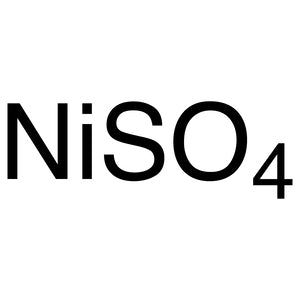
Nickel(II) Sulfate, with the chemical formula NiSO₄, is a versatile inorganic compound widely used in laboratory settings. As a sulfate salt of the nickel(II) ion, it plays a crucial role in catalytic processes and inorganic chemistry. This compound is commonly employed in chemical experiments to facilitate reactions, improve reaction efficiency, and support the synthesis of complex compounds. Its presence in various laboratory applications highlights its importance in both research and educational environments.
One of the key reasons for its popularity is its chemical stability and solubility in water. These properties make it an ideal choice for a wide range of experimental setups. The compound’s consistent chemical behavior and high stability ensure reliable results across different experimental conditions. Additionally, its distinct greenish-yellow color and ease of dissolution in aqueous solutions simplify handling and usage in various chemical processes.
In Indonesian laboratories, Nickel(II) Sulfate is frequently used in chemical research, particularly in catalysis and inorganic synthesis. It is also a valuable tool in educational institutions for teaching fundamental chemical reactions and properties. Its widespread use in both academic and industrial research underscores its significance in the scientific community.
- Catalytic Reactions: Nickel(II) Sulfate is commonly used as a catalyst in various chemical reactions due to its ability to facilitate redox processes and enhance reaction efficiency.
- Inorganic Synthesis: It serves as a reagent in the synthesis of complex inorganic compounds, providing a stable source of nickel ions for coordination chemistry experiments.
- Redox Studies: Its role in redox reactions makes it an essential material for studying electron transfer mechanisms and electrochemical processes.
- Educational Demonstrations: It is frequently used in educational laboratories to illustrate chemical properties, solubility, and reaction mechanisms in a visual and practical manner.
- Analytical Chemistry: Its stable properties and distinct color make it useful in qualitative and quantitative analysis for identifying and quantifying nickel compounds.
| Brand | TCI |
|---|---|
| CAS number | 7786-81-4 |
| Molecular formula | — |
| Purity | — |
| Category | Chemistry > Catalysis and Inorganic Chemistry > Transition Elements |
| Pack sizes | Available in various quantities as per standard laboratory supply specifications |
| Physical form | Crystalline solid with a greenish-yellow color |
| Storage | Store in a cool, dry place away from moisture and direct sunlight |
Nickel(II) Sulfate should be stored in a cool, dry environment to maintain its chemical stability and prevent degradation. It is recommended to keep the compound in a sealed container to avoid moisture absorption, which could affect its solubility and purity. Due to its hygroscopic nature, it is important to ensure that the storage area is well-ventilated and free from sources of humidity. The compound is generally non-toxic but should be handled with care to avoid direct contact with skin or inhalation of dust. In laboratory settings, it is advisable to use appropriate personal protective equipment such as gloves and safety goggles when handling or dispensing the material. Proper storage and handling procedures help ensure the compound remains effective and safe for use in various experimental applications.
—
Produk Terkait
-
TCI B5774 5,10-Bis(4,4,5,5-tetramethyl-1,3,2-dioxaborolan-2-yl)naphtho[1,2-c:5,6-c']bis([1,2,5]oxadiazole)
Regular price Rp 10.255.350,00Regular price -
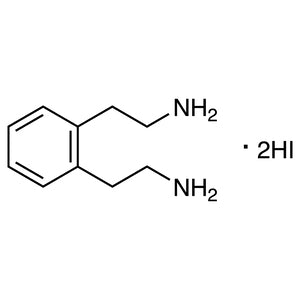
Dihydroiodide TCI B6569
Regular price From Rp 1.936.200,00Regular price -
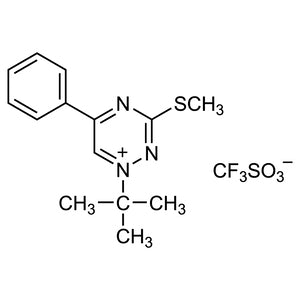
Trifluoromethanesulfonate TCI B7003
Regular price From Rp 1.936.200,00Regular price
![5,10-Bis(4,4,5,5-tetramethyl-1,3,2-dioxaborolan-2-yl)naphtho[1,2-c:5,6-c']bis([1,2,5]oxadiazole) - TCI B5774 - AMI Scientific](http://amiscientific.com/cdn/shop/files/TCI2510B5774.jpg?v=1769180228&width=533)