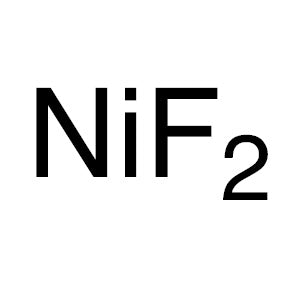
Nickel(II) Fluoride (NiF₂), with the CAS number 10028-18-9, is a chemical compound widely used in laboratory settings, particularly in catalysis and inorganic chemistry. As a transition metal fluoride, it plays a crucial role in facilitating chemical reactions by acting as a catalyst or reagent. Its unique chemical properties make it valuable in a variety of experimental processes, especially those involving metal ion interactions and complex synthesis. In the laboratory, NiF₂ is essential for accelerating reaction rates and improving the efficiency of chemical processes. Its versatility and reactivity make it a preferred choice for researchers working on advanced chemical applications.
Nickel(II) Fluoride is known for its high reactivity and ability to form stable complexes with various metal ions. It has a stable crystalline structure and is soluble in water, which enhances its utility in aqueous-based experiments. The compound’s affinity for other metal ions allows it to participate in a wide range of chemical reactions, making it ideal for applications requiring catalytic activity. Its thermal stability also ensures it remains effective under varying experimental conditions. These properties collectively make NiF₂ a reliable and efficient material for use in both academic and industrial research environments.
In Indonesian laboratories, Nickel(II) Fluoride is commonly used in chemical research, especially in studies related to transition metals and catalytic processes. It is frequently employed in the synthesis of complex compounds and in experiments that require high reactivity and catalytic efficiency. Its availability and performance make it a standard component in many laboratory setups, supporting both teaching and research activities. Its role in advancing chemical understanding and application is well recognized in the scientific community.
TCI brochures (PDF)
- Metallic Salts 2025-11-06 · p. 2
- Transition Metal Catalysts 2026-04-10 · p. 12
Related TCI products
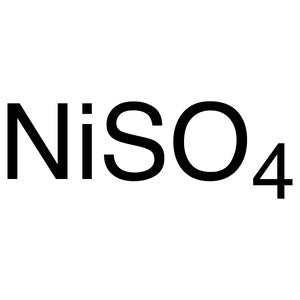
- TCI N1264 7786-81-4 Nickel(II) Sulfate
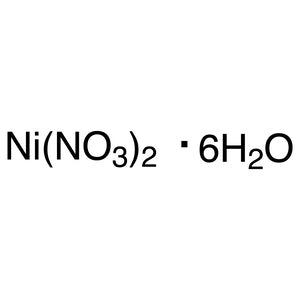
- TCI N1252 13478-00-7 Nickel(II) Nitrate Hexahydrate
- TCI N0851 7791-20-0 Nickel(II) Chloride Hexahydrate
- TCI N0850 7718-54-9 Nickel(II) Chloride Anhydrous
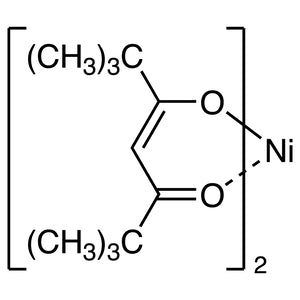
- TCI N1207 14481-08-4 Nickel(II) Bis(2,2,6,6-tetramethyl-3,5-heptanedionate)
- TCI N0096 120156-44-7 Bis(2,4-pentanedionato)nickel(II) Hydrate
- Catalytic Reactions: Nickel(II) Fluoride is widely used in catalytic processes due to its ability to facilitate chemical reactions by lowering activation energy and increasing reaction efficiency.
- Metal Ion Complexation: The compound is effective in forming complexes with various metal ions, making it useful in studies involving metal coordination chemistry and ion exchange.
- Inorganic Synthesis: It is employed in the synthesis of inorganic compounds, where its reactivity and solubility aid in the formation of complex structures and compounds.
- Analytical Chemistry: NiF₂ is used in analytical techniques to detect and quantify metal ions, offering high sensitivity and specificity in qualitative and quantitative analysis.
- Material Science Research: The compound's unique properties make it valuable in the development and characterization of new materials, particularly those involving transition metals and their derivatives.
| Brand | TCI |
|---|---|
| CAS number | 10028-18-9 |
| Molecular formula | — |
| Purity | — |
| Category | Chemistry > Catalysis and Inorganic Chemistry > Transition Elements |
| Pack sizes | Available in various quantities as per supplier specifications |
| Physical form | Solid powder |
| Storage | Store in a cool, dry place away from moisture and direct sunlight |
Nickel(II) Fluoride should be stored in a cool, dry environment to maintain its chemical stability and prevent degradation. It is recommended to keep the compound in airtight containers to avoid exposure to moisture, which can affect its reactivity and purity. Due to its high reactivity, it should be handled with care, using appropriate personal protective equipment such as gloves and safety goggles. It is advisable to store it away from incompatible substances to prevent unwanted chemical reactions. In laboratory settings, proper ventilation is essential to ensure safe handling and minimize any potential hazards. Regular inspection of storage conditions is necessary to ensure the compound remains in optimal condition for use.
—
Product Categories
- Catalysis and Inorganic ChemistryTransition Elements [Catalysis and Inorganic Chemistry]Nickel [Catalysis and Inorganic Chemistry]
- Catalysis and Inorganic ChemistryCross-coupling Reaction using Transition Metal Catalysts [C-C Bond Formation]Nickel Catalysts [Cross-coupling Reaction using Transition Metal Catalysts]
- Catalysis and Inorganic ChemistryMetallic Salts [Catalysis and Inorganic Chemistry]Fluoride Salts [Metallic Salts]
- Synthetic ReagentsC-C Bond Formation [Synthetic Reagents]Cross-coupling Reaction using Transition Metal Catalysts [C-C Bond Formation]
Produk Terkait
-
Nickel(II)Sulfate TCI N1264
Regular price From Rp 875.700,00Regular priceRp 612.150,00Sale price From Rp 875.700,00 -
Nickel(II)NitrateHexahydrate TCI N1252
Regular price From Rp 610.050,00Regular priceRp 426.300,00Sale price From Rp 610.050,00 -
Nickel(II)ChlorideHexahydrate TCI N0851
Regular price From Rp 505.050,00Regular priceRp 352.800,00Sale price From Rp 505.050,00 -
Nickel(II)ChlorideAnhydrous TCI N0850
Regular price From Rp 610.050,00Regular priceRp 426.300,00Sale price From Rp 610.050,00 -
Nickel(II)Bis(2,2,6,6-tetramethyl-3,5-heptanedionate) TCI N1207
Regular price From Rp 1.485.750,00Regular priceRp 1.038.450,00Sale price From Rp 1.485.750,00 -
Bis(2,4-pentanedionato)nickel(II)Hydrate TCI N0096
Regular price From Rp 2.041.200,00Regular priceRp 1.426.950,00Sale price From Rp 2.041.200,00 -
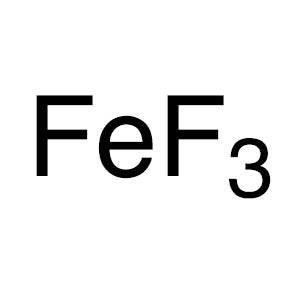
Iron(III)Fluoride TCI I1153
Regular price From Rp 1.538.250,00Regular priceRp 1.075.200,00Sale price From Rp 1.538.250,00 -
CesiumFluoride TCI C2204
Regular price From Rp 1.803.900,00Regular priceRp 1.261.050,00Sale price From Rp 1.803.900,00