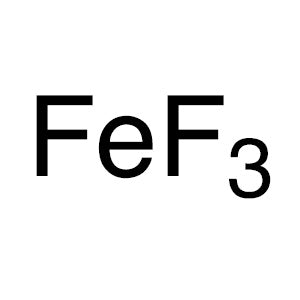
Iron(III) Fluoride (FeF₃) is an inorganic compound widely used in chemical reactions, particularly in catalysis and inorganic chemistry. It plays a crucial role in laboratory settings where the synthesis of complex compounds and redox reactions are required. As a versatile reagent, FeF₃ is often employed in the formation of other fluoride compounds and as a catalyst in various chemical processes. Its unique chemical properties make it an essential component in both academic and industrial research environments.
FeF₃ is valued for its stable crystalline structure and strong chemical reactivity. It exhibits the ability to interact with both organic and inorganic compounds, enabling the occurrence of complex and specific chemical reactions. Its high reactivity allows for efficient and rapid reactions, making it ideal for applications requiring precision and speed. Additionally, FeF₃ demonstrates good thermal stability, which is beneficial in high-temperature laboratory conditions. These properties collectively make it a preferred choice for a wide range of chemical applications.
In Indonesian laboratories, FeF₃ is commonly used in chemical research, especially in higher education institutions and research organizations. It is frequently found in experiments related to transition metal reactivity and the electronic properties of complex compounds. Its availability and reliability make it a standard material in chemical laboratories across Indonesia, supporting both teaching and research activities.
TCI brochures (PDF)
- Metallic Salts 2025-11-06 · p. 2
- Transition Metal Catalysts 2026-04-10 · p. 7
- Redox Reaction Studies - FeF₃ is an effective reagent for studying oxidation-reduction processes due to its strong chemical reactivity and ability to participate in electron transfer reactions.
- Catalytic Synthesis - It serves as a catalyst in the synthesis of various organic and inorganic compounds, promoting efficient and selective chemical transformations.
- Fluoride Compound Preparation - FeF₃ is used in the preparation of other fluoride compounds, making it essential in inorganic chemistry laboratories.
- Transition Metal Reactivity Research - Its role in studying the reactivity of transition metals makes it valuable in research focused on metal complexes and their properties.
- High-Temperature Experiments - The compound's thermal stability allows it to be used in experiments requiring elevated temperatures, such as thermal decomposition studies.
| Brand | — |
|---|---|
| CAS number | — |
| Molecular formula | — |
| Purity | — |
| Category | — |
| Pack sizes | — |
| Physical form | — |
| Storage | — |
- Brand - TCI
- CAS Number - 7783-50-8
- Category - Chemistry > Catalysis and Inorganic Chemistry > Transition Elements
- Pack Sizes - Available in various quantities as per standard laboratory supply formats
- Physical Form - Solid
- Storage Note - Store in a cool, dry place away from moisture and direct sunlight
FeF₃ should be stored in a cool, dry environment to maintain its stability and prevent degradation. It is recommended to keep the compound in a sealed container to avoid exposure to moisture, which can lead to unwanted reactions. Due to its reactivity, it should be handled with care, using appropriate personal protective equipment such as gloves and safety goggles. It is important to store FeF₃ away from incompatible substances like strong bases or organic solvents to ensure safety. In laboratory settings, proper ventilation should be maintained when handling this compound to minimize any potential risks associated with its chemical properties.
—
Product Categories
- Catalysis and Inorganic ChemistryTransition Elements [Catalysis and Inorganic Chemistry]Iron [Catalysis and Inorganic Chemistry]
- Catalysis and Inorganic ChemistryCross-coupling Reaction using Transition Metal Catalysts [C-C Bond Formation]Iron Catalysts [Cross-coupling Reaction using Transition Metal Catalysts]
- Catalysis and Inorganic ChemistryMetallic Salts [Catalysis and Inorganic Chemistry]Fluoride Salts [Metallic Salts]
- Synthetic ReagentsC-C Bond Formation [Synthetic Reagents]Cross-coupling Reaction using Transition Metal Catalysts [C-C Bond Formation]
Produk Terkait
-
Nickel(II)Fluoride TCI N1215
Regular price From Rp 1.326.150,00Regular priceRp 927.150,00Sale price From Rp 1.326.150,00 -
CesiumFluoride TCI C2204
Regular price From Rp 1.803.900,00Regular priceRp 1.261.050,00Sale price From Rp 1.803.900,00 -
Iron(II)Bromide TCI F1338
Regular price From Rp 1.936.200,00Regular priceRp 1.353.450,00Sale price From Rp 1.936.200,00 -
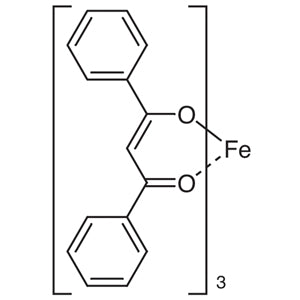
Tris(dibenzoylmethanato)Iron(III) TCI T1686
Regular price From Rp 2.837.100,00Regular priceRp 1.983.450,00Sale price From Rp 2.837.100,00 -
Tris(2,4-pentanedionato)iron(III) TCI I0079
Regular price From Rp 743.400,00Regular priceRp 519.750,00Sale price From Rp 743.400,00 -
Manganese(II)Fluoride TCI M3429
Regular price From Rp 2.094.750,00Regular priceRp 1.464.750,00Sale price From Rp 2.094.750,00 -
Silver(I)Fluoride TCI I1075
Regular price From Rp 2.597.700,00Regular priceRp 1.816.500,00Sale price From Rp 2.597.700,00 -
Copper(II)Fluoride TCI C3762
Regular price From Rp 1.298.850,00Regular priceRp 908.250,00Sale price From Rp 1.298.850,00