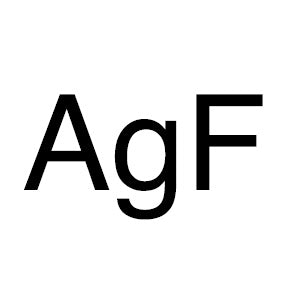
Silver(I) Fluoride (AgF) is a chemical compound widely used in laboratory settings for its catalytic and reactivity properties. It plays a crucial role in various chemical reactions and catalytic processes, particularly in inorganic chemistry and transition metal catalysis. As a versatile reagent, AgF is employed to accelerate chemical reactions or assist in the synthesis of complex compounds. Its unique chemical properties make it a valuable tool for researchers aiming to explore redox reactions and ionic interactions.
The compound is known for its high melting and boiling points, which contribute to its stability under normal laboratory conditions. These physical properties make it suitable for use in a wide range of experimental setups. Additionally, its ability to form complexes with metal ions enhances its utility in catalytic systems. The reactivity of AgF allows it to participate in reactions requiring ionic interactions, making it a preferred choice for chemists working in both inorganic and catalytic fields.
In Indonesian laboratories, Silver(I) Fluoride is commonly used in research and development of chemical materials. It is frequently found in studies related to inorganic chemistry and catalysis, as well as in the synthesis of complex compounds. Due to its availability and broad applications, AgF remains an essential material for scientific research in Indonesia. Its role in accelerating chemical reactions and supporting synthetic processes makes it a key component in many laboratory experiments.
TCI brochures (PDF)
- Safe and Easy-to-handle Trifluoromethoxylating Agent TFNf 2026-08-07 · p. 1
- Metallic Salts 2025-11-06 · p. 2
- Transition Metal Catalysts 2026-04-10 · p. 16
Related TCI products
- Inorganic Chemistry Research: Silver(I) Fluoride is used to study the behavior of metal ions and their interactions in chemical reactions.
- Catalytic Processes: It serves as a catalyst in various reactions, enhancing reaction rates and improving efficiency in chemical synthesis.
- Redox Reaction Studies: Its reactivity makes it suitable for experiments involving oxidation-reduction processes and ionic interactions.
- Complex Compound Synthesis: AgF is employed to facilitate the formation of coordination complexes and other intricate chemical structures.
- Material Development: It is used in the development of new chemical materials and compounds through controlled reaction environments.
| Brand | TCI |
|---|---|
| CAS number | 7775-41-9 |
| Molecular formula | — |
| Purity | — |
| Category | Chemistry > Catalysis and Inorganic Chemistry > Transition Elements |
| Pack sizes | Available in various quantities as per standard laboratory requirements |
| Physical form | Solid |
| Storage | Store in a cool, dry place away from moisture and direct sunlight |
Silver(I) Fluoride should be stored in a cool, dry environment to maintain its chemical stability. It is recommended to use airtight containers to prevent exposure to moisture, which can affect its properties. Due to its reactivity, it should be handled with care, using appropriate personal protective equipment such as gloves and safety goggles. Avoid contact with incompatible substances, and ensure proper ventilation in the laboratory. Storage conditions should be controlled to prevent degradation and maintain the compound’s effectiveness in experimental applications. Always follow standard laboratory safety protocols when working with reactive chemicals like Silver(I) Fluoride.
—
Produk Terkait
-
SilverHexafluorophosphate TCI S0981
Regular price From Rp 1.829.100,00Regular priceRp 1.278.900,00Sale price From Rp 1.829.100,00 -
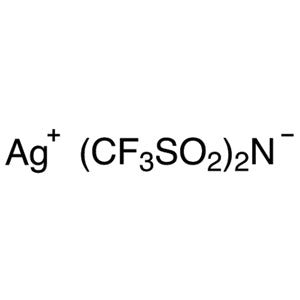
SilverBis(trifluoromethanesulfonyl)imide TCI S0898
Regular price From Rp 5.485.200,00Regular priceRp 3.835.650,00Sale price From Rp 5.485.200,00 -
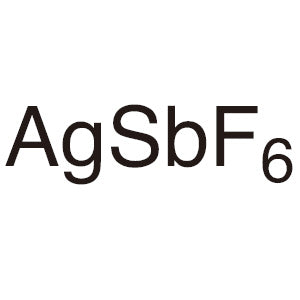
SilverHexafluoroantimonate(V) TCI S0463
Regular price Rp 3.155.250,00Regular priceRp 2.206.050,00Sale price Rp 3.155.250,00 -
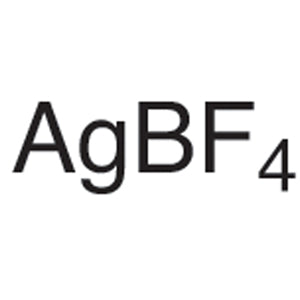
SilverTetrafluoroborate TCI S0446
Regular price From Rp 2.650.200,00Regular priceRp 1.853.250,00Sale price From Rp 2.650.200,00 -
PotassiumSilver(I)Cyanide TCI P3370
Regular price Rp 848.400,00Regular priceRp 593.250,00Sale price Rp 848.400,00 -
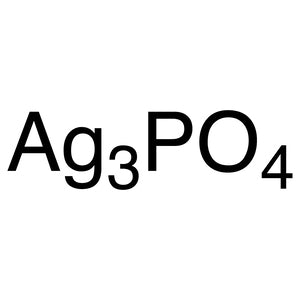
Silver(I)Phosphate TCI I1259
Regular price From Rp 1.670.550,00Regular priceRp 1.167.600,00Sale price From Rp 1.670.550,00 -
Silver(I)Bromide TCI I1258
Regular price From Rp 1.644.300,00Regular priceRp 1.149.750,00Sale price From Rp 1.644.300,00 -
Silver(I)Nitrate TCI I1245
Regular price From Rp 795.900,00Regular priceRp 556.500,00Sale price From Rp 795.900,00