Nickel(II) Chloride Anhydrous (NiCl₂) is a chemical compound widely used in various laboratory applications, particularly in catalysis and inorganic chemistry. As a key reagent in chemical reactions, it plays a crucial role in facilitating reactions without being consumed in the final products. Its versatility makes it an essential component in the synthesis of complex compounds and in the development of new chemical processes. In laboratory settings, NiCl₂ is often employed to enhance reaction efficiency and control reaction pathways, making it a valuable tool for chemists working in both academic and industrial environments.
The properties of Nickel(II) Chloride Anhydrous that make it a preferred choice include its stability, reactivity, and ability to form metal complexes with various ligands. It exhibits excellent catalytic activity in redox reactions and is capable of activating C-H bonds, which is vital in organic synthesis. Additionally, its high melting point allows it to remain stable under extreme reaction conditions, ensuring consistent performance. These characteristics make it a reliable and efficient reagent for a wide range of chemical applications.
In Indonesian laboratories, Nickel(II) Chloride Anhydrous is commonly used in chemical research, especially in catalysis and organic synthesis. Its role in promoting efficient chemical reactions without altering molecular structures significantly makes it a preferred choice for researchers. The compound is frequently utilized in both academic and industrial settings, supporting advancements in chemical processes and material development.
TCI brochures (PDF)
- C-H Bond Activation Reaction 2025-06-20 · p. 6
- Metallic Salts 2025-11-06 · p. 3
- Transition Metal Catalysts 2026-04-10 · p. 12
- Suzuki-Miyaura Cross Coupling Reaction 2025-12-01 · p. 23
Related TCI products
- TCI N0851 7791-20-0 Nickel(II) Chloride Hexahydrate
- TCI N0096 120156-44-7 Bis(2,4-pentanedionato)nickel(II) Hydrate
- TCI B3235 903592-98-3 [1,3-Bis(2,6-diisopropylphenyl)imidazol-2-ylidene]triphenylphosphine Nickel(II) Dichloride
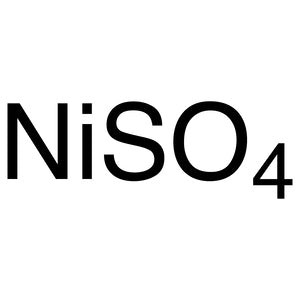
- TCI N1264 7786-81-4 Nickel(II) Sulfate
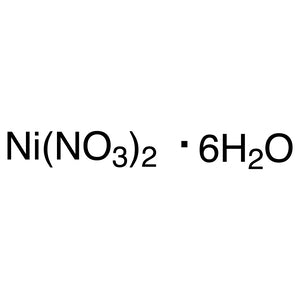
- TCI N1252 13478-00-7 Nickel(II) Nitrate Hexahydrate
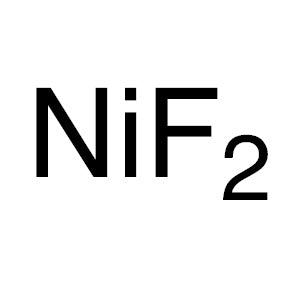
- TCI N1215 10028-18-9 Nickel(II) Fluoride
- C-H Activation Reactions: Nickel(II) Chloride Anhydrous is ideal for C-H activation due to its catalytic properties that facilitate selective bond-breaking in complex organic molecules.
- Redox Reaction Catalysis: Its ability to participate in redox reactions makes it a preferred catalyst for oxidation and reduction processes in synthetic chemistry.
- Inorganic Complex Formation: The compound is widely used to form stable metal complexes with various ligands, which is essential in coordination chemistry studies.
- Organic Synthesis Processes: Its role in promoting efficient chemical transformations makes it a key reagent in the synthesis of organic compounds and functional materials.
- Industrial Catalytic Processes: Its stability and catalytic efficiency make it suitable for large-scale chemical manufacturing and process optimization.
| Brand | TCI |
|---|---|
| CAS number | 7718-54-9 |
| Molecular formula | — |
| Purity | — |
| Category | Chemistry > Catalysis and Inorganic Chemistry > C-H Activation [Catalysis] |
| Pack sizes | Available in various quantities as per standard laboratory requirements |
| Physical form | Anhydrous powder |
| Storage | Store in a cool, dry place away from moisture and direct sunlight |
Nickel(II) Chloride Anhydrous should be stored in a cool, dry environment to maintain its chemical stability. It is recommended to keep it in a tightly sealed container to prevent moisture absorption, which can lead to degradation. The compound is hygroscopic and should be handled in a well-ventilated area to avoid inhalation of dust particles. When working with this material, it is important to use appropriate personal protective equipment, such as gloves and safety goggles. It should not be stored near incompatible substances like strong bases or organic solvents. Proper labeling and storage conditions ensure the safety and effectiveness of the compound in laboratory settings.
—
Product Categories
- Catalysis and Inorganic ChemistryC-H Activation [Catalysis]Nickel Compounds [C-H Activation]
- Catalysis and Inorganic ChemistryNon-Precious Metal Catalysis [Catalysis]
- Catalysis and Inorganic ChemistryTransition Elements [Catalysis and Inorganic Chemistry]Nickel [Catalysis and Inorganic Chemistry]
- Catalysis and Inorganic ChemistryCross-coupling Reaction using Transition Metal Catalysts [C-C Bond Formation]Nickel Catalysts [Cross-coupling Reaction using Transition Metal Catalysts]
- Catalysis and Inorganic ChemistryMetallic Salts [Catalysis and Inorganic Chemistry]Chloride Salts [Metallic Salts]
- Synthetic ReagentsC-C Bond Formation [Synthetic Reagents]Cross-coupling Reaction using Transition Metal Catalysts [C-C Bond Formation]
- Synthetic ReagentsC-X(Non-Halogen) Bond Formation [Synthetic Reagents]C-H Bond Activation Reaction [Synthetic Reagents]
Produk Terkait
-
Nickel(II)ChlorideHexahydrate TCI N0851
Regular price From Rp 505.050,00Regular priceRp 352.800,00Sale price From Rp 505.050,00 -
Bis(2,4-pentanedionato)nickel(II)Hydrate TCI N0096
Regular price From Rp 2.041.200,00Regular priceRp 1.426.950,00Sale price From Rp 2.041.200,00 -
[1,3-Bis(2,6-diisopropylphenyl)imidazol-2-ylidene]triphenylphosphineNickel(II)Dichloride TCI B3235
Regular price From Rp 2.518.950,00Regular priceRp 1.776.600,00Sale price From Rp 2.518.950,00 -
Nickel(II)Sulfate TCI N1264
Regular price From Rp 875.700,00Regular priceRp 612.150,00Sale price From Rp 875.700,00 -
Nickel(II)NitrateHexahydrate TCI N1252
Regular price From Rp 610.050,00Regular priceRp 426.300,00Sale price From Rp 610.050,00 -
Nickel(II)Fluoride TCI N1215
Regular price From Rp 1.326.150,00Regular priceRp 927.150,00Sale price From Rp 1.326.150,00 -
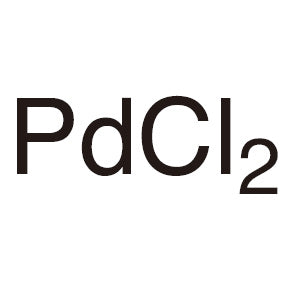
Palladium(II)Chloride TCI P1489
Regular price From Rp 3.127.950,00Regular priceRp 2.202.900,00Sale price From Rp 3.127.950,00 -
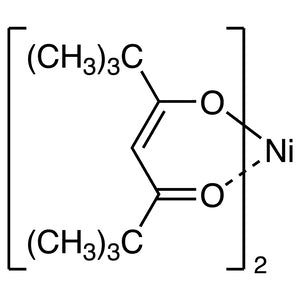
Nickel(II)Bis(2,2,6,6-tetramethyl-3,5-heptanedionate) TCI N1207
Regular price From Rp 1.485.750,00Regular priceRp 1.038.450,00Sale price From Rp 1.485.750,00