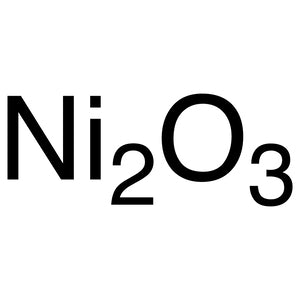
Nickel(III) Oxide Black (Ni₂O₃), with the CAS number 1314-06-3, is an inorganic compound widely utilized in chemical experiments, particularly in the fields of catalysis and inorganic chemistry. As a transition metal oxide, it plays a crucial role in various chemical reactions, especially those involving oxidation and reduction processes. Its unique chemical properties make it a valuable material in laboratory settings where high reactivity and catalytic activity are required. This compound is commonly used as a reagent in the synthesis of complex chemical compounds and in analytical procedures that demand precise chemical interactions.
The physical and chemical stability of Nickel(III) Oxide Black, combined with its dark color, indicates a dense crystalline structure and high density. Its insolubility in water makes it suitable for applications requiring chemical stability under specific conditions. Additionally, its ability to interact with a wide range of chemical substances makes it a preferred choice for advanced chemical research. The compound’s reactivity towards certain environments further enhances its utility in specialized laboratory applications.
In Indonesian laboratories, Nickel(III) Oxide Black is frequently used in chemical research and development, particularly in academic and industrial settings. Its role in catalytic processes and chemical synthesis makes it an essential component in both teaching and research environments. The compound’s properties support its use in experiments that require controlled chemical reactions and precise material interactions. Its availability through suppliers like AMI Scientific ensures that it remains a reliable resource for Indonesian researchers and educators.
TCI brochures (PDF)
- Metallic Salts 2025-11-06 · p. 6
- Transition Metal Catalysts 2026-04-10 · p. 12
- Catalytic Reactions: Nickel(III) Oxide Black is ideal for catalytic processes due to its ability to facilitate oxidation and reduction reactions, enhancing reaction efficiency and selectivity.
- Chemical Synthesis: It is widely used in the synthesis of complex inorganic compounds, providing a stable and reactive material for forming new chemical structures.
- Analytical Chemistry: Its chemical stability and reactivity make it suitable for analytical procedures requiring precise and controlled chemical interactions.
- Material Science Research: The compound is employed in studies involving transition metal oxides, contributing to the development of new materials with specific properties.
- Environmental Studies: Its role in oxidation processes makes it useful for studying environmental chemical transformations and pollutant degradation.
| Brand | TCI |
|---|---|
| CAS number | 1314-06-3 |
| Molecular formula | — |
| Purity | — |
| Category | Chemistry > Catalysis and Inorganic Chemistry > Transition Elements |
| Pack sizes | Available in various quantities as per supplier specifications |
| Physical form | Black powder |
| Storage | Store in a cool, dry place away from moisture and incompatible substances |
Nickel(III) Oxide Black should be stored in a cool, dry environment to maintain its chemical stability and prevent degradation. It is recommended to use airtight containers to protect it from moisture and potential contaminants. Due to its reactivity, it should be kept away from incompatible substances such as acids and strong oxidizers. Proper labeling and safe handling procedures are essential to ensure laboratory safety. Regular inspection of storage conditions is advised to maintain the integrity of the material. Always follow standard laboratory safety protocols when handling this compound to minimize risks associated with its reactivity.
—
Produk Terkait
-
Nickel(II)Oxide,Green TCI N1265
Regular price From Rp 955.500,00Regular priceRp 667.800,00Sale price From Rp 955.500,00 -
Nickel(II)Sulfate TCI N1264
Regular price From Rp 875.700,00Regular priceRp 612.150,00Sale price From Rp 875.700,00 -
Nickel(II)NitrateHexahydrate TCI N1252
Regular price From Rp 610.050,00Regular priceRp 426.300,00Sale price From Rp 610.050,00 -
Nickel(II)Iodide TCI N1238
Regular price From Rp 1.696.800,00Regular priceRp 1.202.250,00Sale price From Rp 1.696.800,00 -
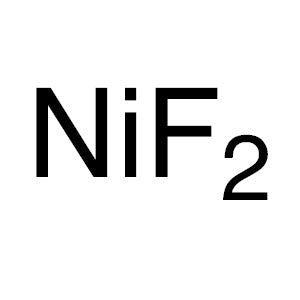
Nickel(II)Fluoride TCI N1215
Regular price From Rp 1.326.150,00Regular priceRp 927.150,00Sale price From Rp 1.326.150,00 -
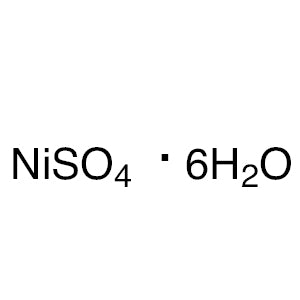
Nickel(II)SulfateHexahydrate TCI N1203
Regular price From Rp 477.750,00Regular priceRp 333.900,00Sale price From Rp 477.750,00 -
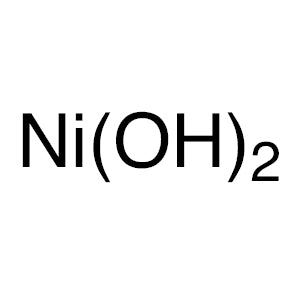
Nickel(II)Hydroxide TCI N1202
Regular price From Rp 664.650,00Regular priceRp 464.100,00Sale price From Rp 664.650,00 -
Nickel(II)ChlorideHexahydrate TCI N0851
Regular price From Rp 505.050,00Regular priceRp 352.800,00Sale price From Rp 505.050,00