4-n-Octyl-2-(4,4,5,5-tetramethyl-1,3,2-dioxaborolan-2-yl)thiophene is a specialized organoboron compound used in advanced chemical research, particularly in the field of organometallic chemistry. This compound plays a crucial role in various synthetic processes, especially in the development of complex molecular structures. Its unique structure combines a thiophene ring with a boronic acid derivative, making it an essential reagent for coupling reactions and the synthesis of heterocyclic compounds. Due to its reactivity and functional group versatility, it is widely employed in both academic and industrial laboratories.
The compound's organoboron functionality provides high reactivity and selectivity in controlled chemical environments. Its stability under certain conditions allows for precise manipulation during synthesis, while its reactivity ensures efficient participation in key reaction steps. The molecular design enables it to interact specifically with a range of reagents, enhancing the efficiency of synthetic pathways. These properties make it a preferred choice for researchers aiming to achieve high yields and structural complexity in their chemical experiments.
In Indonesian laboratories, this compound is commonly used in organic chemistry research, particularly in the synthesis of heterocyclic compounds and coupling reactions. It is a key component in the development of new synthetic methodologies and green chemistry approaches. Many research institutions and universities in Indonesia rely on this compound to advance their work in chemical synthesis and materials science. Its application is widespread in both academic and industrial settings, contributing to the growth of chemical innovation in the region.
TCI brochures (PDF)
- Thiophenes 2026-06-29 · p. 4
- Boron Compounds 2025-10-07 · p. 19
- Building Blocks for Organic Semiconductor 2026-03-24 · p. 26
Related TCI products
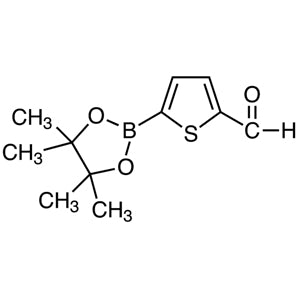
- TCI T3485 1040281-83-1 5-(4,4,5,5-Tetramethyl-1,3,2-dioxaborolan-2-yl)thiophene-2-carboxaldehyde
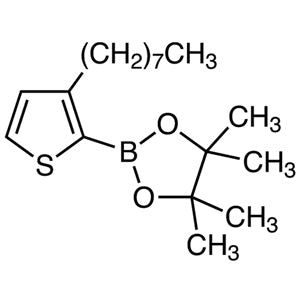
- TCI O0410 405165-14-2 3-n-Octyl-2-(4,4,5,5-tetramethyl-1,3,2-dioxaborolan-2-yl)thiophene
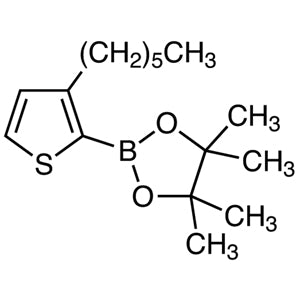
- TCI H1298 850881-09-3 3-Hexyl-2-(4,4,5,5-tetramethyl-1,3,2-dioxaborolan-2-yl)thiophene
- TCI H1294 883742-29-8 4-Hexyl-2-(4,4,5,5-tetramethyl-1,3,2-dioxaborolan-2-yl)thiophene
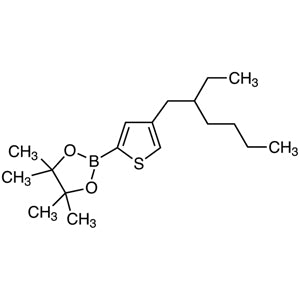
- TCI E1355 1224430-50-5 4-(2-Ethylhexyl)-2-(4,4,5,5-tetramethyl-1,3,2-dioxaborolan-2-yl)thiophene
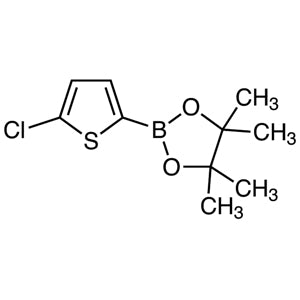
- TCI C3301 635305-24-7 5-Chloro-2-(4,4,5,5-tetramethyl-1,3,2-dioxaborolan-2-yl)thiophene
- Organic synthesis of heterocyclic compounds due to its reactivity and functional group versatility, enabling the formation of complex molecular structures.
- Coupling reactions in the development of new pharmaceuticals and materials, as it facilitates efficient bond formation between different molecular entities.
- Research in green chemistry for sustainable synthetic methods, as it supports environmentally friendly processes with high selectivity and yield.
- Development of advanced materials in polymer science, where its unique structure contributes to the creation of functional polymers with specific properties.
- Academic research in chemical innovation, where it is used to explore new synthetic pathways and reaction mechanisms in organic chemistry.
| Brand | TCI |
|---|---|
| CAS number | 405165-12-0 |
| Molecular formula | — |
| Purity | — |
| Category | Chemistry > Organometallic Reagents > Organoboron [Organometallic Reagents] |
| Pack sizes | Available in various quantities as per supplier specifications |
| Physical form | Solid or liquid, depending on the specific formulation |
| Storage | Store in a cool, dry place away from moisture and direct sunlight |
This compound should be stored in a cool, dry environment, away from moisture and direct sunlight to maintain its stability and reactivity. It is recommended to use airtight containers made of materials that do not react with the compound, such as glass or high-density polyethylene. Proper labeling and storage in a designated chemical storage area are essential to ensure safety. Laboratory personnel should handle the compound with appropriate personal protective equipment, including gloves and safety goggles, to minimize exposure. Due to its reactivity, it should be handled in a well-ventilated area or fume hood to prevent any potential hazards. Regular monitoring of storage conditions is advised to maintain the compound's integrity and effectiveness in chemical applications.
—
Produk Terkait
-
5-(4,4,5,5-Tetramethyl-1,3,2-dioxaborolan-2-yl)thiophene-2-carboxaldehyde TCI T3485
Regular price Rp 1.961.400,00Regular price -
3-n-Octyl-2-(4,4,5,5-tetramethyl-1,3,2-dioxaborolan-2-yl)thiophene TCI O0410
Regular price From Rp 3.392.550,00Regular price -
3-Hexyl-2-(4,4,5,5-tetramethyl-1,3,2-dioxaborolan-2-yl)thiophene TCI H1298
Regular price From Rp 1.724.100,00Regular price -
4-Hexyl-2-(4,4,5,5-tetramethyl-1,3,2-dioxaborolan-2-yl)thiophene TCI H1294
Regular price From Rp 3.976.350,00Regular price -
4-(2-Ethylhexyl)-2-(4,4,5,5-tetramethyl-1,3,2-dioxaborolan-2-yl)thiophene TCI E1355
Regular price From Rp 3.367.350,00Regular price -
5-Chloro-2-(4,4,5,5-tetramethyl-1,3,2-dioxaborolan-2-yl)thiophene TCI C3301
Regular price From Rp 1.035.300,00Regular price -
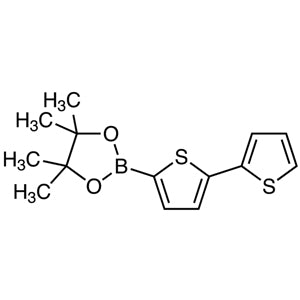
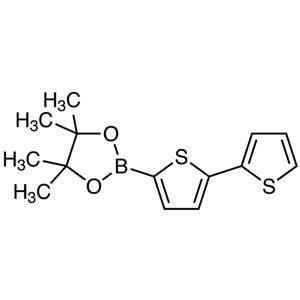
5-(4,4,5,5-Tetramethyl-1,3,2-dioxaborolan-2-yl)-2,2'-bithiophene TCI T2518
Regular price From Rp 1.644.300,00Regular price -
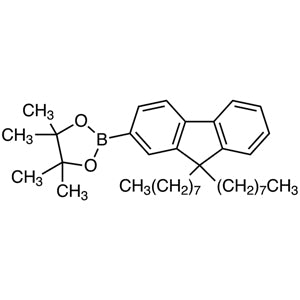
2-(9,9-Di-n-octyl-9H-fluoren-2-yl)-4,4,5,5-tetramethyl-1,3,2-dioxaborolane TCI D5371
Regular price Rp 3.525.900,00Regular price