4-Methoxyazobenzene is a chemical compound widely used in laboratory settings for its versatility in synthetic chemistry applications. It serves as a key building block in the creation of complex molecules and is particularly valuable in reactions involving azo bonds. This compound is commonly found in chemical laboratories due to its role in the synthesis of both heterocyclic and non-heterocyclic compounds. As part of the "Building Blocks" category, it plays a crucial role in the development of more intricate chemical structures. Its stable molecular structure and predictable chemical properties make it an essential tool for researchers seeking to control and manipulate chemical reactions with precision.
The presence of a methoxy group in its molecular structure enhances its reactivity compared to standard azobenzene. This increased reactivity makes it a preferred choice for substitution and covalent reactions. The compound’s predictable behavior under various reaction conditions allows scientists to design and execute experiments with greater confidence. Its chemical stability also ensures that it remains effective across a range of experimental protocols, making it a reliable component in both academic and industrial research environments.
In Indonesian laboratories, 4-Methoxyazobenzene is frequently utilized in organic chemistry research, especially in pharmaceutical and material science fields. It is also an integral part of university and research institution programs that require basic chemical compounds for experimental and developmental purposes. Its widespread use highlights its importance in both educational and practical applications within the chemical sciences.
Related TCI products
- Organic synthesis applications benefit from 4-Methoxyazobenzene due to its role in forming azo bonds, which are essential in creating complex molecular structures.
- Pharmaceutical research utilizes this compound for the development of new drugs, as it can participate in various substitution and coupling reactions.
- Material science experiments often incorporate 4-Methoxyazobenzene to create functional materials with specific chemical properties.
- Educational laboratories use it as a fundamental building block for teaching synthetic chemistry and reaction mechanisms.
- Research institutions rely on this compound for its predictable chemical behavior, which supports the reproducibility of experimental results.
| Brand | TCI |
|---|---|
| CAS number | 2396-60-3 |
| Molecular formula | — |
| Purity | — |
| Category | Chemistry > Building Blocks > Non-Heterocyclic Building Blocks |
| Pack sizes | Available in various quantities as per supplier specifications |
| Physical form | Solid |
| Storage | Store in a cool, dry place away from light and moisture |
4-Methoxyazobenzene should be stored in a cool, dry environment, away from direct sunlight and moisture to maintain its chemical stability. It is recommended to use airtight containers made of glass or inert plastic to prevent contamination and degradation. Due to its potential reactivity, it should be handled in a well-ventilated area, and appropriate personal protective equipment should be worn when working with it. Avoid exposure to heat or open flames, as this may lead to unintended chemical reactions. Proper labeling and storage conditions are essential to ensure the safety of laboratory personnel and the integrity of the compound.
—
Produk Terkait
-
Azobenzene TCI A0565
Regular price From Rp 2.411.850,00Regular price -
4-(Methylamino)azobenzene TCI M0143
Regular price Rp 4.028.850,00Regular price -
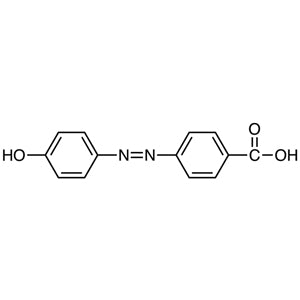
4'-Hydroxyazobenzene-4-carboxylicAcid TCI H1400
Regular price Rp 2.782.500,00Regular price -
4'-Hydroxyazobenzene-2-carboxylicAcid TCI H0586
Regular price From Rp 1.246.350,00Regular price -
Sodium4-Hydroxyazobenzene-4'-sulfonate TCI H0327
Regular price From Rp 1.140.300,00Regular price -
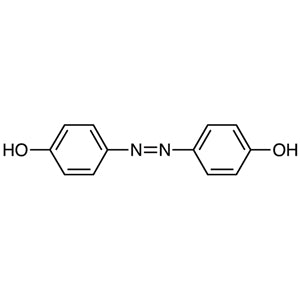
4,4'-Dihydroxyazobenzene TCI D3431
Regular price From Rp 4.849.950,00Regular price -
2,2'-Dihydroxyazobenzene[SpectrophotometricandfluorimetricreagentforAl,Mgandothermetals] TCI A5005
Regular price From Rp 2.625.000,00Regular price -
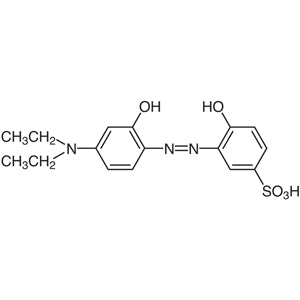
5-Sulfo-4'-diethylamino-2,2'-dihydroxyazobenzene TCI S0128
Regular price Rp 2.094.750,00Regular price




![2050-14-8 2,2'-Dihydroxyazobenzene [Spectrophotometric and fluorimetric reagent for Al, Mg and other metals] - AMI Scientific](http://amiscientific.com/cdn/shop/files/TCI2510A5005.jpg?v=1767084831&width=533)