Phenylazoresorcinol from TCI (product code P0151, CAS 67503-46-2) is an azo dye made of a phenylazo group attached to a resorcinol ring, which is a benzene ring carrying two hydroxyl groups. TCI lists it under Oil Dyes, a group of dyes for research and experimental use that dissolve in organic solvents, oils and fats rather than in water. In the laboratory it is used to colour nonpolar matrices and mark organic phases. It also serves as a model compound in dye chemistry research and in studies of how dyes interact with different media.
Researchers choose this material because its azo chromophore and two hydroxyl groups together give an intense orange colour. The hydroxyl group next to the azo bond can form an intramolecular hydrogen bond, which allows azo-hydrazone tautomerism. This tautomerism affects both the colour and the stability of the dye. Because it dissolves more easily in organic media than in water, it is well suited to selectively staining lipophilic phases. Its phenolic hydroxyl groups can also bind metal ions, which makes it useful for studying coloured complexes. These features make it a flexible reference dye for many kinds of experiments.
In Indonesian laboratories, Phenylazoresorcinol is useful to researchers in analytical chemistry, materials science and non-consumable food technology research. Universities, research institutes and industrial R&D groups can use it to see phase boundaries in extraction experiments, follow how dyes spread through polymers or oily materials, and teach the structure–colour relationships of azo compounds. Since TCI supplies it for research and experimental purposes only, it is suited to controlled laboratory studies rather than to commercial colouring of food, cosmetics or consumer goods.
- Staining nonpolar matrices: its good solubility in organic solvents, oils and fats lets researchers colour lipophilic materials evenly, which makes oil distribution and nonpolar regions easy to see.
- Marking organic phases in extractions: because the dye stays mainly in the organic layer rather than the water layer, it clearly shows phase boundaries during liquid–liquid separation experiments.
- Model compound in dye chemistry research: the phenylazo and resorcinol structure, with possible azo-hydrazone tautomerism, makes it a useful reference for studying how molecular structure affects colour and stability.
- Studies of dye–medium interactions: its intense orange colour and selective solubility let researchers watch how the dye behaves in different solvents, polymers and lipid-based media under controlled conditions.
- Coloured metal complex studies: the phenolic hydroxyl groups can bind metal ions, so researchers can explore how coloured complexes form and use them as a basis for exploratory analytical methods.
| Brand | TCI (product code P0151) |
|---|---|
| CAS number | 67503-46-2 |
| Molecular formula | — |
| Purity | — |
| Category | Chemistry > Stains and Dyes (for Research and Experimental Use) > Oil Dyes (for Research and Experimental Use) |
| Pack sizes | as listed in the current TCI catalogue for this product |
| Physical form | azo dye with an intense orange colour; see the TCI Certificate of Analysis for detailed physical data |
| Storage | keep tightly closed in a cool, dry place away from light; follow the TCI Safety Data Sheet |
Store Phenylazoresorcinol in its original tightly closed container in a cool, dry, well-ventilated area away from direct sunlight, heat and sources of ignition. Keep it apart from strong oxidising agents and incompatible chemicals, and make sure the label stays clear and readable. Wear standard personal protective equipment when handling it, including a lab coat, chemical-resistant gloves and safety glasses. Weigh and transfer the powder in a fume hood or ventilated area so you do not breathe in dust, and avoid contact with skin and eyes, since azo dyes can stain heavily. Clean up spills promptly, and dispose of waste and contaminated solvents according to local chemical waste regulations. Always read the TCI Safety Data Sheet before use. This product is for research and experimental use only.
—
Produk Terkait
-
4-(4-Bromophenylazo)phenol TCI B4053
Regular price From Rp 3.392.550,00Regular price -
Resorcinol TCI R0008
Regular price From Rp 477.750,00Regular price -
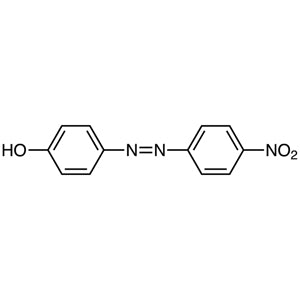
4-(4-Nitrophenylazo)phenol TCI N0653
Regular price From Rp 6.308.400,00Regular price -
4-(4-Nitrophenylazo)orcinol TCI N0324
Regular price Rp 2.995.650,00Regular price -
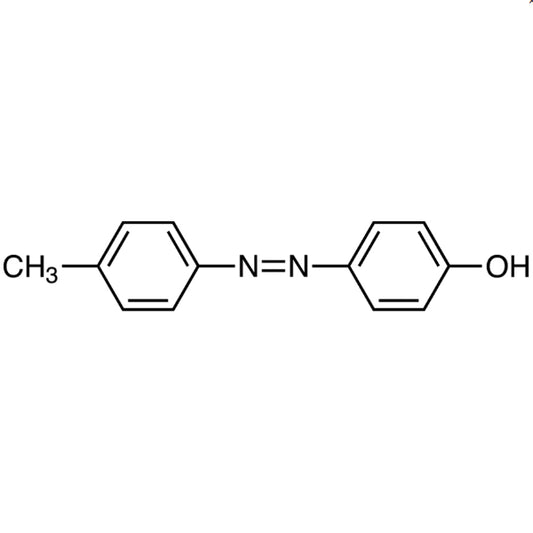
4-(4-Methylphenylazo)phenol TCI M3204
Regular price From Rp 1.115.100,00Regular price -
2-Iodoresorcinol TCI I0788
Regular price From Rp 1.644.300,00Regular price -
5-Bromoresorcinol TCI B3731
Regular price From Rp 2.730.000,00Regular price -
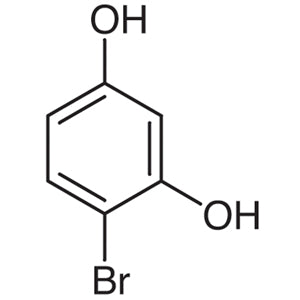
4-Bromoresorcinol TCI B0654
Regular price From Rp 3.207.750,00Regular price