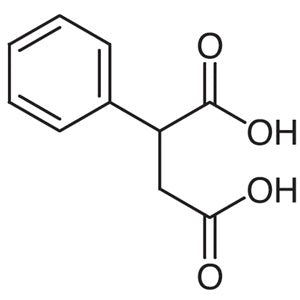
Phenylsuccinic Acid from TCI is a dicarboxylic acid derived from succinic acid, with a phenyl substituent on one of the carbon atoms of its main chain. The carbon that carries the phenyl group is a chiral centre, so the compound exists as two enantiomers. A product sold under the general name, with no stereochemical label, is usually a racemic mixture, so check the Certificate of Analysis (CoA) to confirm. As a non-heterocyclic building block, Phenylsuccinic Acid is used to make anhydrides, imides, esters and polyesters, and to serve as a dicarboxylate ligand in coordination chemistry.
Chemists choose this compound because its two carboxylic acid groups allow many different reactions. Both groups can be esterified or amidated. They can also be cyclised to form phenylsuccinic anhydride, a reactive intermediate for further synthesis. Compared with plain succinic acid, the phenyl ring makes the molecule more rigid and more hydrophobic. This affects the solubility and crystallinity of its derivatives and the properties of any polymers made from it. Its chiral centre also makes it a classic teaching example of optical resolution. In that technique, the two enantiomers are separated by forming diastereomeric salts with a chiral base.
In Indonesia, Phenylsuccinic Acid is useful to organic chemistry and stereochemistry laboratories at universities and research institutes. It suits teaching laboratories running practical sessions on chirality and enantiomer separation. It also suits research groups working on polymer synthesis, coordination compounds and new derivatives. Because the TCI product is listed under its catalogue number and CAS number, researchers can easily match it to published procedures. They can also confirm batch details against the CoA before planning sensitive or stereochemistry-dependent experiments.
Related TCI products
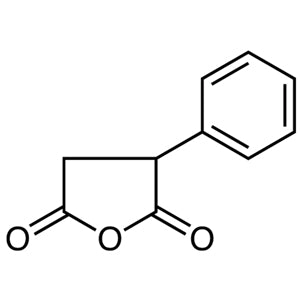
- TCI P2257 1131-15-3 Phenylsuccinic Anhydride
- TCI B1613 7538-42-3 2-Buten-1-ylsuccinic Anhydride
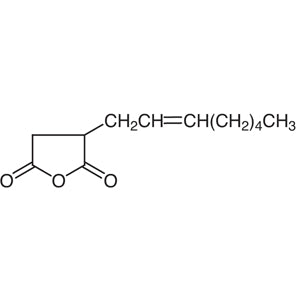
- TCI H0616 10500-34-2 2-Hexen-1-ylsuccinic Anhydride (cis- and trans- mixture)
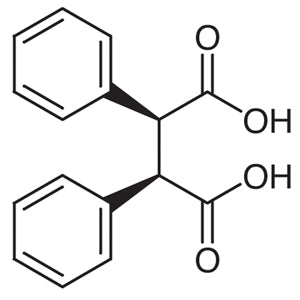
- TCI D2209 1225-13-4 meso-2,3-Diphenylsuccinic Acid
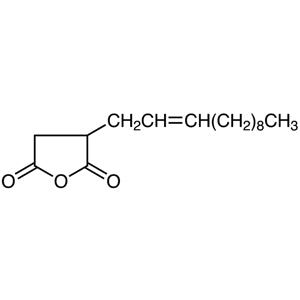
- TCI D0976 19780-11-1 2-Dodecen-1-ylsuccinic Anhydride (cis- and trans- mixture)
- TCI P1359 83-25-0 N-Phenylsuccinimide
- Optical resolution practicals: the chiral centre allows enantiomers to be separated as diastereomeric salts with a chiral base, a classic stereochemistry teaching exercise.
- Anhydride and imide synthesis: the two carboxylic acid groups can be cyclised to give reactive phenylsuccinic anhydride, which can then be converted into imides and other derivatives.
- Ester preparation: both acid groups can be esterified, giving diesters for organic synthesis studies or for use as intermediates in multi-step reaction sequences.
- Polyester and polymer research: the phenyl ring adds rigidity and hydrophobicity, which changes the crystallinity, solubility and other properties of the polymers that are produced.
- Coordination chemistry: the molecule can act as a dicarboxylate ligand for building metal complexes and coordination compounds, and the phenyl group changes the structure compared with plain succinate.
| Brand | TCI (catalogue number P0155) |
|---|---|
| CAS number | 635-51-8 |
| Molecular formula | — |
| Purity | — |
| Category | Chemistry > Building Blocks > Non-Heterocyclic Building Blocks |
| Pack sizes | ask AMI Scientific for the pack sizes currently available |
| Physical form | — |
| Storage | follow the conditions on the TCI label and Safety Data Sheet (SDS) |
- Stereochemistry: usually racemic when no stereochemical label is given; confirm on the CoA
Keep Phenylsuccinic Acid in its original, tightly closed container in a cool, dry, well-ventilated place. Keep it away from moisture, direct sunlight and incompatible substances such as strong oxidising agents and strong bases. Use clean, dry spatulas and glassware so the material does not become contaminated. Wear standard laboratory protective equipment, including safety glasses, gloves and a lab coat. Avoid creating or breathing dust, and weigh the material in a fume hood or a well-ventilated area. Read the TCI Safety Data Sheet before use, and follow local regulations and your institution's rules when disposing of waste.
—
Produk Terkait
-
PhenylsuccinicAnhydride TCI P2257
Regular price From Rp 3.605.700,00Regular price -
2-Buten-1-ylsuccinicAnhydride TCI B1613
Regular price From Rp 2.439.150,00Regular price -
2-Hexen-1-ylsuccinicAnhydride(cis-andtrans-mixture) TCI H0616
Regular price Rp 4.213.650,00Regular price -
meso-2,3-DiphenylsuccinicAcid TCI D2209
Regular price From Rp 2.545.200,00Regular price -
2-Dodecen-1-ylsuccinicAnhydride(cis-andtrans-mixture) TCI D0976
Regular price From Rp 610.050,00Regular price -
N-Phenylsuccinimide TCI P1359
Regular price From Rp 2.174.550,00Regular price -
TetrapropenylsuccinicAnhydride(mixtureofbranchedchainisomers) TCI T0170
Regular price From Rp 505.050,00Regular price -
2-OctenylsuccinicAnhydride(cis-andtrans-mixture) TCI O0040
Regular price From Rp 1.087.800,00Regular price