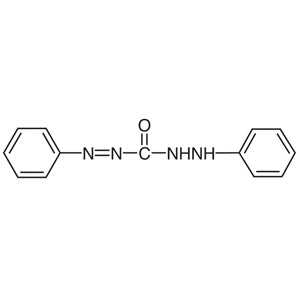
1-Phenylsemicarbazide is a chemical compound widely used in laboratory settings for its reactivity and versatility in chemical synthesis. As a semicarbazide derivative, it plays a crucial role in organic chemistry, particularly in the formation of heterocyclic compounds and other organic molecules. This compound is commonly found in chemical laboratories as a building block for condensation or substitution reactions. Its ability to react with various functional groups, such as carbonyl groups, makes it an essential tool for the synthesis of complex compounds.
One of the key properties that make 1-Phenylsemicarbazide a preferred choice is its stability under controlled laboratory conditions. This stability ensures consistent results during chemical reactions, making it reliable for both research and educational purposes. Additionally, its reactivity with carbonyl groups allows for the synthesis of amines, acids, and esters, which are fundamental in many organic reactions. The compound's predictable behavior and broad applicability further enhance its value in laboratory environments.
In Indonesian laboratories, 1-Phenylsemicarbazide is extensively used in organic chemistry research and education. It is a common reagent in the development of new compounds and in the study of reaction mechanisms. Its presence in both academic and industrial research settings underscores its importance as a versatile and effective chemical building block. The compound is frequently employed in laboratory testing to understand and optimize chemical processes.
Related TCI products
- TCI P0228 537-47-3 4-Phenylsemicarbazide
- TCI S0032 563-41-7 Semicarbazide Hydrochloride
- TCI T2051 85095-61-0 1,1,1',1'-Tetramethyl-4,4'-(methylenedi-p-phenylene)disemicarbazide
- TCI D3854 22718-49-6 1,1-Dimethylsemicarbazide
- TCI A0058-25G 110-20-3 Acetone Semicarbazone
- TCI A0193 591-86-6 Acetaldehyde Semicarbazone
- Heterocyclic Compound Synthesis: 1-Phenylsemicarbazide is ideal for creating heterocyclic structures due to its reactivity with carbonyl groups, making it a key reagent in organic synthesis.
- Organic Reaction Studies: Its ability to participate in condensation and substitution reactions makes it useful for studying reaction mechanisms and pathways in chemical processes.
- Educational Research: Widely used in Indonesian academic institutions for teaching and research, it supports hands-on learning in organic chemistry laboratories.
- Functional Group Modification: The compound’s interaction with various functional groups allows for the modification of organic molecules, aiding in the development of new chemical structures.
- Analytical Testing: It is commonly used in laboratory testing to evaluate the behavior of chemical compounds under different reaction conditions.
| Brand | TCI |
|---|---|
| CAS number | 103-03-7 |
| Molecular formula | — |
| Purity | — |
| Category | Chemistry > Building Blocks > Non-Heterocyclic Building Blocks |
| Pack sizes | Available in various quantities as per supplier specifications |
| Physical form | Solid |
| Storage | Store in a cool, dry place away from moisture and direct sunlight |
1-Phenylsemicarbazide should be stored in a cool, dry environment to maintain its stability and prevent degradation. It is recommended to keep the compound in a tightly sealed container to avoid exposure to moisture and air. Due to its chemical nature, it should be handled with care, using appropriate personal protective equipment such as gloves and goggles. It is important to store it away from incompatible substances to ensure safety in the laboratory. Regular monitoring of storage conditions is advised to maintain the integrity of the compound during long-term use. Proper labeling and organization of storage areas contribute to a safe and efficient laboratory environment.
—
Produk Terkait
-
4-Phenylsemicarbazide TCI P0228
Regular price From Rp 1.458.450,00Regular price -
SemicarbazideHydrochloride TCI S0032
Regular price From Rp 505.050,00Regular price -
1,1,1',1'-Tetramethyl-4,4'-(methylenedi-p-phenylene)disemicarbazide TCI T2051
Regular price From Rp 769.650,00Regular price -
1,1-Dimethylsemicarbazide TCI D3854
Regular price From Rp 2.332.050,00Regular price -
AcetoneSemicarbazone TCI A0058-25G
Regular price Rp 1.087.800,00Regular price -
AcetaldehydeSemicarbazone TCI A0193
Regular price From Rp 1.035.300,00Regular price -
Diphenylcarbazone(containsDiphenylcarbazide) TCI D0881
Regular price Rp 3.021.900,00Regular price -
AcetoneSemicarbazone TCI A0058
Regular price From Rp 1.087.800,00Regular price