

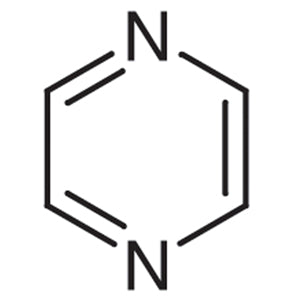
Pyrazine is a chemical compound classified under heterocyclic structures, featuring two nitrogen atoms within an aromatic ring. This compound plays a crucial role in laboratory settings, particularly in the synthesis of complex molecules. Its fundamental structure makes it a versatile building block in organic chemistry and pharmacology. Pyrazine is widely used in research to develop compounds with specific biological activities, such as pharmaceuticals and industrial chemicals. Its stability under normal conditions allows for reliable use in various experimental procedures.
Pyrazine is valued for its chemical stability and reactivity, which enable it to participate in a wide range of chemical reactions. Its ability to form bonds with different functional groups makes it an essential component in the creation of complex heterocyclic compounds. The compound's predictable behavior in controlled environments ensures consistent results in laboratory experiments. These properties make pyrazine a preferred choice for chemists and researchers working on advanced synthesis projects.
In Indonesian laboratories, pyrazine is commonly used in organic chemistry, pharmacology, and material science research. It is a key reagent in the development of new compounds with biological activity, including potential drug candidates and industrial chemicals. Its availability and reliability make it a popular choice among researchers seeking to explore the synthesis of heterocyclic structures. The compound's role in scientific innovation underscores its importance in modern laboratory practices.
TCI brochures (PDF)
- Organic Linker Molecules for Metal Organic Frameworks (MOFs) 2026-05-11 · p. 5
Related TCI products
- Organic synthesis research utilizes pyrazine as a fundamental building block for creating complex heterocyclic compounds.
- Pharmaceutical development projects rely on pyrazine to design molecules with specific biological activities and therapeutic potential.
- Material science experiments incorporate pyrazine to explore new chemical structures and functional materials.
- Analytical chemistry applications use pyrazine as a reference standard for identifying and quantifying heterocyclic compounds.
- Industrial chemical synthesis benefits from pyrazine's reactivity and stability in producing specialized chemical intermediates.
| Brand | TCI |
|---|---|
| CAS number | 290-37-9 |
| Molecular formula | — |
| Purity | — |
| Category | Chemistry > Building Blocks > Heterocyclic Building Blocks |
| Pack sizes | Available in various quantities as per supplier specifications |
| Physical form | Solid, typically in crystalline form |
| Storage | Store in a cool, dry place away from direct sunlight |
Pyrazine should be stored in a cool, dry environment to maintain its chemical stability. It is recommended to keep it in a sealed container to prevent exposure to moisture and air. Suitable storage containers include glass or high-density polyethylene vessels that are resistant to chemical reactions. Laboratory personnel should handle pyrazine with care, using appropriate personal protective equipment such as gloves and safety goggles. Avoid contact with incompatible substances to ensure safe handling. Regular inspection of storage conditions is essential to maintain the integrity of the compound. Proper labeling and storage practices help minimize risks and ensure compliance with laboratory safety standards.
—
Product Categories
- Organic-Inorganic Hybrid MaterialsMetal Organic Frameworks (MOF) and Their Raw MaterialsOrganic Linker Molecules [Metal Organic Frameworks (MOFs) Precursors]
- Polymer/Macromolecule ReagentsMetal Organic Frameworks (MOF) and Their Raw MaterialsOrganic Linker Molecules [Metal Organic Frameworks (MOFs) Precursors]
Produk Terkait
-
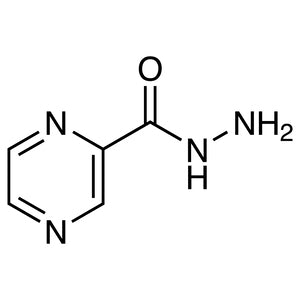
Pyrazine-2-carbohydrazide TCI P2961
Regular price Rp 1.724.100,00Regular price -
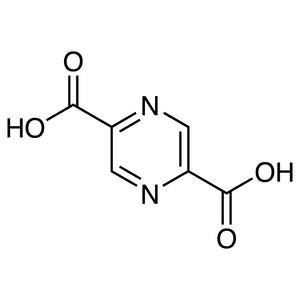
Pyrazine-2,5-dicarboxylicAcid TCI P2932
Regular price From Rp 1.326.150,00Regular price -
2-(Piperazin-1-yl)pyrazine TCI P2910
Regular price From Rp 1.936.200,00Regular price -
(2-Mercaptoethyl)pyrazine TCI M1845
Regular price From Rp 1.670.550,00Regular price -
2-(Methylthio)pyrazine TCI M1821
Regular price Rp 584.850,00Regular price -
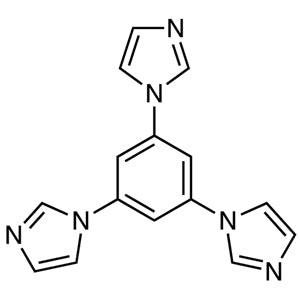
1,3,5-Tri(1H-imidazol-1-yl)benzene TCI T3903
Regular price Rp 3.155.250,00Regular price -
1,3,5-Tris[(1H-imidazol-1-yl)methyl]benzene TCI T3479
Regular price From Rp 2.545.200,00Regular price


![147951-02-8 1,3,5-Tris[(1H-imidazol-1-yl)methyl]benzene - AMI Scientific](http://amiscientific.com/cdn/shop/files/TCI2510T3479.jpg?v=1767144149&width=533)