Polyvinylpyrrolidone (insoluble) from TCI, product code P0691, is a crosslinked form of polyvinylpyrrolidone, also known as PVPP or crospovidone. Ordinary PVP dissolves readily in water. This crosslinked grade does not dissolve in water or in many common solvents, but it can still swell and bind certain compounds. In the laboratory, it is mainly used to adsorb polyphenols and tannins from plant extracts. It is also used in research on beverage clarification and in pharmaceutical formulation studies.
Insoluble PVP binds polyphenols because of the amide groups on its pyrrolidone rings. These groups form strong hydrogen bonds with phenolic hydroxyl groups. Because the polymer itself does not dissolve, the bound polyphenols can be removed easily by centrifugation or filtration, and no polymer is left behind in the solution. The crosslinked structure also lets the particles take up water quickly and swell, which is why the material is used as a disintegrant in tablets. It is generally a white to yellowish-white powder and is chemically stable under normal laboratory conditions.
In Indonesia, many research groups work with plant material, including medicinal plants, tea, coffee, cocoa, and other tropical crops rich in phenolic compounds. These compounds often interfere with later analytical or biochemical steps. Insoluble PVP gives these laboratories a simple, removable way to take out unwanted polyphenols during sample preparation. It is also a useful reference material for pharmaceutical faculties and food technology laboratories that study tablet disintegration and beverage stabilisation.
TCI brochures (PDF)
- Biomaterials Research Reagents 2025-02-19 · p. 4
Related TCI products
- TCI P0473 9003-39-8 Polyvinylpyrrolidone K 90 Average Molecular Wt. 360000
- TCI P0472 9003-39-8 Polyvinylpyrrolidone K 30 Average Molecular Wt 40000
- TCI P0471 9003-39-8 Polyvinylpyrrolidone K 15 Average Molecular Wt 10000
- TCI P0385 25086-89-9 Poly(1-vinylpyrrolidone-co-Vinyl Acetate) (Copolymer, 3:7) (50% in Ethanol)
- TCI P0382 25086-89-9 Poly(1-vinylpyrrolidone-co-Vinyl Acetate) (Copolymer, 7:3) (50% in Ethanol)
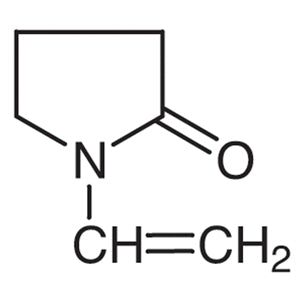
- TCI V0026 88-12-0 1-Vinyl-2-pyrrolidone (stabilized with N,N'-Di-sec-butyl-p-phenylenediamine)
- Polyphenol removal from plant extracts: the amide groups hydrogen-bond strongly with phenolic hydroxyl groups, so interfering polyphenols and tannins can be bound and then separated by centrifugation or filtration.
- Sample preparation for nucleic acid and protein work from plant tissue: because the polymer is insoluble, it can capture phenolic contaminants and be removed completely without leaving polymer in the solution.
- Beverage clarification research: the material binds the polyphenols and tannins linked to haze in drinks, so it suits laboratory studies on clarifying and stabilising beverages.
- Tablet disintegrant studies in pharmaceutical formulation: the crosslinked particles take up water quickly and swell, which helps tablets break apart, making the material useful for disintegration research.
- Comparative polymer studies in materials science: as a crosslinked, insoluble counterpart to water-soluble PVP, it lets researchers study how crosslinking changes solubility, swelling, and binding behaviour.
| Brand | TCI (product code P0691) |
|---|---|
| CAS number | 9003-39-8 |
| Molecular formula | — |
| Purity | — |
| Category | Materials Science > Polymer/Macromolecule Reagents > Polymers |
| Pack sizes | please refer to the available options on the product listing |
| Physical form | generally a white to yellowish-white powder |
| Storage | keep tightly closed in a dry place, protected from moisture |
Store Polyvinylpyrrolidone (insoluble) in its original, tightly sealed container in a cool, dry, well-ventilated area. Because the crosslinked polymer absorbs water quickly and swells, protect it from humidity and close the container promptly after each use. This is especially important in humid tropical climates. Use clean, dry spatulas when dispensing. Avoid creating airborne dust, and wear standard laboratory protective equipment, including gloves, safety glasses, and a lab coat. Weigh the powder in a well-ventilated area or under local exhaust. Always check the supplier's Safety Data Sheet for full handling, first-aid, and disposal guidance.
—
Produk Terkait
-
PolyvinylpyrrolidoneK90AverageMolecularWt.360000 TCI P0473
Regular price From Rp 530.250,00Regular priceRp 370.650,00Sale price From Rp 530.250,00 -
PolyvinylpyrrolidoneK30AverageMolecularWt40000 TCI P0472
Regular price From Rp 530.250,00Regular priceRp 370.650,00Sale price From Rp 530.250,00 -
PolyvinylpyrrolidoneK15AverageMolecularWt10000 TCI P0471
Regular price From Rp 584.850,00Regular priceRp 408.450,00Sale price From Rp 584.850,00 -
Poly(1-vinylpyrrolidone-co-VinylAcetate)(Copolymer,3:7)(50%inEthanol) TCI P0385
Regular price From Rp 557.550,00Regular priceRp 389.550,00Sale price From Rp 557.550,00 -
Poly(1-vinylpyrrolidone-co-VinylAcetate)(Copolymer,7:3)(50%inEthanol) TCI P0382
Regular price From Rp 557.550,00Regular priceRp 389.550,00Sale price From Rp 557.550,00 -
1-Vinyl-2-pyrrolidone(stabilizedwithN,N'-Di-sec-butyl-p-phenylenediamine) TCI V0026
Regular price From Rp 530.250,00Regular priceRp 386.400,00Sale price From Rp 530.250,00 -
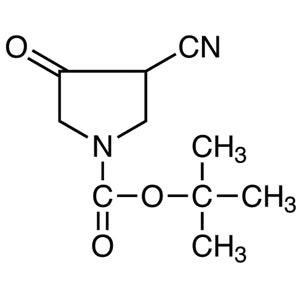
1-tert-Butoxycarbonyl-3-cyano-4-pyrrolidone TCI B4761
Regular price From Rp 742.350,00Regular priceRp 534.450,00Sale price From Rp 742.350,00 -
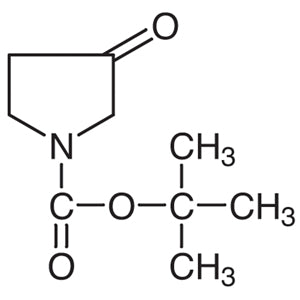
1-tert-Butoxycarbonyl-3-pyrrolidone TCI B3589
Regular price From Rp 582.750,00Regular priceRp 423.150,00Sale price From Rp 582.750,00