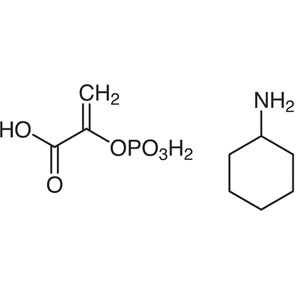
Phosphoenolpyruvic Acid Monocyclohexylammonium Salt is a biochemical compound widely used in laboratory settings for its role in enzymatic reactions and metabolic studies. This compound serves as a key substrate in various biochemical processes, particularly in the activity of enzymes like pyruvate kinase, which is essential for ATP production. Its presence in laboratory experiments helps researchers understand cellular metabolism, energy conversion, and enzyme kinetics. Due to its chemical stability under controlled conditions, it is a reliable reagent for precise and reproducible results in scientific research.
This compound is preferred for its solubility in organic solvents and its ability to maintain structural integrity during experimental procedures. Its crystalline form allows for accurate weighing and handling, making it suitable for high-precision applications. Additionally, its sensitivity to moisture and air necessitates careful storage, ensuring its effectiveness in laboratory settings. These properties make it a valuable reagent for bioactive compound research and biochemical analysis.
In Indonesian laboratories, this compound is commonly used in biomedical, pharmacological, and biotechnological research. It supports studies on metabolic pathways, enzyme function, and cellular processes. Its availability in various packaging options facilitates its use in both small-scale and large-scale experiments, enhancing its versatility in academic and industrial research environments.
Related TCI products
- TCI P0256 35556-70-8 Phosphoenolpyruvic Acid Tris(cyclohexylammonium) Salt
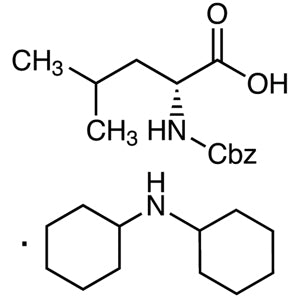
- TCI C2135 7662-58-0 N-Carbobenzoxy-D-leucine Dicyclohexylammonium Salt
- TCI T3498 251992-66-2 4-(p-Tolylthio)thieno[2,3-c]pyridine-2-carboxamide
- TCI B5415 1259028-99-3 BTT 3033
- TCI A3586 105947-03-3 ABEPI1
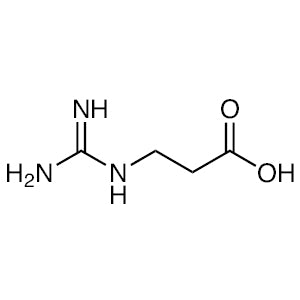
- TCI A3421 353-09-3 3-Guanidinopropanoic Acid
- Enzymatic Reaction Studies: This compound is ideal for studying enzyme kinetics and substrate specificity, particularly in experiments involving pyruvate kinase.
- Metabolic Pathway Analysis: It is used to investigate energy metabolism and glycolytic pathways in cellular systems.
- Biochemical Assays: Its role as a substrate makes it suitable for assays that require accurate measurement of enzyme activity and metabolic output.
- Biomedical Research: It supports research into metabolic disorders and cellular energy dynamics in biological systems.
- Biotransformation Studies: It is used to examine how enzymes modify substrates under different environmental conditions.
| Brand | TCI |
|---|---|
| CAS number | 10526-80-4 |
| Molecular formula | — |
| Purity | — |
| Category | Life Science > Biochemicals and Reagents > Bioactive Compounds |
| Pack sizes | Available in various packaging options for different experimental needs |
| Physical form | Crystalline solid |
| Storage | Requires protection from moisture and air exposure |
This compound should be stored in a cool, dry place away from moisture and direct air exposure to maintain its chemical integrity. It is recommended to use airtight containers to prevent degradation. Due to its sensitivity, it should be handled in a controlled environment to avoid contamination. Proper labeling and storage conditions are essential to ensure its effectiveness in laboratory applications. Always use appropriate personal protective equipment when handling this material to ensure safety in the laboratory setting.
—
Produk Terkait
-
PhosphoenolpyruvicAcidTris(cyclohexylammonium)Salt TCI P0256
Regular price From Rp 2.466.450,00Regular price -
N-Carbobenzoxy-D-leucineDicyclohexylammoniumSalt TCI C2135
Regular price From Rp 610.050,00Regular price -
4-(p-Tolylthio)thieno[2,3-c]pyridine-2-carboxamide TCI T3498
Regular price From Rp 4.213.650,00Regular price -
BTT3033 TCI B5415
Regular price Rp 10.124.100,00Regular price -
ABEPI1 TCI A3586
Regular price Rp 2.650.200,00Regular price -
3-GuanidinopropanoicAcid TCI A3421
Regular price From Rp 1.353.450,00Regular price -
Ro41-3118 TCI R0286
Regular price Rp 6.042.750,00Regular price -
RCGD423 TCI R0283
Regular price Rp 6.520.500,00Regular price

![251992-66-2 4-(p-Tolylthio)thieno[2,3-c]pyridine-2-carboxamide - AMI Scientific](http://amiscientific.com/cdn/shop/files/TCI2510T3498.jpg?v=1767144174&width=533)
![251992-66-2 4-(p-Tolylthio)thieno[2,3-c]pyridine-2-carboxamide - AMI Scientific](http://amiscientific.com/cdn/shop/files/TCI2510T3498_ff83aa00-e77d-4427-92df-ae99a39bd777.jpg?v=1772425406&width=533)