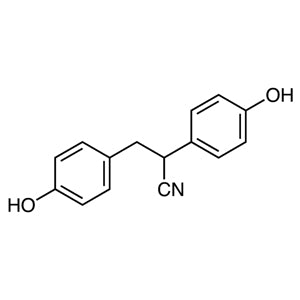
2-Phenylpropionitrile is a chemical compound widely used as a foundational building block in various chemical reactions, particularly in the synthesis of complex organic compounds. Its simple molecular structure plays a crucial role in the formation of longer carbon chains, making it a versatile reagent in synthetic chemistry. In the laboratory, it serves as a key component in substitution, addition, and other reactions that require a nitrile group. This compound is essential for researchers aiming to develop new organic molecules with specific functional groups.
The chemical properties of 2-Phenylpropionitrile make it a preferred choice for high-reactivity applications. Its nitrile group contributes to its reactivity, enabling it to participate in a wide range of chemical transformations. However, it is sensitive to moisture and air exposure, requiring careful handling. The compound also has a strong odor and can cause irritation to the skin and eyes, necessitating proper safety measures. Despite these challenges, its reactivity and structural versatility make it an indispensable tool in organic synthesis.
In Indonesian laboratories, 2-Phenylpropionitrile is extensively used in organic chemistry research, especially in the pharmaceutical and chemical industries. It is commonly found in university laboratories and research institutions focused on the synthesis of new compounds. Due to its reactivity, it is a key reagent in the development of novel chemical structures and is frequently utilized in projects requiring high chemical activity and functional group manipulation.
Related TCI products
- Organic synthesis applications benefit from 2-Phenylpropionitrile due to its reactivity and ability to form complex carbon chains.
- It is ideal for substitution reactions where the nitrile group can be transformed into other functional groups.
- In pharmaceutical research, it serves as a precursor for the development of new drug compounds with specific molecular structures.
- Its use in polymer chemistry allows for the creation of materials with tailored properties through controlled chemical modifications.
- The compound is also valuable in analytical chemistry for the identification and characterization of organic compounds through various spectroscopic techniques.
| Brand | TCI |
|---|---|
| CAS number | 1823-91-2 |
| Molecular formula | — |
| Purity | — |
| Category | Chemistry > Building Blocks > Non-Heterocyclic Building Blocks |
| Pack sizes | Available in various quantities as per supplier specifications |
| Physical form | Liquid |
| Storage | Store in a cool, dry place away from moisture and air exposure |
2-Phenylpropionitrile should be stored in a cool, dry environment to maintain its chemical stability. It is recommended to use airtight containers to prevent exposure to moisture and air, which can degrade the compound. Due to its strong odor and potential for causing skin and eye irritation, proper personal protective equipment, such as gloves and safety goggles, should be worn during handling. The compound should be kept away from heat sources and incompatible materials. In laboratory settings, it is essential to follow standard safety protocols to ensure safe and effective use.
—
Produk Terkait
-
3-Phenylpropionitrile TCI P0611
Regular price Rp 2.279.550,00Regular price -
Propionitrile TCI P0514
Regular price From Rp 477.750,00Regular price -
3-(Methylamino)propionitrile TCI M2312
Regular price From Rp 1.988.700,00Regular price -
N,N'-(Hexane-1,6-diyl)bis(3-phenylprop-2-en-1-imine) TCI D5989
Regular price Rp 1.936.200,00Regular price -
3,3-Diphenylpropionitrile TCI D2590
Regular price From Rp 848.400,00Regular price -
2,2-Diphenylpropionitrile TCI D2534
Regular price From Rp 928.200,00Regular price -
3-Benzoylpropionitrile TCI B5378
Regular price Rp 2.359.350,00Regular price -
Diarylpropionitrile TCI B4385
Regular price From Rp 2.942.100,00Regular price