Pyridinium p-Toluenesulfonate is a chemical compound widely used in synthetic laboratory applications. It belongs to the category of synthetic reagents, specifically within acids and bases, and is commonly employed in substitution and chain reactions. This reagent plays a crucial role in organic synthesis, where it acts as a versatile reactant that enables the formation of desired molecular structures. Its chemical properties make it an essential tool for researchers and chemists working in both academic and industrial settings.
The compound is known for its high reactivity and ionization properties, which allow it to participate effectively in various chemical reactions under controlled conditions. Its ability to dissolve easily in organic solvents enhances its usability in a wide range of experimental setups. The stable molecular structure of Pyridinium p-Toluenesulfonate ensures consistent performance across multiple laboratory applications, making it a reliable choice for synthetic processes.
In Indonesian laboratories, Pyridinium p-Toluenesulfonate is frequently used in organic chemistry research, particularly in the synthesis of complex compounds. It is a valuable resource for educational institutions and research centers that require high-quality reagents for their experiments. Its practicality and effectiveness make it a preferred choice for both teaching and research purposes.
Related TCI products
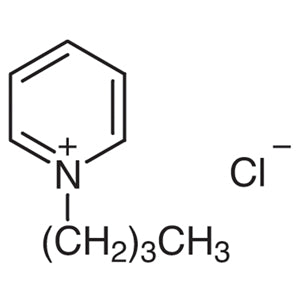
- TCI B1329 1124-64-7 1-Butylpyridinium Chloride
- TCI A5161 6004-24-6 CPC Monohydrate (=Cetylpyridinium Chloride Monohydrate) [Ion association reagent for extraction photometric analysis and sensitizer in photometric determination of metals]
- TCI A5014 36951-72-1 TMPyP [=alpha,beta,gamma,delta-Tetrakis(1-methylpyridinium-4-yl)porphyrin p-Toluenesulfonate] [Ultra-high sensitive spectrophotometric reagent for Cu, Mg] [For the simultaneous determination of metals by HPLC]
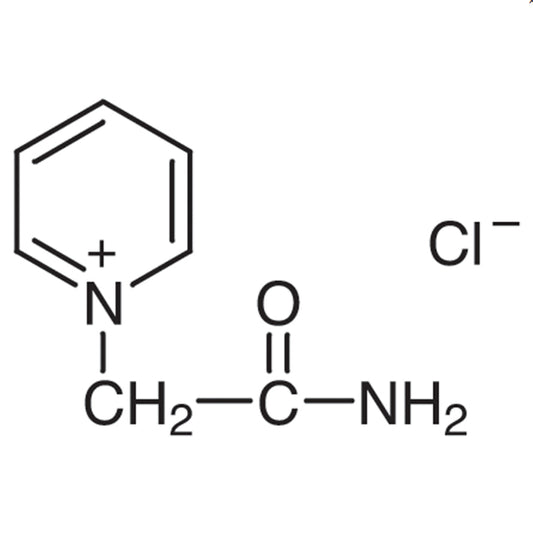
- TCI A0829 41220-29-5 1-(Carbamoylmethyl)pyridinium Chloride
- TCI A0828 42508-60-1 1-Acetonylpyridinium Chloride
- TCI A0629 6295-87-0 1-Aminopyridinium Iodide
- Organic synthesis reactions where it acts as a nucleophilic or electrophilic reagent due to its ionization properties.
- Chain reaction mechanisms where it facilitates the formation of complex molecular structures through substitution processes.
- Research in medicinal chemistry for the development of pharmaceutical compounds requiring precise synthetic pathways.
- Teaching laboratories for demonstrating the principles of acid-base chemistry and synthetic reagent behavior.
- Industrial-scale chemical processes that require reliable and consistent reagents for large-scale production.
| Brand | TCI |
|---|---|
| CAS number | 24057-28-1 |
| Molecular formula | — |
| Purity | — |
| Category | Chemistry > Synthetic Reagents > Acids, Bases [Synthetic Reagents] |
| Pack sizes | Available in various quantities suitable for both small-scale and bulk laboratory use |
| Physical form | Solid powder or crystalline, depending on the packaging and storage conditions |
| Storage | — |
Pyridinium p-Toluenesulfonate should be stored in a cool, dry place away from direct sunlight and moisture. It is recommended to keep it in a sealed container to prevent exposure to air and humidity. The compound is typically stored in glass or polyethylene containers to ensure chemical stability and prevent contamination. Due to its reactivity, it should be handled with care, using appropriate personal protective equipment such as gloves and safety goggles. It is important to store it separately from incompatible substances to avoid any potential chemical interactions. Regular monitoring of storage conditions is advised to maintain the integrity and effectiveness of the reagent in laboratory settings.
—
Produk Terkait
-
1-ButylpyridiniumChloride TCI B1329
Regular price From Rp 2.121.000,00Regular price -
CPCMonohydrate(=CetylpyridiniumChlorideMonohydrate)[Ionassociationreagentforextractionphotometricanalysisandsensitizerinphotometricdeterminationofmetals] TCI A5161
Regular price Rp 1.060.500,00Regular price -
TMPyP[=alpha,beta,gamma,delta-Tetrakis(1-methylpyridinium-4-yl)porphyrinp-Toluenesulfonate][Ultra-highsensitivespectrophotometricreagentforCu,Mg][ForthesimultaneousdeterminationofmetalsbyHPLC] TCI A5014
Regular price From Rp 1.298.850,00Regular price -
1-(Carbamoylmethyl)pyridiniumChloride TCI A0829
Regular price From Rp 664.650,00Regular price -
1-AcetonylpyridiniumChloride TCI A0828
Regular price Rp 2.094.750,00Regular price -
1-AminopyridiniumIodide TCI A0629
Regular price From Rp 1.273.650,00Regular price -
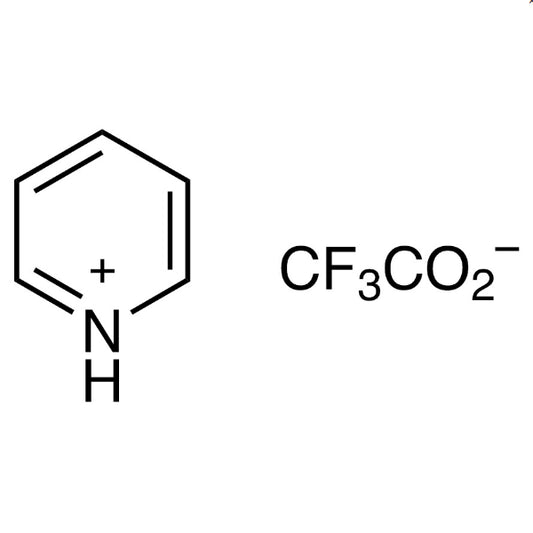
PyridiniumTrifluoroacetate TCI P2920
Regular price From Rp 955.500,00Regular price -
PyridiniumTrifluoromethanesulfonate TCI P1627
Regular price From Rp 1.644.300,00Regular price
![6004-24-6 CPC Monohydrate (=Cetylpyridinium Chloride Monohydrate) [Ion association reagent for extraction photometric analysis and sensitizer in photometric determination of metals] - AMI Scientific](http://amiscientific.com/cdn/shop/files/TCI2510A5161.jpg?v=1767084888&width=533)
![36951-72-1 TMPyP [=alpha,beta,gamma,delta-Tetrakis(1-methylpyridinium-4-yl)porphyrin p-Toluenesulfonate] [Ultra-high sensitive spectrophotometric reagent for Cu, Mg] [For the simultaneous determination of metals by HPLC] - AMI Scientific](http://amiscientific.com/cdn/shop/files/TCI2510A5014.jpg?v=1768203998&width=533)
![36951-72-1 TMPyP [=alpha,beta,gamma,delta-Tetrakis(1-methylpyridinium-4-yl)porphyrin p-Toluenesulfonate] [Ultra-high sensitive spectrophotometric reagent for Cu, Mg] [For the simultaneous determination of metals by HPLC] - AMI Scientific](http://amiscientific.com/cdn/shop/files/TCI2510A5014_63fd8d60-181a-4b04-a4ef-aab4621faaf1.jpg?v=1769055177&width=533)