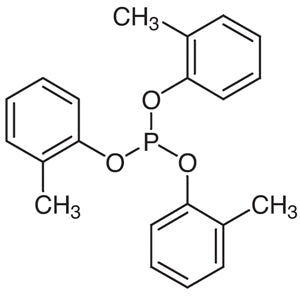
Tri-p-tolyl Phosphite (TCI P1175), with CAS number 620-42-8, is a phosphorous compound widely used in chemical reactions, particularly in catalytic and organic synthesis processes. It serves as an electron donor and can function as both a catalyst and a reagent in the synthesis of complex chemical compounds. Its versatility makes it a valuable tool for researchers aiming to manipulate chemical reactions involving phosphorus and organic molecules. In laboratory settings, this compound is essential for accelerating chemical reactions that require phosphorus-based interactions.
One of the key properties that make Tri-p-tolyl Phosphite a preferred choice is its stability under controlled conditions. This stability allows it to be used in a wide range of experimental setups without undergoing unwanted side reactions. Additionally, its ability to form bonds with various chemical compounds enhances its utility in different synthetic pathways. The compound’s inert nature also contributes to its safety profile, making it a reliable option for laboratory use.
In Indonesian laboratories, Tri-p-tolyl Phosphite is commonly employed in organic chemistry research, catalytic processes, and the synthesis of complex compounds. It is particularly favored for its role in promoting reactions between phosphorus and organic materials. Many research institutions and academic laboratories rely on this compound to meet the demands of experiments requiring specialized reagents. Its consistent performance and reliability make it a staple in chemical research across Indonesia.
TCI brochures (PDF)
- Polymer Additives 2026-04-16 · p. 9
- Ligands 2025-12-01 · p. 8
Related TCI products
- Organic synthesis reactions benefit from Tri-p-tolyl Phosphite as a reagent due to its ability to facilitate phosphorus-based interactions and promote complex molecule formation.
- Catalytic processes in the laboratory often utilize this compound because of its role as an electron donor, enhancing reaction efficiency and selectivity.
- Research into phosphorus-containing compounds frequently incorporates Tri-p-tolyl Phosphite for its stability and compatibility with various chemical environments.
- The synthesis of pharmaceutical intermediates can be optimized using this compound, as it supports the formation of complex organic structures.
- It is suitable for applications requiring controlled chemical interactions, where its inert nature ensures predictable and safe reaction outcomes.
| Brand | TCI |
|---|---|
| CAS number | 620-42-8 |
| Molecular formula | — |
| Purity | — |
| Category | Chemistry > Catalysis and Inorganic Chemistry > Phosphorous Compounds |
| Pack sizes | Available in various sizes as per supplier specifications |
| Physical form | Liquid |
| Storage | Store in a cool, dry place away from direct sunlight and incompatible materials |
Tri-p-tolyl Phosphite should be stored in a cool, dry environment to maintain its stability and prevent degradation. It is recommended to keep the compound in a sealed container to minimize exposure to air and moisture. Suitable storage containers include glass or high-density polyethylene (HDPE) bottles, which provide chemical resistance and prevent contamination. Due to its chemical nature, it should be kept away from strong oxidizing agents and incompatible substances. In laboratory settings, proper ventilation and personal protective equipment should be used when handling this compound to ensure safety. Regular monitoring of storage conditions is advised to maintain the integrity of the material.
—
Produk Terkait
-
Tri-o-tolylPhosphite TCI P1416
Regular price From Rp 2.121.000,00Regular priceRp 1.482.600,00Sale price From Rp 2.121.000,00 -
Tris(1,1,1,3,3,3-hexafluoro-2-propyl)Phosphite TCI T3353
Regular price From Rp 3.367.350,00Regular priceRp 2.354.100,00Sale price From Rp 3.367.350,00 -
TriphenylPhosphite TCI T0510
Regular price From Rp 530.250,00Regular priceRp 370.650,00Sale price From Rp 530.250,00 -
TributylPhosphite TCI T0362
Regular price From Rp 903.000,00Regular priceRp 631.050,00Sale price From Rp 903.000,00 -
Tris(2,4-di-tert-butylphenyl)Phosphite TCI P1421
Regular price From Rp 477.750,00Regular priceRp 333.900,00Sale price From Rp 477.750,00 -
TrihexylPhosphite TCI P1260
Regular price From Rp 1.378.650,00Regular priceRp 963.900,00Sale price From Rp 1.378.650,00 -
TriisodecylPhosphite(mixtureofisomers) TCI T0420
Regular price From Rp 795.900,00Regular priceRp 556.500,00Sale price From Rp 795.900,00 -
Tris(2-ethylhexyl)Phosphite TCI P1169
Regular price From Rp 1.035.300,00Regular priceRp 723.450,00Sale price From Rp 1.035.300,00